


This article was automatically translated from the original Turkish version.
+2 More
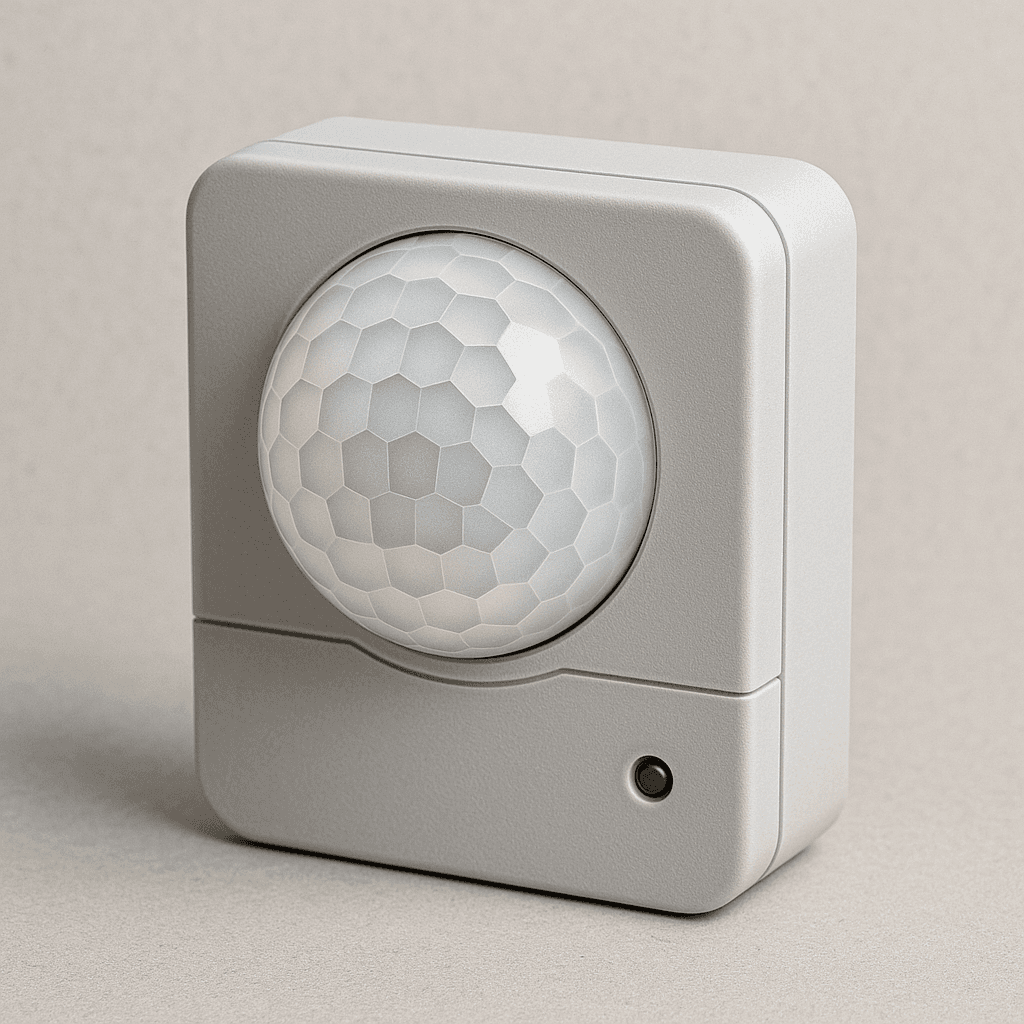
Motion Sensor
Definition(s) | A device that detects physical movement or change in a specific area and typically generates an electronic signal. | ||||||||
|---|---|---|---|---|---|---|---|---|---|
Basic Working Principle | Motion detection using different physical principles such as infrared (heat), microwave (Doppler effect), ultrasonic (sound waves), or inertial (acceleration, angular velocity). | ||||||||
Important Application Areas | Security, Lighting control, Automation, Healthcare applications, User tracking. | ||||||||
Motion sensors are devices that detect physical movement or changes within a specific area and typically generate an electronic signal. They play a critical role in many aspects of modern life ranging from security systems and energy management to industrial automation and healthcare technologies. By detecting dynamic changes in their environment these sensors enable systems to respond adaptively to their surroundings.
Motion sensors operate on different principles depending on the physical phenomenon they detect and are classified into various types:
Motion sensors have practical applications across a wide range of fields:
Motion sensor technology is increasingly integrated with artificial intelligence and machine learning to enable the development of smarter systems with enhanced contextual awareness. Sensor data are no longer limited to merely detecting motion but are now used to analyze the nature intent and even individual behavioral patterns of movement. This holds significant potential especially in healthcare security and personalized interaction systems.
Electrical Engineers Chamber. "Hareket Sensörleri." Accessed May 28, 2025. https://www.emo.org.tr/ekler/56aa121ad133e55_ek.pdf.
Kara, E., S. Ikizoglu, K. Sahin, and A. Atas. “A New Algorithm for Dynamic Vestibular System Analysis with Wearable Pressure and Motion Sensors.” *Journal of Academic Research in Medicine* 11, no. 2 (2021): 149–155. Accessed May 28, 2025. https://jarem.org/tr/makaleler/a-new-algorithm-for-dynamic-vestibular-system-analysis-with-wearable-pressure-and-motion-sensors/doi/jarem.galenos.2021.3980.
Yayan, U. “Design and Implementation of a Smart Energy Management System for Classrooms Using PIR Sensors.” *Journal of Intelligent Systems and Technology* 4, no. 2 (2020): 74–79. Accessed May 28, 2025. https://dergipark.org.tr/en/pub/jist/article/733386.
Çelik, İ., and H. Bayrak. “Akıllı Telefon Hareket Sensörleri ve Dokunma Davranışları ile Kullanıcı Tanımlama.” Accessed May 28, 2025. https://d1wqtxts1xzle7.cloudfront.net/93569664/User_Identification_on_Smartphones_with_Motion_Sensors_and_Touching_Behaviors-libre.pdf.
Çiftçi, A. *Proximity and Motion Sensor Based Fall Detection for Elderly People.* Master's thesis, Boğaziçi University, 2012. Accessed May 28, 2025. https://www.proquest.com/docview/3110351594?pq-origsite=gscholar&fromopenview=true&sourcetype=Dissertations%20&%20Theses.

Motion Sensor
Definition(s) | A device that detects physical movement or change in a specific area and typically generates an electronic signal. | ||||||||
|---|---|---|---|---|---|---|---|---|---|
Basic Working Principle | Motion detection using different physical principles such as infrared (heat), microwave (Doppler effect), ultrasonic (sound waves), or inertial (acceleration, angular velocity). | ||||||||
Important Application Areas | Security, Lighting control, Automation, Healthcare applications, User tracking. | ||||||||
Working Principles and Types
Application Areas
Future Trends