

This article was automatically translated from the original Turkish version.
Model Name | Moto Guzzi V7 Stone | ||||||||
|---|---|---|---|---|---|---|---|---|---|
Manufacturer(s) | Moto Guzzi S.p.A. | ||||||||
Production Year | 2017–present | ||||||||
Segment | Retro/Naked | ||||||||
Engine Type | 853 cc, air-cooled, 90° V-Twin | ||||||||
Maximum Power | 52 PS @ 6,200 rpm | ||||||||
Maximum Torque | 73 Nm @ 4,900 rpm | ||||||||
Transmission(s) | 6-speed manual | ||||||||
Suspension (Front/Rear) | 40 mm telescopic fork / dual shock absorbers (pre-load adjustable) | ||||||||
Braking System | Dual front 320 mm discs + four-piston calipers; single rear 260 mm disc; ABS | ||||||||
Electronic Assistance Systems | Dual-channel ABS | ||||||||
Instrument Panel | Analog speedometer + small digital information display | ||||||||
Seat Height | 780 mm | ||||||||
Fuel Capacity | 21 L | ||||||||
Weight (Full) | 209 kg | ||||||||
Moto Guzzi V7 Stone is one of the most renowned and beloved models in Moto Guzzi’s modern classic segment. The Stone is a contemporary interpretation of Guzzi’s iconic V7 series, which has been in production since 1967, distinguished by the brand’s characteristic transversely mounted V-Twin engine and distinctive Italian styling. With its simple elegant design, user-friendly riding character, and refined performance, the V7 Stone is an ideal choice for both novice riders and experienced riders seeking a comfortable and stylish motorcycle.
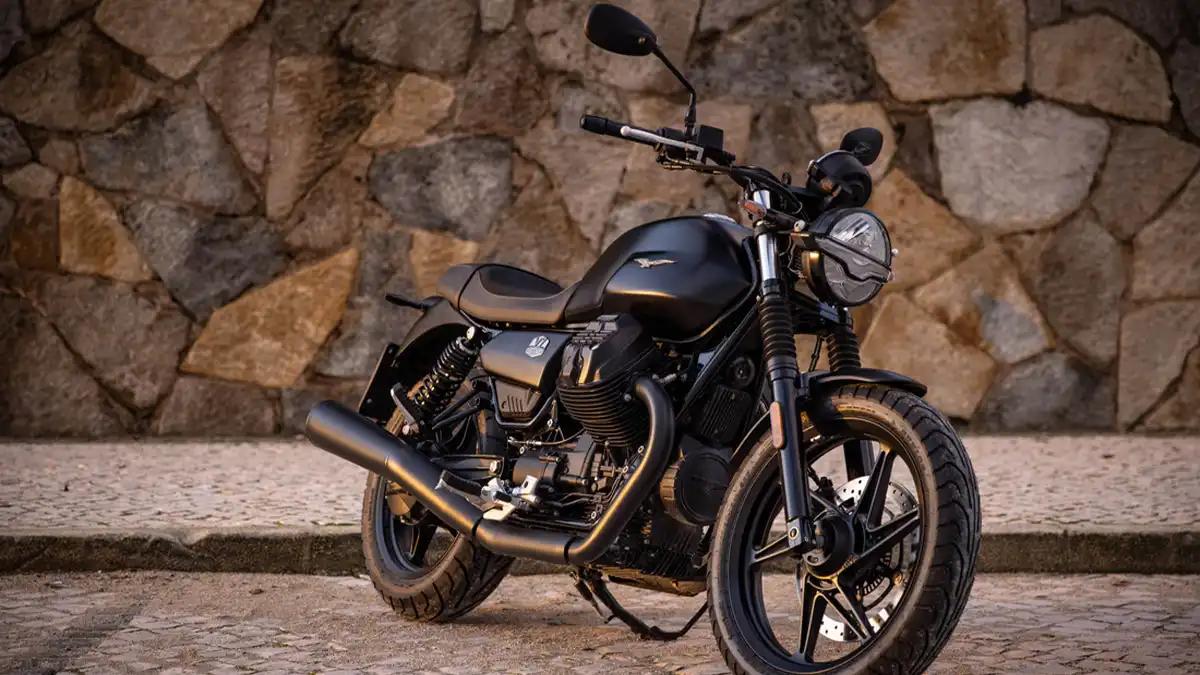
The design of the V7 Stone blends Moto Guzzi’s rich heritage with a modern minimalist approach. Clean lines, matte or glossy single-color paint options, and functional beauty form the foundation of the motorcycle’s aesthetic.

Moto Guzzi V7 Stone (Moto Guzzi)
The Moto Guzzi V7 Stone draws its power from the brand’s signature air-cooled, 90° transversely mounted V-Twin engine. This engine is particularly known for its strong, smooth torque output at low and mid-range RPMs, making it ideal for urban riding and relaxed cruising.
This engine delivers a distinctive riding experience while meeting modern standards of performance and reliability.
The V7 Stone’s chassis is designed to combine a classic appearance with modern riding dynamics. Comfortable suspension and reliable braking provide an enjoyable ride for daily commuting and weekend excursions.

Moto Guzzi V7 Stone (Moto Guzzi)
Despite its retro appearance, the Moto Guzzi V7 Stone incorporates modern rider assistance systems that enhance safety and ease of use.
The Moto Guzzi V7 Stone holds a strong position in the motorcycle market’s modern classic or retro naked segment. Its unique transverse V-Twin engine, distinctive design, and comfortable riding position set it apart from competitors. It is an ideal motorcycle for both daily commuting and weekend rides.
Its main rivals include other mid-class retro or neo-retro motorcycles such as the Triumph Bonneville T100/Street Twin, Royal Enfield Interceptor 650, Kawasaki W800, Yamaha XSR700, and Honda CB650R. The V7 Stone stands out particularly due to Moto Guzzi’s Italian heritage, shaft drive system, and the engine’s unique character.
Cycle World. "Moto Guzzi V7." CycleWorld.com. Accessed July 16, 2025. https://www.cycleworld.com/moto-guzzi/v7/.
Moto Guzzi. "Moto Guzzi V7 Stone 850." MotoGuzzi.com.tr. Accessed July 16, 2025. https://www.motoguzzi.com.tr/tr/v7-stone-850.html.
Motorcycle News. "Moto Guzzi V7 (2021) Review." MotorcycleNews.com. Accessed July 16, 2025. https://www.motorcyclenews.com/bike-reviews/moto-guzzi/v7/2021/.
Top Speed. "This New Moto Guzzi V7 Stone Is Faster and Sexier Than Before." TopSpeed.com. Accessed July 16, 2025. https://www.topspeed.com/this-new-moto-guzzi-v7-stone-is-faster-and-sexier-than-before/.

Model Name | Moto Guzzi V7 Stone | ||||||||
|---|---|---|---|---|---|---|---|---|---|
Manufacturer(s) | Moto Guzzi S.p.A. | ||||||||
Production Year | 2017–present | ||||||||
Segment | Retro/Naked | ||||||||
Engine Type | 853 cc, air-cooled, 90° V-Twin | ||||||||
Maximum Power | 52 PS @ 6,200 rpm | ||||||||
Maximum Torque | 73 Nm @ 4,900 rpm | ||||||||
Transmission(s) | 6-speed manual | ||||||||
Suspension (Front/Rear) | 40 mm telescopic fork / dual shock absorbers (pre-load adjustable) | ||||||||
Braking System | Dual front 320 mm discs + four-piston calipers; single rear 260 mm disc; ABS | ||||||||
Electronic Assistance Systems | Dual-channel ABS | ||||||||
Instrument Panel | Analog speedometer + small digital information display | ||||||||
Seat Height | 780 mm | ||||||||
Fuel Capacity | 21 L | ||||||||
Weight (Full) | 209 kg | ||||||||
No Discussion Added Yet
Start discussion for "Moto Guzzi V7 Stone" article
Design and “Italian Minimalist Classic” Aesthetic
Main design elements:
Engine Specifications and Powertrain
Main engine and powertrain features:
Chassis, Suspension and Braking Systems
Chassis, suspension and braking system details:
Electronic Systems and Rider Aids
Key electronic features:
Market Position and Competitive Landscape