

This article was automatically translated from the original Turkish version.
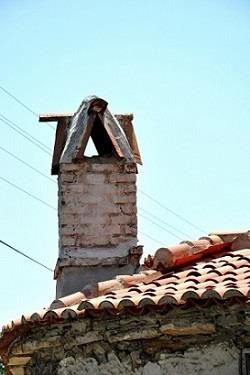
Muğla chimney is a traditional type of chimney specific to the Muğla province of Türkiye. It plays a significant role in the region’s traditional chimney system and is considered a distinctive feature of Muğla houses. This chimney system is defined as a structural element specifically developed to adapt to local climatic conditions.
The Muğla chimney emerged with the introduction of Turkish-style tiled roofs. As traditional Muğla houses evolved, this chimney type gradually became one of the city’s iconic symbols.
Initially, earthen-tiled houses were widespread in Muğla and persisted until the early 20th century. With the adoption of Turkish-style tiled roofs, the Muğla chimney appeared and became widely used.
The Muğla chimney is a structure built on a square base using Turkish-style tiles. A total of 28 tiles are used in its construction. During the building process, the tiles are arranged in a specific pattern. In the first stage, two tiles are placed back-to-back on each side to form a ridge. In the second stage, additional tiles are laid to create triangular structural elements.
In the third stage, the apexes of opposing triangular elements are joined with tiles to form a cross-shaped upper structure. The gaps between them are then filled with tile fragments and mortar. In the final stage, additional tiles are placed to complete the chimney.
The top of the chimney is closed with a cross-shaped arrangement designed to provide protection against rain and wind.
Muğla is one of the regions with high rainfall, and precipitation carried by wind has significantly influenced building design. The local wind, known as “deli memet,” brings rain from all directions, which led to the chimney being designed with open sides on all four faces.【1】 This design prevents chimney blockages and facilitates the smooth exit of smoke. It is also completed with an overhead covering system that reduces the impact of rainfall.
The Muğla chimney is not only a technical structural element but also regarded as a cultural symbol. This chimney type, used for many years in the city, has become an integral part of Muğla’s local architectural identity. Studies have shown that this chimney type is also found in districts including Milas, Yatağan, Ula, Köyceğiz, and Ortaca, as well as in various towns and settlements.
[1]
T.C. Kültür ve Turizm Bakanlığı, “Muğla Bacası,” Muğla İl Kültür ve Turizm Müdürlüğü, Erişim 24 Mart 2026, https://mugla.ktb.gov.tr/TR-73666/mugla-bacasi.html

Historical Development
Architectural Features
Relationship with Climate
Cultural and Geographic Spread