

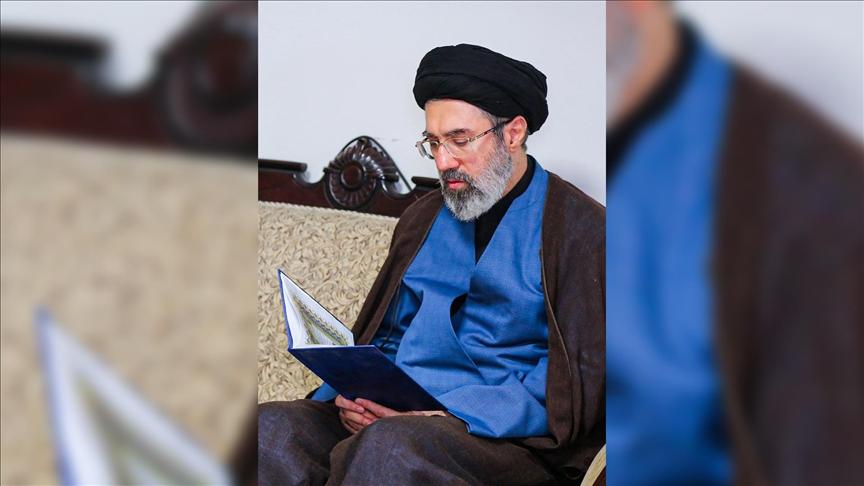

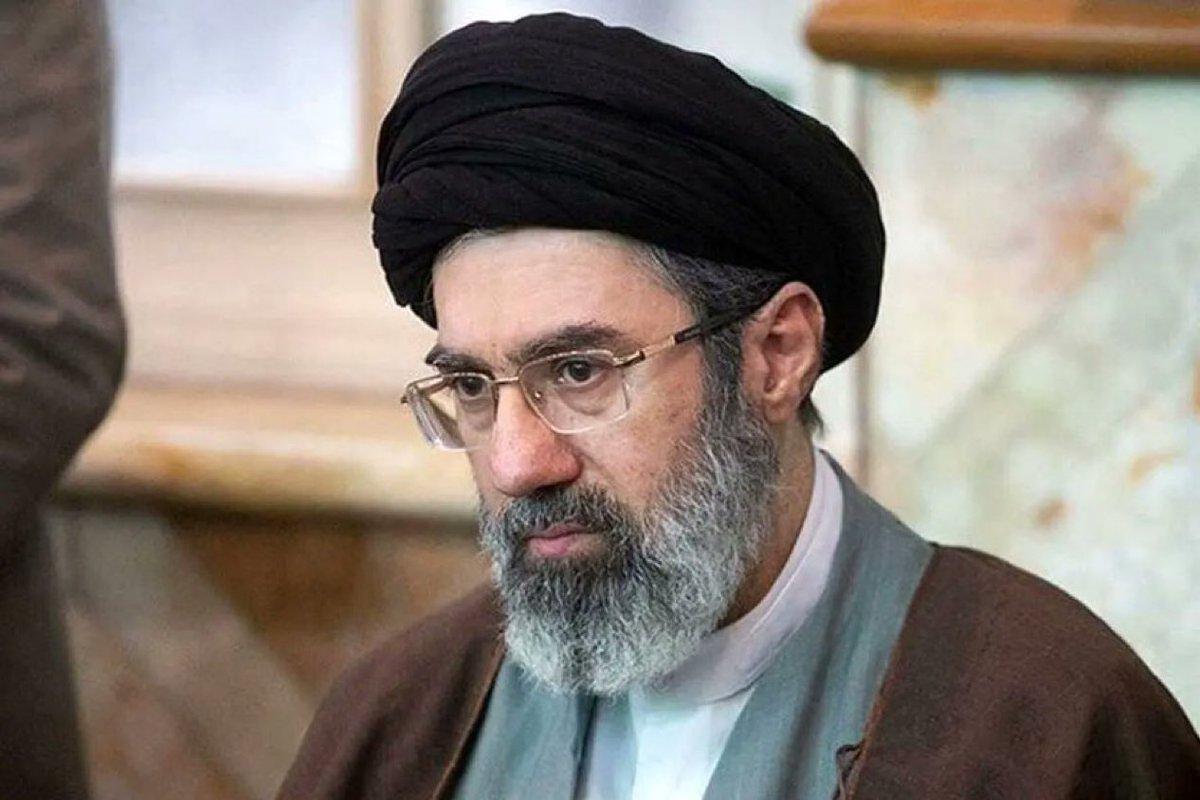
Muqtada al-Sadr (X account)
Father(s) | Ali Khamenei | ||||||||
|---|---|---|---|---|---|---|---|---|---|
Place of Birth | Iran Mashhad | ||||||||
Birth | 1969 | ||||||||
Education | Qom theological circle Hakkani and Kalpaykani madrasas | ||||||||
Persian Name | سید مجتبی حسینی خامنهای | ||||||||
Mujtaba Husayni Khamenei (Persian: سید مجتبی حسینی خامنهای) is an Iranian cleric born on 17 September 1969 in Mashhad. He is the second son of Ali Khamenei, the second religious leader of the Islamic Republic of Iran. Although he holds no official state position within Iran’s political structure, he is recognized as an influential figure in the country’s governance. He has been mentioned as one of the potential candidates for succession to the position of Iran’s religious leadership.
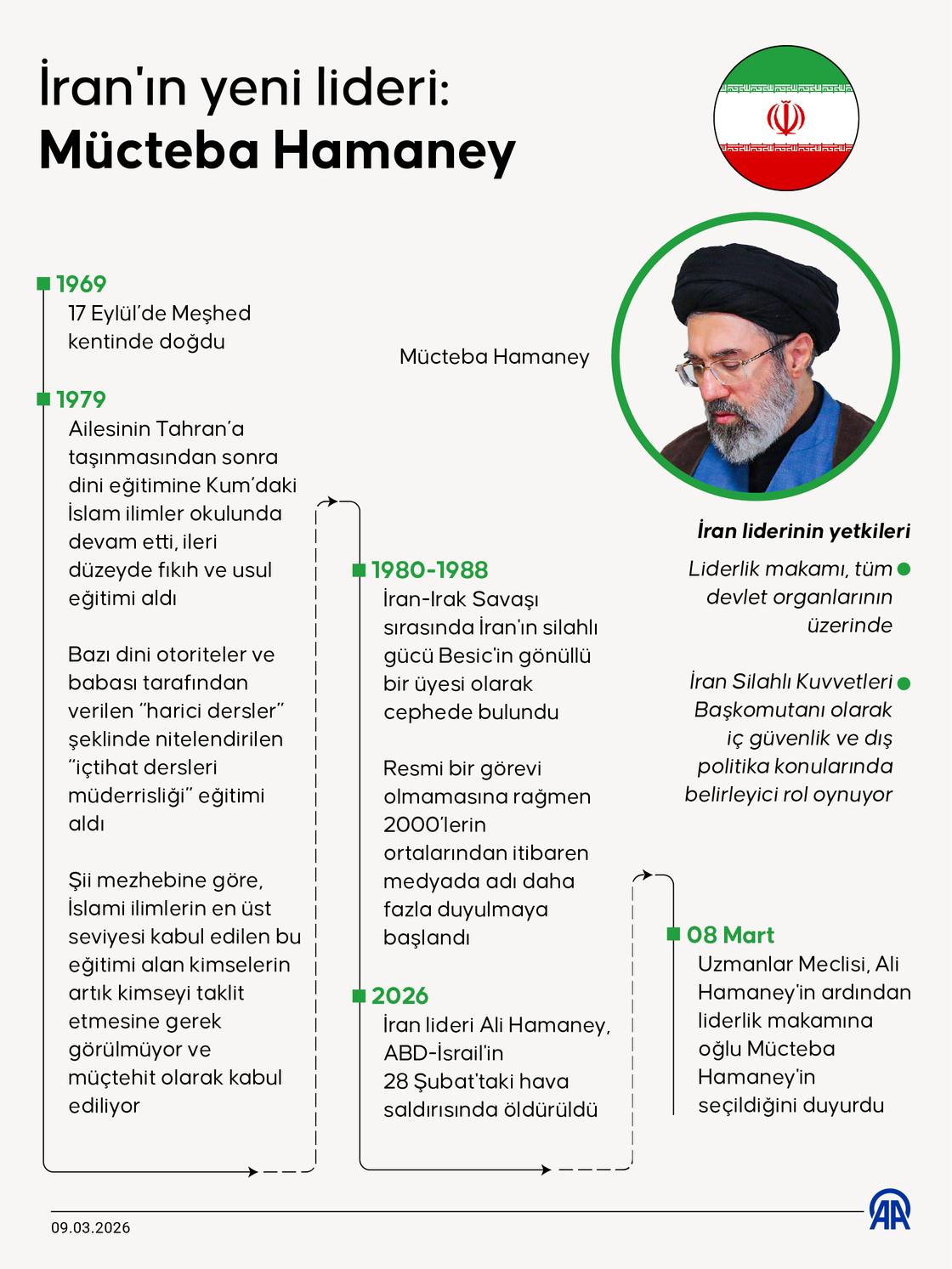
Infographic of Mujtaba Khamenei (Anadolu Ajansı)
Mujtaba Khamenei was born in Mashhad in 1969. His father, Ali Khamenei, assumed key roles in Iran’s political and religious structure after the Islamic Revolution and became Iran’s religious leader in 1989. Mujtaba Khamenei’s childhood coincided with his father’s revolutionary activities against the Iranian monarchy and the political developments of that period. His grandfather, Sayyid Javad Khamenei, was also a prominent Shia cleric, and the family has long-standing ties to religious circles.
He spent his childhood years within the new political and religious order established after the 1979 Islamic Revolution. Following the revolution, Ali Khamenei and his family relocated from Mashhad to Tehran. Due to his father’s rapid rise in post-revolutionary politics, Mujtaba Khamenei was raised in close proximity to state and religious institutions. He received his education at Alavi High School in Tehran, where he undertook both general and religious studies. This institution is known as one of the schools that produced Iran’s political and bureaucratic elite.
Mujtaba Khamenei began his religious education at a young age and studied at various seminaries across Iran. After completing his studies at the Hakkani and Kalpaykani seminaries, he attended lectures by Razi Shirazi. In 1999, he continued his religious training at seminaries in Qom to pursue clerical status and engaged in scholarly work in Shia religious sciences. Among his earliest teachers in theological studies were his father, Ali Khamenei, and Mahmud Hashimi Shahroudi. In Qom, he received advanced instruction in jurisprudence and legal theory.
After his father’s elevation to the position of religious leader, Mujtaba Khamenei continued his religious education and attended lectures by several prominent Iranian clerics. During this period, he interacted with key figures in Iran’s religious educational institutions. He participated in advanced interpretive classes known as “external lessons,” provided by certain clerics and his father, and later became one of the instructors delivering such lessons himself.
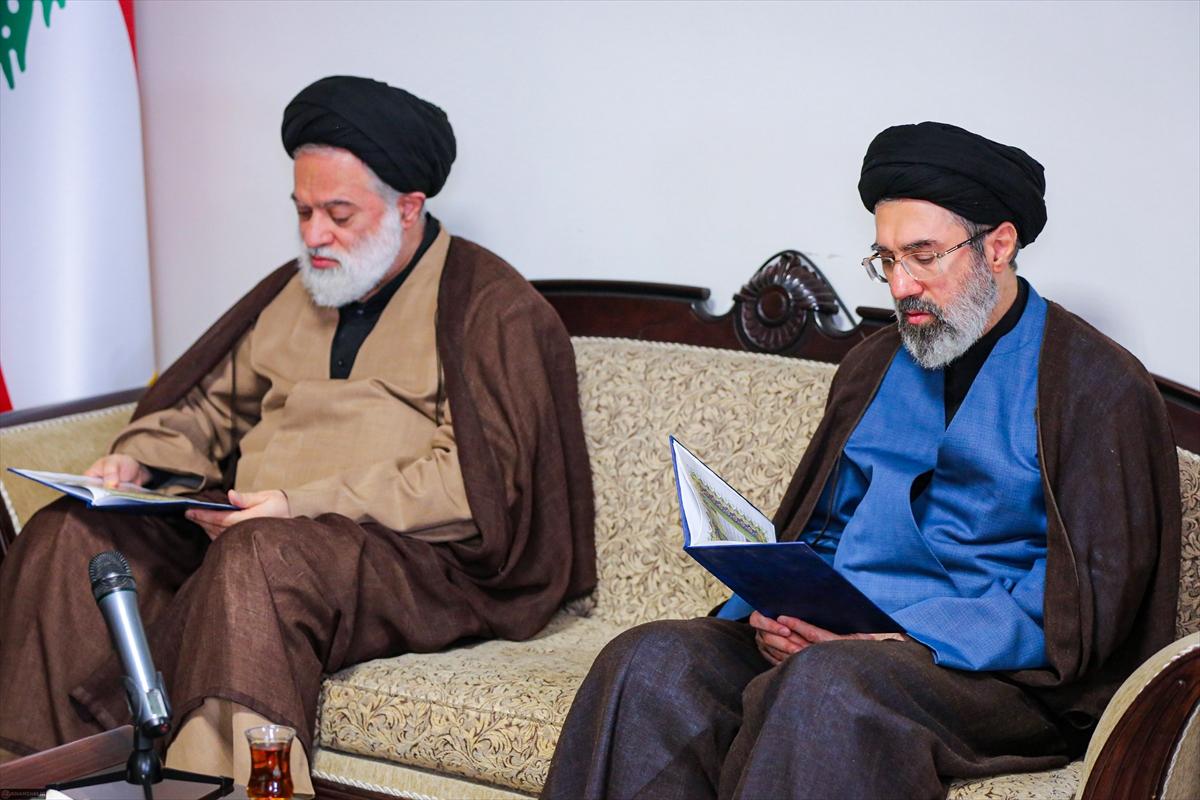
Mujtaba Khamenei (right) (AA)
After completing high school, Mujtaba Khamenei joined the front lines during the final phase of the Iran-Iraq War. At the age of 17, he enlisted and served in the Habib ibn Mazhar Battalion, part of the Muhammad Rasulullah Forces under the Basij volunteer militia. During this period, he established connections with individuals who would later assume important roles within Iran’s security institutions.
Mujtaba Khamenei holds no formal state position in Iranian politics. Nevertheless, during his father’s leadership, he has been described as an influential figure within Iran’s governance structure, particularly through activities linked to the office of the religious leader.
From the mid-2000s onward, his name began to appear more frequently in both Iranian and international media. Mujtaba Khamenei has been linked to the Islamic Revolutionary Guard Corps and operates within a network connected to Iran’s security bureaucracy. He is alleged to have played an influential role in the political processes surrounding the 2005 and 2009 presidential elections. During the controversies following the 2009 presidential election, reformist politician Mehdi Karroubi accused security circles of interfering in the electoral process, and Mujtaba Khamenei’s name was frequently raised in these debates.
In 2019, the U.S. Department of the Treasury added Mujtaba Khamenei to its sanctions list, citing the rationale that although he holds no official position, he represents the Iranian regime.
In Iran, the selection of the religious leader is conducted by the Assembly of Experts, a body composed of 88 clerics elected by the public every eight years, which has the authority to elect, supervise, and, if necessary, remove the religious leader.
Following the death of Ali Khamenei in 2026, debates emerged in Iran regarding who would succeed him as religious leader. Some reports claimed that the Assembly of Experts had selected Mujtaba Khamenei as the new religious leader; however, no official announcement had been made as of 9 March 2026.
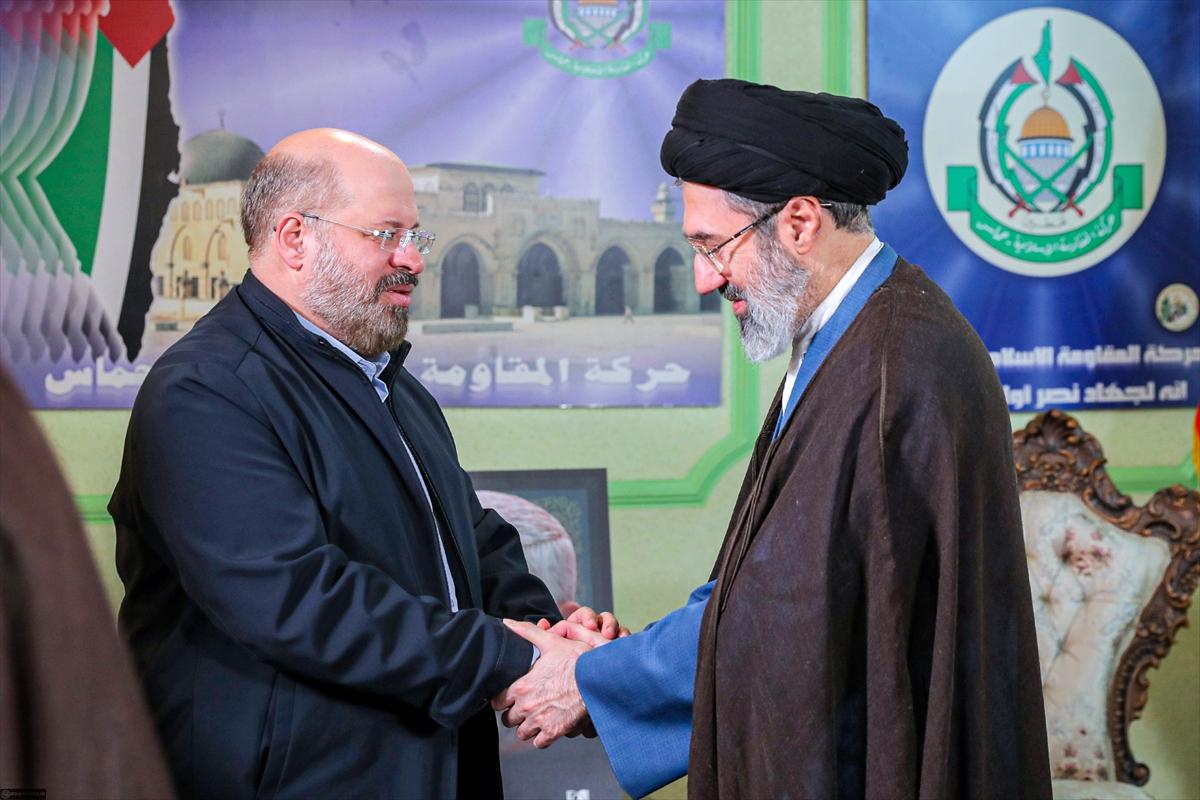
Selection of Mujtaba Khamenei as Religious Leader (AA)
Following the death of Iran’s religious leader Ali Khamenei in an air strike orchestrated by the United States and Israel on 28 February 2026, the leadership position became vacant. On 9 March 2026, the Assembly of Experts, which holds the constitutional authority to select Iran’s new religious leader, announced that Mujtaba Khamenei had been elected by an overwhelming majority as the third religious leader of the Islamic Republic of Iran.【1】
The written statement issued by the Assembly of Experts stated that the selection process was completed during an extraordinary session and that the decision was formally announced by the votes of its members.
In Iran’s political structure, the religious leader, referred to as the “Supreme Leader,” holds constitutional authority above all state institutions, including the president, and serves as commander-in-chief of the armed forces. He is regarded as the ultimate authority on domestic and foreign policy matters.
Following his selection as leader, statements issued by the Iranian General Staff, the Iranian Army, and the Islamic Revolutionary Guard Corps confirmed that the armed forces would continue their duties under the command of the new leader. Additionally, Iranian President Masoud Pezeshkian, in a public message, congratulated Mujtaba Khamenei on assuming his new role and emphasized the importance of unity and solidarity in addressing the country’s challenges.
Mujtaba Khamenei is married and the father of three children. He first married the daughter of Ayatollah Hushugat and later married Zahra Haddad Adil, with whom he has three children. For many years, Mujtaba Khamenei maintained a low public profile, refraining from public political statements and limiting his visibility. As a result, he is regarded as one of the figures in Iranian society about whom limited public information is available.
Al Jazeera. “Who could succeed Ayatollah Ali Khamenei to lead Iran?” Accessed March 4, 2026. https://www.aljazeera.com/news/2026/3/1/who-could-succeed-ayatollah-ali-khamenei-to-lead-iran
CNBC-E. "’İran'ın yeni lideri Ali Hamaney'in oğlu Mücteba Hamaney seçildi’ iddiası." Accessed March 4, 2026. https://www.cnbce.com/haberler/ali-hamaneyin-yerine-gelen-isim-belli-oldu-iddiasi-yeni-iran-dini-lideri-kim-oldu-mucteba-hameney-kimdir-h26100
GZT. “Müçteba Hamaney kimdir? Ali Hamaney'in 'sır küpü' oğlu Müçteba hakkında tüm bilgiler.” Accessed March 4, 2026. https://www.gzt.com/foto-galeri/dunya/mucteba-hamaney-kimdir-iranin-yeni-dini-lideri-oldugu-iddia-edilen-mucteba-hamaney-kac-yasinda-4021401
GZT. “SON DAKİKA | Hamaney's Son Selected as New Religious Leader in Iran.” Accessed March 4, 2026. https://www.gzt.com/dunya/iranin-yeni-dini-lideri-mucteba-hamaney-oldu-dunya-haberleri-4021399
GZT. “İran’ın gerçek lideri kim? Mücteba Hamaney’in perde arkasındaki gücü.” YouTube. Accessed March 4, 2026. https://www.youtube.com/watch?v=0XmJI7STRYE
Parpanchi, Mehdi. “A Wartime Succession in Iran: Why the IRGC Backed Mojtaba Khamenei.” Iran International. Accessed March 4, 2026. https://www.iranintl.com/en/202603048311
TGRT Haber. “İran için kritik iddia: Yeni lider olarak Ali Hamaney'in oğlu Mücteba Hamaney'in seçildiği öne sürüldü.” Accessed March 4, 2026. https://www.tgrthaber.com/dunya/iran-icin-kritik-iddia-yeni-lider-ali-hamaneyin-oglu-mucteba-hamaneyin-secildigi-one-3286030
The Telegraph. "Mojtaba Khamenei, son of Ayatollah, set to succeed father as Iran’s Supreme Leader: Report." Accessed March 4, 2026. https://www.telegraphindia.com/world/ayatollah-khameneis-son-mojtaba-chosen-as-irans-next-supreme-leader-report/cid/2149757#goog_rewarded
United Against Nuclear Iran. "Mojtaba Khamenei: The Supreme Leader’s Gatekeeper & Guardian." Accessed March 4, 2026. https://www.unitedagainstnucleariran.com/mojtaba-khamenei-supreme-leaders-gatekeeper-guardian
[1]
Anadolu Ajansı. "ABD-İsrail'in saldırısında öldürülen Hamaney'in oğlu Mücteba Hamaney, İran'ın yeni lideri olarak seçildi". Erişim 9 Mart 2026. https://www.aa.com.tr/tr/dunya/abd-israilin-saldirisinda-oldurulen-hamaneyin-oglu-mucteba-hamaney-iranin-yeni-lideri-olarak-secildi/3855560

Muqtada al-Sadr (X account)
Father(s) | Ali Khamenei | ||||||||
|---|---|---|---|---|---|---|---|---|---|
Place of Birth | Iran Mashhad | ||||||||
Birth | 1969 | ||||||||
Education | Qom theological circle Hakkani and Kalpaykani madrasas | ||||||||
Persian Name | سید مجتبی حسینی خامنهای | ||||||||
Family and Early Life
Education
Iran-Iraq War
Position within Iran’s Political System
International Sanctions
Leadership Discussions and Succession
Selection as Iran’s Religious Leader
Private Life