This article was automatically translated from the original Turkish version.
+2 More
Registration Number | 1393 | ||||||||
|---|---|---|---|---|---|---|---|---|---|
Registration Date | 22.06.2023 | ||||||||
Application Number | C2020/054 | ||||||||
Application Date | 11.02.2020 | ||||||||
Name of the Geographical Indication | Muş Eski Kaşarı | ||||||||
Product / Product Group(s) | Kaşar / Cheeses | ||||||||
Type of Geographical Indication | Geographical indication | ||||||||
Applicant/Registrant(s) | Muş Provincial Directorate of Agriculture and Forestry | ||||||||
Address of the Registrant | Sunay Mah. Bitlis Yolu Otogar Yanı No:4 49100 Merkez MUŞ | ||||||||
Geographical Boundary | Muş Province | ||||||||
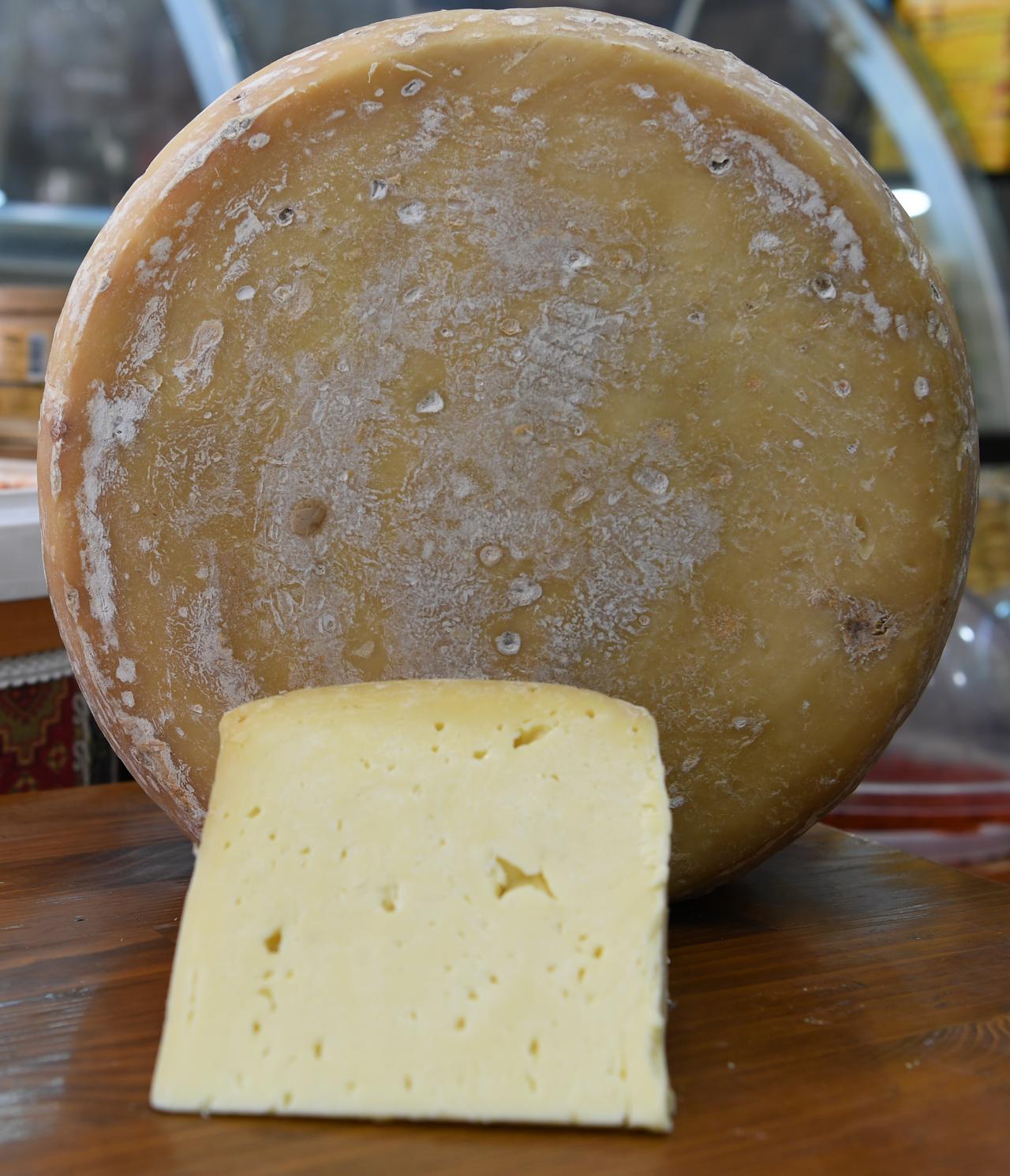
Muş Eski Kaşarı is a registered kaşar cheese unique to Muş Province in Türkiye, protected by a geographical indication. It is produced from the milk of sheep that graze on endemic plants native to the geographical region, with cow and goat milk added in specific proportions to achieve a balanced flavor and aroma. The dry matter content exceeds 60%, while the fat content ranges approximately between 24.5% and 27.5%. The rind develops a yellowish hue after production and darkens and hardens as the cheese matures. It is produced in a round shape, with a smooth and even cross-section, distinguished by its slightly firm texture and distinct sheep milk aroma.
Muş Eski Kaşarı is produced exclusively from the milk of sheep grazing on endemic plant species within the defined geographical area. The milk blend used in production consists of the following proportions: sheep milk 45–50%, cow milk 30–35%, and goat milk 15–20%. The high proportion of sheep milk imparts a characteristic sheep milk aroma to the product. Goat and cow milk are additionally used to balance flavor and aroma.
Chemical composition measurements for Muş Eski Kaşarı fall within the following ranges:
Thanks to this composition, Muş Eski Kaşarı has a creamy color and a long shelf life. The extended ripening period ensures the absence of pathogenic bacteria or health risks.
Average and range values for texture analysis of Muş Eski Kaşarı are as follows:
The color of the product has been evaluated using the L*, a*, b* parameters, with the following average and range values observed:
External color measurements include the rind up to a depth of 2 cm.
Muş Eski Kaşarı has a round shape. The diameters of the circular molds used vary and differ between producers. The cheeses are typically produced in molds weighing 8–12 kilograms. A brand mark, indicating the producer’s identity, is stamped on the front surface of the mold.
The cross-section of the cheese is smooth and even. Its consistency is described as slightly firm. Due to the high proportion of sheep milk, it carries a dense sheep milk aroma. Its flavor is mildly salty, and the cheese readily disperses in the mouth.
The production of Muş Eski Kaşarı is a detailed process comprising the following stages:
The extended ripening and storage processes intensify the sheep milk aroma and flavor of the cheese and define its characteristic properties.
Muş Eski Kaşarı is presented to consumers either in kilogram-sized portions or as whole wheels after production. The product is marked with the designation “Muş Eski Kaşarı” and the geographical indication emblem. When the mark cannot be applied directly to the product or packaging, it must be visibly displayed at the production facility.
The production of Muş Eski Kaşarı is permitted only within the geographical boundaries of Muş Province. The product has historical roots dating back centuries and holds a significant place in the regional economy. Therefore, all stages of production must occur within Muş Province.
Monitoring of the production, composition, packaging, and use of the designation for Muş Eski Kaşarı is carried out under the coordination of the Muş Provincial Directorate of Agriculture and Forestry. The monitoring authority includes the following institutions:
The monitoring authority consists of at least three experts in the field. Inspections are conducted at least once annually as routine procedures and may be carried out at any time in response to complaints or specific needs. When necessary, services may be procured from experts, whether individuals or legal entities, from public or private institutions. The registering authority also manages legal procedures related to the protection of the product.
Turk Patent and Trademark Office. "Muş Eski Kaşarı Coğrafi İşaret Tescil Belgesi." Accessed July 14, 2025. https://ci.turkpatent.gov.tr/Files/GeographicalSigns/c0843c7c-ad79-4952-9b1d-5951515fe1ab.pdf.
Turkish Patent and Trademark Office. "Muş Eski Kaşarı." Geographical Indications. Accessed July 14, 2025. https://ci.turkpatent.gov.tr/cografi-isaretler/detay/1704.

Registration Number | 1393 | ||||||||
|---|---|---|---|---|---|---|---|---|---|
Registration Date | 22.06.2023 | ||||||||
Application Number | C2020/054 | ||||||||
Application Date | 11.02.2020 | ||||||||
Name of the Geographical Indication | Muş Eski Kaşarı | ||||||||
Product / Product Group(s) | Kaşar / Cheeses | ||||||||
Type of Geographical Indication | Geographical indication | ||||||||
Applicant/Registrant(s) | Muş Provincial Directorate of Agriculture and Forestry | ||||||||
Address of the Registrant | Sunay Mah. Bitlis Yolu Otogar Yanı No:4 49100 Merkez MUŞ | ||||||||
Geographical Boundary | Muş Province | ||||||||
Raw Material and Milk Composition
Physicochemical Properties
Texture Properties
Color Properties
Physical Properties
Rind Structure
Structure and Consistency
Production Method
Packaging and Presentation
Geographical Boundary and Production Linkage
Monitoring