


This article was automatically translated from the original Turkish version.
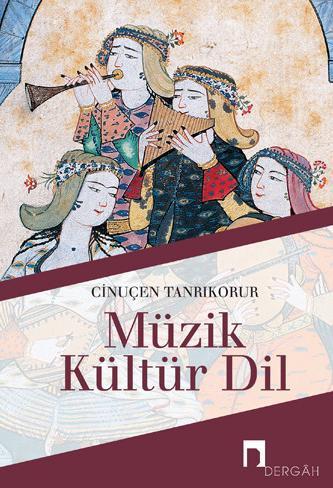
Music Culture Language (Book)
Author(s) | Cinuçen Tanrıkorur | ||||||||
|---|---|---|---|---|---|---|---|---|---|
Publisher(s) | Dergâh Yayınları | ||||||||
Publication Year | March 2022 (5th Edition) | ||||||||
Number of Pages | 367 | ||||||||
Type(s) | Music Studies Philosophy of Art | ||||||||
Music Culture Language is a work by Cinuçen Tanrıkorur (1938–2000), one of the most significant figures in Turkish music, published as part of Dergâh Publications’ “Music” series. It combines musicology, philosophy of art and cultural essay, presenting a collection of research, essayistic and reflective writings that reveal not only Tanrıkorur’s identity as a musicologist but also as a thinker, scholar and stylistic prose writer. First published in October 2003, the book comprises 367 pages and has reached its fifth edition as of March 2022.
Music Culture Language offers a comprehensive perspective on Cinuçen Tanrıkorur’s artistic and intellectual world. The book emphasizes that Tanrıkorur was far more than a performer and composer—he was a profound thinker and researcher. The work is grounded in the idea that great artists engage deeply with philosophy, aesthetics, literature, painting, plastic arts and even crafts in order to perform and interpret their own art at the highest level. This approach reinforces the thesis that an artist’s work functions as a “book” reflecting their accumulated knowledge, beliefs, thoughts, inner tensions, worldview, hopes, anxieties and the central problems of their era—in short, their philosophy.
The book also examines Tanrıkorur’s desire, as a spokesperson for his era’s artistic consciousness, to express through written language what he had conveyed through sound, voice and composition. He regarded this transition to written expression not as a choice but as a necessity. Consequently, he constructed his identity as a prose writer (nâsir). By exploring the complex relationship between music, culture and language, the work demonstrates that an artist is not merely a performer but also an intellectual being, with a deep philosophy underlying their art. The book presents essays and research articles on comparative analyses of Western and Turkish music, stylistic differences in music, the connection between cultural identity and music, and the role of language in musical expression.
The language and style of the work reflect the author’s literary mastery and intellectual depth. Although written with academic seriousness, the texts present complex philosophical and aesthetic ideas in clear, fluent prose. Tanrıkorur’s style combines an informative and definitional approach with personal observations and reflections. The book contains no promotional or laudatory language; instead, it offers an objective and critical perspective on the mutual interactions among music, culture and language. Beyond his identity as a musicologist, Tanrıkorur’s voice as a thinker—evident in his writing—invites readers to reflect and question.
Cinuçen Tanrıkorur was an exceptional artist who made substantial contributions to Turkish music as a composer, performer, educator and musicologist. He undertook vital work to preserve, develop and promote classical Turkish music internationally. This book is a compilation of Tanrıkorur’s profound reflections on music, culture and language, extending far beyond his identity as a creator. It serves as a foundational reference in the fields of Turkish music research, musicology, philosophy of art and cultural studies. The work is significant because it shows how the artist bore witness to his era not only through his compositions but also through his ideas. It stands as a reference for music lovers, academics and all readers interested in the philosophical dimensions of art.
Tanrıkorur, Cinuçen. *Müzik Kültür Dil*. İstanbul: Dergah Yayınları, 2003. Accessed July 8, 2025. https://www.dergah.com.tr/kitaplar/muzik-kultur-dil.
Music Culture Language (Book)
Author(s) | Cinuçen Tanrıkorur | ||||||||
|---|---|---|---|---|---|---|---|---|---|
Publisher(s) | Dergâh Yayınları | ||||||||
Publication Year | March 2022 (5th Edition) | ||||||||
Number of Pages | 367 | ||||||||
Type(s) | Music Studies Philosophy of Art | ||||||||
No Discussion Added Yet
Start discussion for "Music Culture Language (Book)" article
Content and Thematic Structure
Language and Style
The Author’s Position and the Work’s Significance