


This article was automatically translated from the original Turkish version.
Toward the end of 2024, Myloplus sauron, discovered in the Xingu River, one of the tributaries of the Amazon River, was introduced to the world by Dr. Rupert Collins and his team from the Natural History Museum in London. This discovery has provided significant insights into the evolutionary history of piranhas.
Myloplus sauron is a striking species that differs from other piranhas both in its physical structure and behavior. It derives its name from the black stripe pattern on its body, which resembles the eye of Sauron, a character from J.R.R. Tolkien’s The Lord of the Rings. This black stripe runs prominently along the length of its fins, making the species unique. Additionally, orange spots near the tail and along the body are among the distinguishing features of this fish.
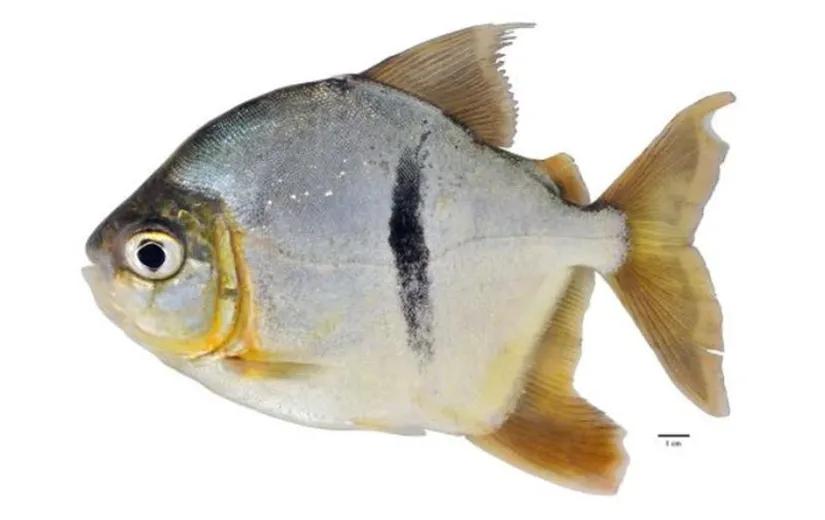
Myloplus sauron-SciSpace
One of the most notable features of Myloplus sauron is its robust, molar-like teeth that resemble human teeth. This adaptation is suited for grinding and crushing plant material. While traditional piranhas possess razor-sharp teeth designed for slicing flesh, the teeth of this species are specialized for processing plant-based food.
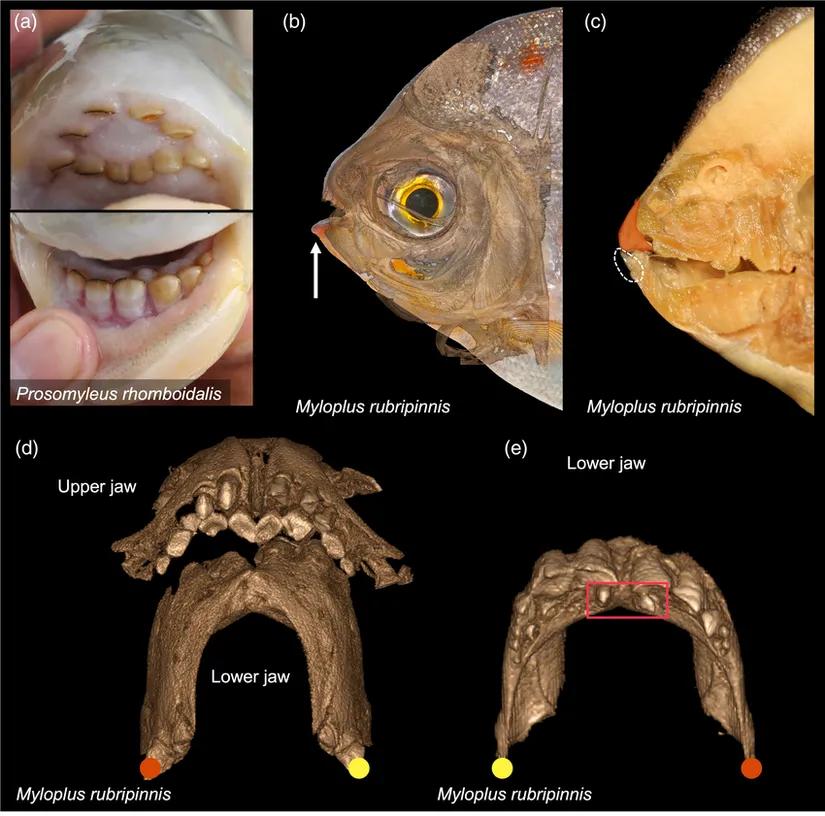
Dentition of herbivorous piranhas-ResearchGate
Myloplus sauron belongs to the family Serrasalmidae, which includes both carnivorous piranhas and herbivorous pacu species. It is well established that throughout their evolutionary history, piranhas have rarely become fully carnivorous; instead, numerous species have evolved to be herbivorous, omnivorous, or even parasitic in their feeding habits. Scientific studies indicate that the ancestors of modern piranhas were likely herbivorous.
Although piranhas are commonly perceived as aggressive fish, this perception has largely been shaped by exaggerated accounts in the notes of Theodore Roosevelt. Current research reveals that piranhas only attack humans during periods of extreme hunger or food scarcity. Myloplus sauron, however, stands entirely outside this stereotype, noted for its calm demeanor and herbivorous feeding habits.
This new discovery sheds light on the biological diversity of aquatic ecosystems in South America and offers a broader understanding of the evolutionary past of piranhas.

Morphological Characteristics
Dental Structure and Feeding Behavior
Evolutionary Differences Between Piranhas and Pacus
Behavioral Traits