

This article was automatically translated from the original Turkish version.
+2 More
Myndos is an ancient city located at the site of present-day Gümüşlük on the western coast of the Bodrum Peninsula. Mentioned in ancient sources, Myndos was founded in the 4th century BCE by Mausolus. The city was surrounded by walls that began at the ridges of Mount Kocadağ to the west, extended along the city’s own ridges, and ended at Tavşan Adası. It is known that viticulture and olive cultivation were practiced during antiquity. During the Roman Imperial period, the city remained poor. Today, Myndos is a fishing village characterized by mandarin orange groves.
The Ancient City of Myndos was founded in the 4th century BCE by Mausolus. It is one of the cities frequently mentioned by ancient authors and is known today as Gümüşlük. The historian Herodotus wrote about the people and ships of Myndos during his time (5th century BCE). However, no detailed information from this period has been uncovered through archaeological excavations to date. The city was enclosed by walls stretching from the ridges of Mount Kocadağ in the west to Tavşan Adası.
Alexander the Great besieged Myndos but failed to capture it. One year later, in 333 BCE, after the defeat of the Persian commander Orontobates, the city came under the control of Alexander’s generals. In the 3rd century BCE, Myndos came under Ptolemaic rule. Myndos gained independence in 197 BCE and began minting coins thereafter. In 44 BCE, Caesar’s assassins Brutus and Cassius used Myndos as their headquarters. During the Roman Imperial period, Myndos remained a poor city. The settlement continued into the late Byzantine period.
No scientific excavations have been conducted to date within the classical city of Myndos or other Lelegian cities, so detailed information remains scarce. Even traces of the stadium and theater mentioned by 19th-century writers have disappeared.
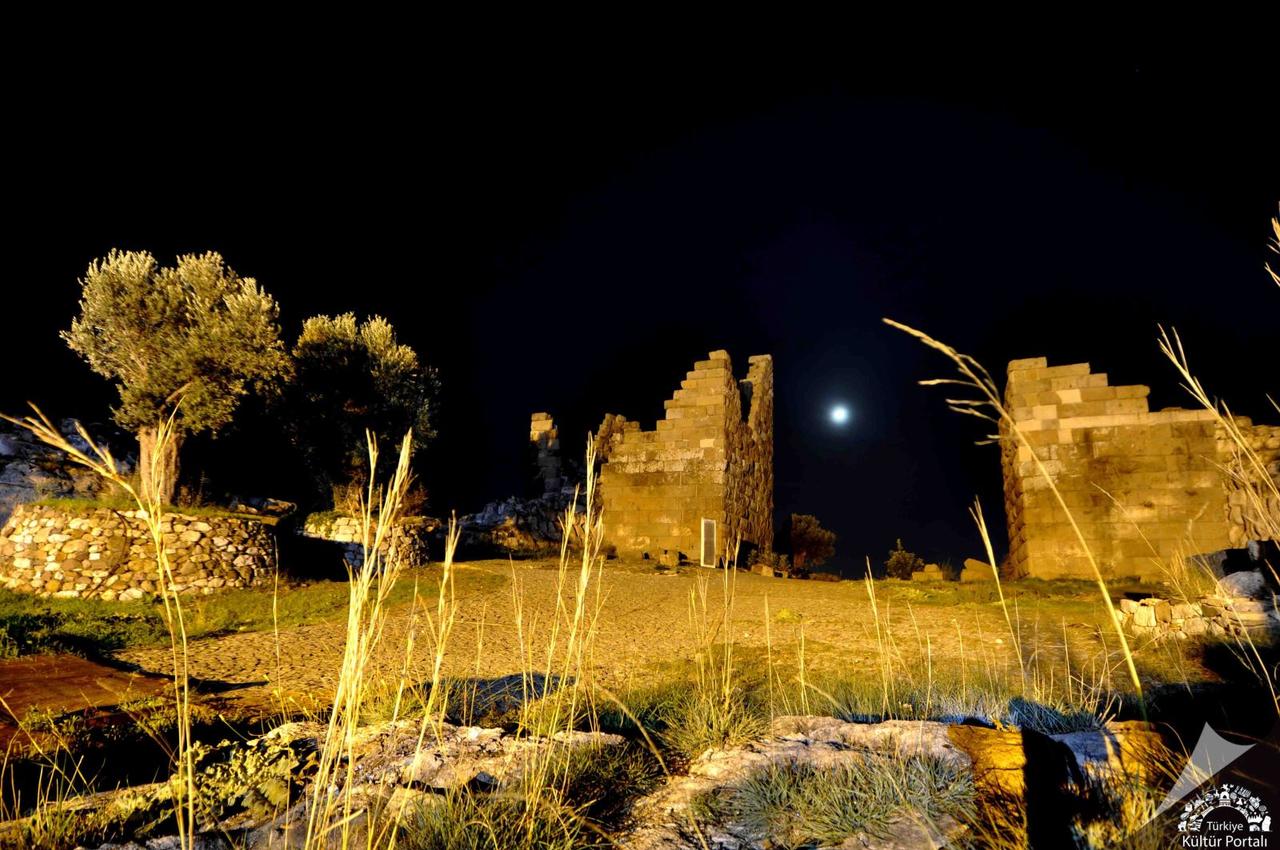
Today, remains visible above ground include a Byzantine church, sections of city walls, a breakwater, and fragments of towers. Subsurface findings include partially buried columns, mosaic fragments, and ceramic pieces. Excavations carried out by the Bodrum Museum of Underwater Archaeology have uncovered necropolis areas dating to the Early Bronze Age, and these artifacts are displayed in the museum.
In antiquity, Myndos was one of the regions known for wine production. Myndian wine was mixed with seawater and consumed, based on the belief that it was beneficial for the stomach; this practice was also observed in other parts of the ancient world. Written sources also confirm that olive cultivation was carried out during antiquity. During the time of Mausolus, the area near Gümüşlük known as Koyunbaba was used as a stone quarry.

No Discussion Added Yet
Start discussion for "Myndos Ancient City" article
History
Archaeological Investigations and Remains
Ancient Economy and Culture