


This article was automatically translated from the original Turkish version.
+1 More
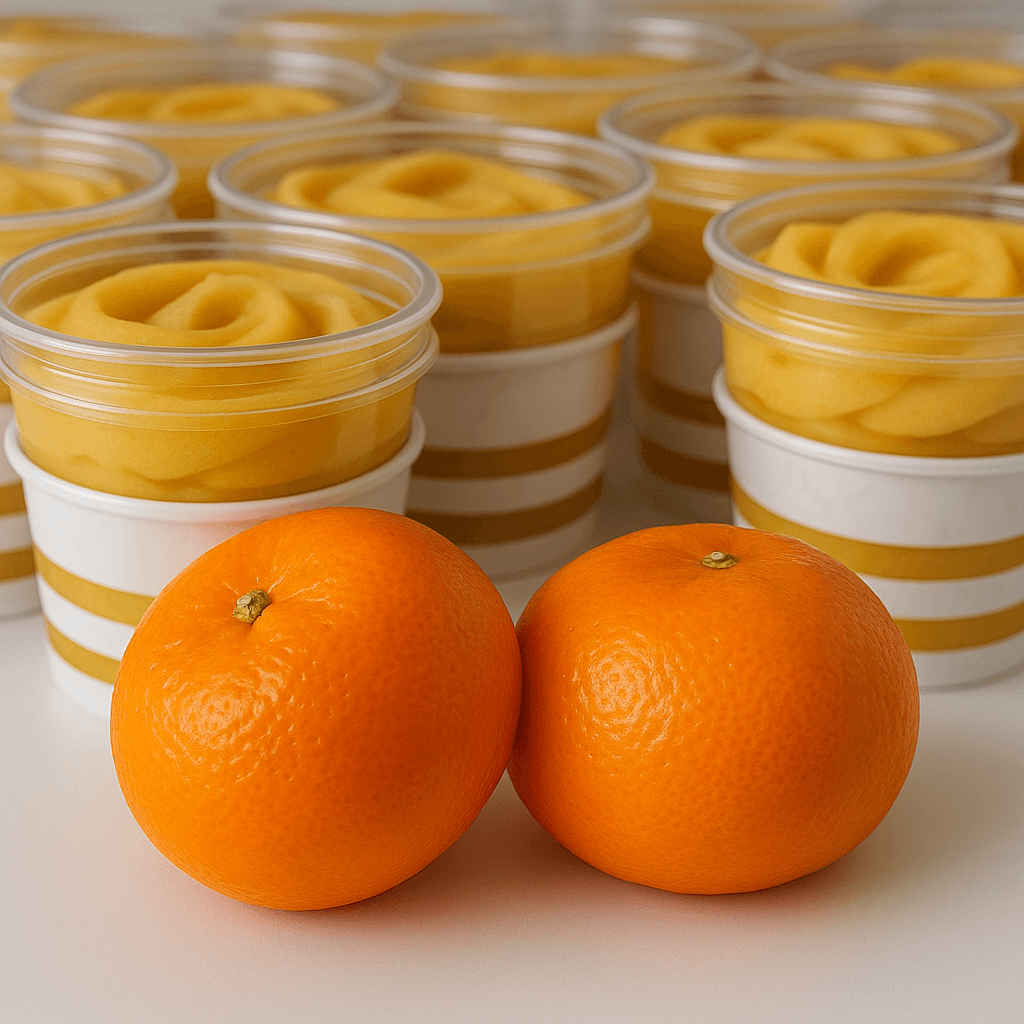
Bodrum Mandarin
Product / Product Group(s) | Processed and unprocessed fruits vegetables and mushrooms | ||||||||
|---|---|---|---|---|---|---|---|---|---|
Applicant/Registrant(s) | Bodrum Citrus Producers Union | ||||||||
Registration Date | 20.11.2012 | ||||||||
File Number | C2009/043 | ||||||||
Registration Number | 162 | ||||||||
Bodrum Mandarini is a geographical indication citrus product belonging to the species Citrus reticulata, cultivated on the Bodrum Peninsula in Türkiye’s Muğla Province. The product was officially registered by the Turkish Patent and Trademark Office on 3 December 2009 under the designation “Place of Origin”.
Bodrum Mandarini features small to medium-sized, flattened fruits. Its peel ranges from light yellow to orange, is thin and slightly rough in texture. The peel is easily removable and possesses a distinctive aromatic profile due to essential oils present in the rind. The pulp is crisp, highly juicy, and pleasantly fragrant. The average fruit weight is 87.6 grams, with a length of 52.65 mm and a width of 60.78 mm. The average number of seeds is 19, soluble dry matter content is 9.74%, titratable acidity is 1.23%, and juice content is 42.35%. The average peel thickness is 3.22 mm.
The Bodrum Peninsula is characterized by a microclimate where Aegean and Mediterranean climatic conditions converge. Summers are hot and dry, while winters are mild and low in humidity. The soil is calcareous and rich in minerals, with sufficient underground water sources. These environmental conditions determine the quality attributes of Bodrum Mandarini, including its color, aroma and flavor.

Bodrum Mandarini (GEKA)
Bodrum Mandarini is propagated by grafting buds onto rootstocks such as Troyer Citrange or Carrizo Citrange. Certified, virus-free seedlings are used. Planting distances vary according to soil structure and slope, ranging from 4.0–5.0 m between rows and 2.5–5.0 m within rows. Irrigation is carried out using sprinkler or drip systems, with drip irrigation being preferred. Fertilization is applied either through fertigation, depending on the irrigation method, or by mixing fertilizers into the soil.
Pruning is performed between January and February, prior to flowering. Flowering occurs in April and May; fruits develop in November and reach maturity in December. Full maturity is achieved after 15 December. Mature fruits can remain on the tree until the end of February but are highly sensitive to transport and storage.

Bodrum Mandarini (AA)
Harvesting is carried out with shears starting from 15 December. Fruits are placed in crates and transported to packing centers in boxes of 20–22 kg. Products packed in boxes of 8–16 kg can be stored for up to 10 days under suitable conditions, or for up to 21 days at temperatures between 4–6 °C.
Bodrum Mandarini is produced exclusively in the municipalities of Ortakent-Yahşi, Bitez, Gümüşlük, Turgutreis, Gündoğan, Konacık and Göltürkbükü on the Bodrum Peninsula, and in the villages under their jurisdiction.
Anadolu Ajansı. (2022). *Bodrum Mandalinasında Bu Yıl Rekolte Düştü*. Accessed May 27, 2025. https://www.aa.com.tr/tr/ekonomi/bodrum-mandalinasinda-bu-yil-rekolte-dustu/3062269
Güneyege Türkiye. (n.d.). *Bodrum Mandarini*. Accessed May 27, 2025. https://www.guneyegeturkiye.net/mekan/bodrum-mandarini
Turkish Patent and Trademark Office. (2009). *Bodrum Mandarini – Coğrafi İşaret Sicil Belgesi No: 162*. Accessed May 27, 2025. https://ci.turkpatent.gov.tr/cografi-isaretler/detay/38014

Bodrum Mandarin
Product / Product Group(s) | Processed and unprocessed fruits vegetables and mushrooms | ||||||||
|---|---|---|---|---|---|---|---|---|---|
Applicant/Registrant(s) | Bodrum Citrus Producers Union | ||||||||
Registration Date | 20.11.2012 | ||||||||
File Number | C2009/043 | ||||||||
Registration Number | 162 | ||||||||
Product Description and Distinctive Characteristics
Production Method
Harvest and Storage
Geographical Boundary and Monitoring