


This article was automatically translated from the original Turkish version.
+1 More
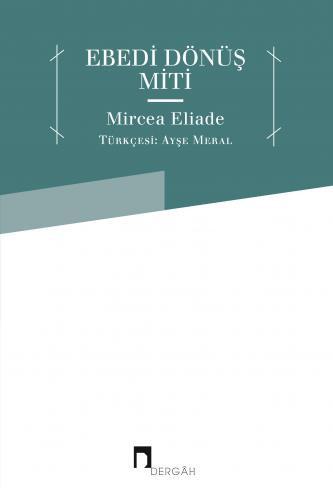
Eternal Return Myth (Book)
Author(s) | Mircea Eliade | ||||||||
|---|---|---|---|---|---|---|---|---|---|
Translator(s) | Ayşe Meral | ||||||||
Publisher(s) | Dergâh Yayınları | ||||||||
Publication Year | March 2022 (4th Edition) | ||||||||
Number of Pages | 171 | ||||||||
Genre | History of Religions Philosophy Mythology | ||||||||
The Myth of the Eternal Return is a foundational work by the Romanian scholar and historian of religions Mircea Eliade (1907–1986), renowned worldwide for his contributions to the history of religions and mythology. Translated into Turkish by Ayşe Meral and published by Dergâh Yayınları as part of its “Western Thought” series, this book examines how traditional societies perceive time, history, and cosmic cycles. First published in March 2017, the work comprises 171 pages and reached its fourth printing as of March 2022.
The Myth of the Eternal Return presents Mircea Eliade’s analysis of how traditional societies understand time, history, and existence. The book argues that, unlike modern societies, traditional societies perceive time as cyclical and as an eternal repetition. According to this view, neither objects in the external world nor human activities possess intrinsic value; rather, they acquire significance only insofar as they participate in the cosmic order and manifest the sacred.
Eliade contends in his work that cities, temples, and even homes were constructed according to this cosmic pattern, and that time and the universe sustain their existence through the continuous repetition of specific rituals, ceremonies, and myths. This cyclical understanding relies on the perpetual reenactment of sacred events and mythic ages in the present moment. Thus, the traditional human being escapes the destructive effects of history and the meaninglessness of existence by transforming every moment into a sacred beginning.
The book examines the manifestations of the “eternal return” myth across different cultures, analyzing the influence of archetypes, symbols, and rituals on human consciousness and social structures from philosophical and anthropological perspectives. Eliade’s work has significantly influenced subsequent scholarship in the fields of history of religions, mythology, anthropology, and philosophy.
The language and style of The Myth of the Eternal Return reflect Mircea Eliade’s academic and analytical approach. Ayşe Meral’s translation renders Eliade’s complex philosophical and mythological concepts clearly and fluently for Turkish readers. The text is written with a descriptive and objective perspective, containing no promotional or laudatory language. The author treats the mentality, rituals, and myths of traditional societies with scientific rigor while preserving the depth and significance of the subject. The book introduces readers to a different conception of time and invites them to reflect deeply on existence and history.
Mircea Eliade is one of the most important historians of religions, philosophers, and mythologists of the twentieth century. His works are known for their contributions to the phenomenological study of religion and have generated widespread academic interest through his novel perspectives on the distinction between the sacred and the profane, the structure and function of myths, and related themes.
The Myth of the Eternal Return is among Eliade’s best-known works and is regarded as a fundamental reference text in the fields of history of religions, mythology, anthropology, philosophy, and cultural studies. The book holds particular importance for its comparison between the modern individual’s anxiety toward history and the traditional individual’s methods of coping with this anxiety. Eliade’s work remains an indispensable source for students, scholars, and general readers seeking to understand the role of recurring patterns, rituals, and myths in collective consciousness throughout human history.
Eliade, Mircea. *Ebedi Dönüş Miti*. Translated by Ayşe Meral. İstanbul: Dergah Yayınları, 2017. Accessed July 8, 2025. https://www.dergah.com.tr/kitaplar/ebedi-donus-miti.

Eternal Return Myth (Book)
Author(s) | Mircea Eliade | ||||||||
|---|---|---|---|---|---|---|---|---|---|
Translator(s) | Ayşe Meral | ||||||||
Publisher(s) | Dergâh Yayınları | ||||||||
Publication Year | March 2022 (4th Edition) | ||||||||
Number of Pages | 171 | ||||||||
Genre | History of Religions Philosophy Mythology | ||||||||
No Discussion Added Yet
Start discussion for "Myth of Eternal Return (Book)" article
Content and Thematic Structure
Language and Style
The Author’s Position and the Work’s Significance