

This article was automatically translated from the original Turkish version.
+2 More
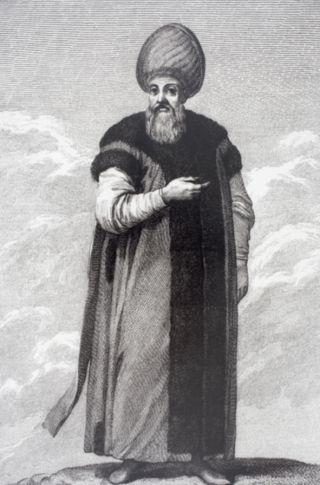
Nakîbü'l Eşraf is the title given to the official who, in Islamic states, oversaw the registration of the birth, death, lineage, and legal status of sayyids and sharifs; managed their affairs; and handled administrative, legal, and social matters concerning this group. The institution and office responsible for this role are known as the Nakîbü'l Eşraflık.
The term “nakîb” carries the meanings of supervisor, overseer, and representative in both lexical and practical usage. Within this framework, the Nakîbü'l Eşraf functioned as an official authority responsible for monitoring and safeguarding the social status and religious privileges of the sayyids and sharifs.
In Islamic tradition, descendants of Hasan ibn Ali are referred to as sharifs, while descendants of Husayn ibn Ali are called sayyids. The reverence accorded to the Ahl al-Bayt necessitated in Islamic societies the protection, documentation, and preservation of the rights of this group. This need laid the groundwork for the emergence of the Nakîbü'l Eşraflık institution over the course of history.
Due to their proximity to the Prophet, members of his family and close relatives were exempt from receiving zakat and sadaqa; instead, they were granted shares from war spoils. The Prophet entrusted the distribution of these shares to the Nakîbü'l Eşraf, a duty continued by Ali during the caliphates of Umar and Uthman. During the caliphate of Umar, when the diwan system was established, closeness to the Prophet became a key criterion for determining shares, and the names of those entitled to revenue were recorded. This practice enabled the identification of the Prophet’s direct lineage while also helping to prevent fraudulent claims of descent by impostors.
Following the Umayyad period, during which there was generally a hostile attitude toward the Ahl al-Bayt, the rise of the Abbasids created a favorable environment for the formalization of the nakîb institution. During the Abbasid era, an official titled “nakību’l-ensâb” was appointed in the central administration to maintain records of the Abbasids and the Alids, that is, descendants of Ali and Fatima. Although records for the Abbasids and Alids were kept separately, there were instances when both lines of descent were consolidated under a single official.
As the nakîb system became more widespread, local nakîbs were appointed in various regions to carry out these duties, and the central official overseeing them was given the title “nakībü’n-nükabâ.” During the caliphate of Al-Mutawakkil (847–861), it is documented that Umar al-Ruhhaci managed the affairs of the Alids. It is recorded that Ahmad ibn Abdussamad ibn Salih, known as Ibn Tumār, held the nakîb office for both the Abbasids and the Alids simultaneously; upon his death, the position passed to his son Muhammad.
Generally, nakîbs were selected from within the respective lineages of the Abbasids and Alids. In certain periods, the office of nakîb was combined with other roles such as emir of the pilgrimage, qadi, preacher, or vizier. Nakībü’n-nükabâs were appointed by caliphal decree and granted honorific titles such as “el-Murtazâ zü’l-mecdeyn,” “er-Rızâ zü’l-fahreyn,” “Nûrü’l-hüdâ,” and “et-Tâhir.” These individuals were sometimes also assigned duties related to the Sancak-ı Şerif and participated in official ceremonial protocols.
During this period, the duties of the nakîbs were defined as: maintaining records of individuals descended from the Prophet; ensuring adherence to the principle of marital equivalence; protecting their rights and preventing encroachment by others; distributing their allotted shares of revenue and spoils; and determining punishments for those who committed offenses.
The Nakîbü'l Eşraflık institution persisted in other Islamic states beyond the Abbasids, though its scope gradually narrowed. During the periods of the Tulunids, Ayyubids, Ilkhanids, and Mamluks, the institution concerned itself exclusively with descendants of Hasan and Husayn. It is also known that during the Anatolian Seljuk period, records of sayyids and sharifs were maintained, efforts were made to prevent genealogical confusion, their incomes were secured, and tax exemptions were granted to sayyids and sharifs engaged in trade.
The Ottoman State constructed its political and administrative structure upon the Turkish-Islamic tradition and derived much of its legitimacy from religious references. Within this framework, the reverence for sayyids and sharifs held a prominent place in Ottoman social structure. During the Turkification of Anatolia, sayyids and sharifs who migrated to the region were exempted from public service, granted berats, and supported through various waqfs and appointments.
The increasing number of sayyids and sharifs and the need to manage their privileges systematically rendered the establishment of the Nakîbü'l Eşraflık institution in the Ottoman State necessary. The institution’s founding is generally dated to the reign of Yıldırım Bayezid. During this period, Seyyid Ali Natta, who arrived in Bursa and claimed descent from Husayn ibn Ali, was recognized as the first Nakîbü'l Eşraf of the Ottoman State. In 1400, Seyyid Ali Natta was appointed to oversee the affairs of sayyids and sharifs; however, this duty was interrupted after the Battle of Ankara. He was reappointed as Nakîbü'l Eşraf during the reign of Murad II, but the institution was abolished under Fatih Sultan Mehmed.
The Nakîbü'l Eşraflık institution was reestablished during the reign of Bayezid II. In 1494, Seyyid Mahmud was appointed as the head of the sayyids and sharifs with the title of Nakîbü'l Eşraf, establishing the institutional framework that would endure until the end of the Ottoman Empire. The primary reasons for this reorganization included inappropriate conduct by some individuals claiming the title of sayyid, the rise in fraudulent claims of descent (müteseyyidlik), and the urgent need to bring this situation under control. During this period, the term Nâzır-ı Sâdât was abandoned, and the title Nakîbü'l Eşraf was formally adopted in accordance with usage in the Arab world.
The Nakîbü'l Eşraf was a high-ranking official within the Ottoman ilmiyye class and was typically selected from among sayyids or sharifs. In the early period, there was no requirement for the appointee to hold a high scholarly rank; however, from the eighteenth century onward, it became customary to appoint retired sayyids and sharifs who had previously served as kadis of Istanbul or kazaskers.
The Nakîbü'l Eşraflık held a significant position in Ottoman ceremonial hierarchy. During the accession of sultans, holiday greetings, ceremonies of the Sancak-ı Şerif, Mawlid celebrations, and visits to the Hırka-i Saadet, the Nakîbü'l Eşraf occupied a place in the front rows. It is also known that the sword-girding ceremonies of some sultans were performed by the Nakîbü'l Eşraf. These officials were also regarded as individuals whose prayers were believed to be accepted.
The duties of the Nakîbü'l Eşraf were extensive. Their primary responsibilities included:
Sayyids and sharifs who committed offenses were tried by the Nakîbü'l Eşraf in Istanbul and by his deputy kaymakams in the provinces. Punishments were carried out within the offices of the Nakîbü'l Eşraf, isolating the offenders from society. In cases requiring hadd punishments, the green turban was removed before the penalty was administered and then restored afterward. Preventing sayyid women from marrying individuals deemed unsuitable according to the principle of küfve also fell within the jurisdiction of the Nakîbü'l Eşraf.
The Nakîbü'l Eşraf had various officials under his authority, both in the center and in the provinces, including Nakîbü'l Eşraf kaymakams, alemdars, çavuşs, and kâtipls. The kaymakams stationed in the provinces maintained records of sayyids and sharifs and operated under central authority. Although the Nakîbü'l Eşraf did not have an official office, it is known that they generally carried out their duties from their residences.
Records pertaining to sayyids and sharifs were maintained in special registers known as Nakîbü'l Eşraf defterleri. A total of 39 Nakîbü'l Eşraf registers are preserved in the Istanbul Muftiate Meşihat Archives.【1】 These notebooks include alphabetical lists, siyâdet certificates, summary and inspection records, and documents concerning the appointment and dismissal of kaymakams. These registers serve as primary sources for verifying the identities of sayyids and sharifs and for preventing fraudulent claims. This archival series has been digitized in modern times.
The salaries of the Nakîbü'l Eşrafs varied according to their scholarly rank. In the early period, their daily salary was twenty-five akças; over time, this increased, reaching seventy-five akças by the end of the sixteenth century. Sayyids and sharifs were supported by the state through salary payments, as well as exemptions from military service and taxation, all of which were supervised by the Nakîbü'l Eşraf.
Işık, Ayhan. "Osmanlı’da Nakıbu’l-Eşrâflık Müessesesi ve Nakıbu’l-Eşrâf Defterleri." *İSAM.*, pp. 85-91. Accessed January 22, 2026. https://isamveri.org/pdfdrg/D03292/2007/2007_1/2007_1_ISIKA.pdf
Katgı, İsmail, and Murat Sarıcık. "Osmanlı Devleti’nde Nakîbü’l-Eşrâflık Müessesesi." *Uludağ Üniversitesi İlahiyat Fakültesi Dergisi* 21, no. 1 (2012): 175–184. Accessed January 22, 2026. https://dergipark.org.tr/en/pub/uluifd/issue/13476/162777
Türkiye Diyanet Vakfı İslam Ansiklopedisi. "Nakîbüleşraf." Accessed January 22, 2026. https://islamansiklopedisi.org.tr/nakibulesraf
Uzunçarşılı, İsmail Hakkı. "Osmanlılar’da Nakîbü’l-Eşraflık." *Marife Dini Araştırmalar Dergisi* 4, no. 3 (2004): 431–438. Accessed January 22, 2026. https://dergipark.org.tr/en/download/article-file/2218782
[1]
Işık, Ayhan. "Osmanlı’da Nakıbu’l-Eşrâflık Müessesesi ve Nakıbu’l-Eşrâf Defterleri." İSAM. 88. Erişim 22 Ocak 2026. https://isamveri.org/pdfdrg/D03292/2007/2007_1/2007_1_ISIKA.pdf

The Concepts of Sayyid and Sharif
Nakîbü'l Eşraflık in Pre-Ottoman Islamic States
The Emergence of Nakîbü'l Eşraflık in the Ottoman State
Reorganization During the Reign of Bayezid II
Status and Position within the Ilmiyye Institution
Duties and Authorities
Organizational Structure
Registers and Archival System
Salaries and Privileges