


This article was automatically translated from the original Turkish version.
Since I began my career in journalism, I have reviewed each year’s final two to three months to understand what has transpired in Türkiye through various channels. Naturally, the most reliable way to do this is by examining data, listening to academics, and reading reports published by official institutions for public awareness. The most valuable dataset that has captured my attention over the past three years is the NARKOLOG Report prepared by the Presidency for Combating Narcotic Crimes. The report offers a comprehensive perspective on Türkiye’s drug problem. Let us examine the 2025 report together.
The NARKOLOG Report, prepared by the Presidency for Combating Narcotic Crimes under the General Directorate of Security of the Ministry of Interior of the Republic of Türkiye, provides a detailed analysis of who uses drugs in Türkiye, under what conditions they live, which substances they prefer, and how this phenomenon transforms into family, societal, and security issues.
Based on testimonies from tens of thousands of users, this dataset is not merely composed of tables and graphs; it also presents a strategic snapshot that will guide Türkiye’s efforts in combating drugs.
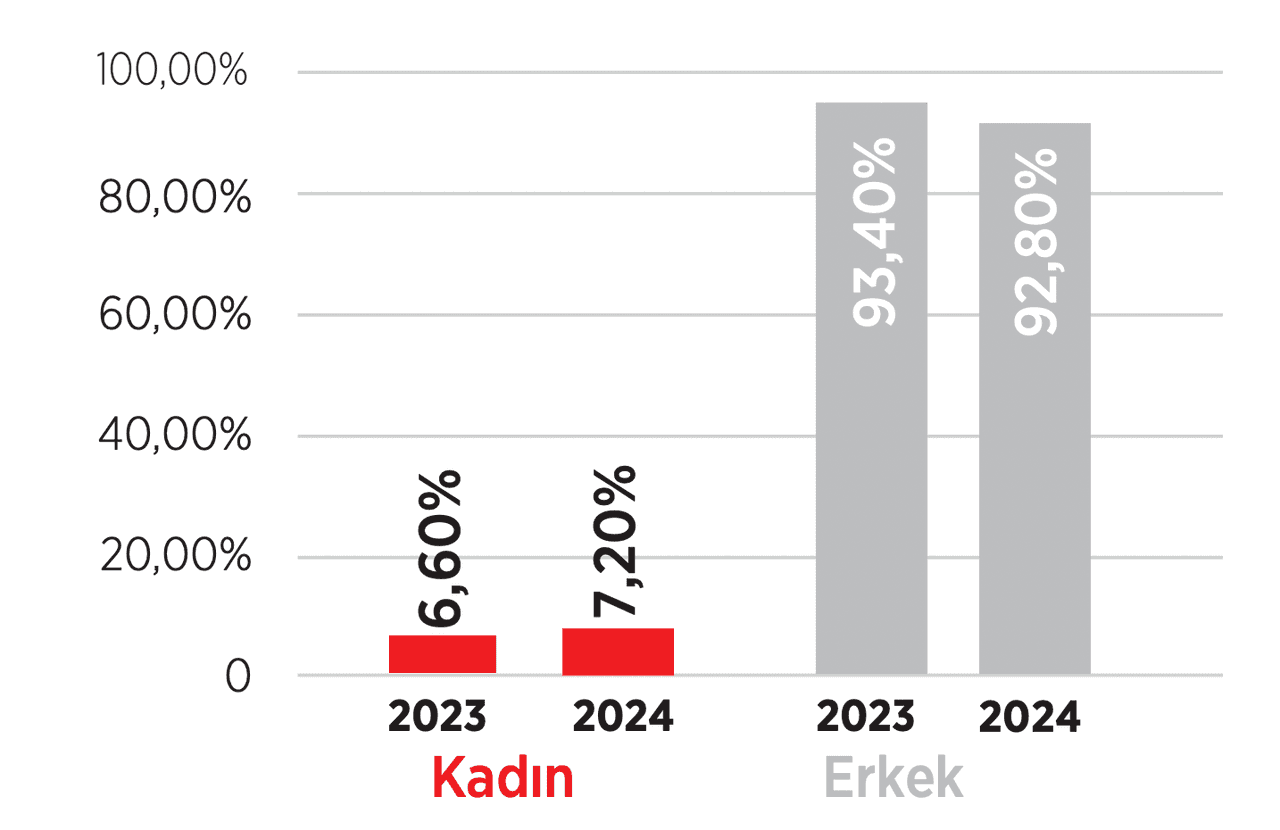
Gender Distribution - NARKOLOG 2025
According to the 2024 NARKOLOG data, the vast majority of the 18,620 individuals analyzed are male. Approximately 93% of the sample are men, with only 7% being women. This pattern demonstrates that drug-related offenses remain a predominantly male-dominated domain.
Of the participants, 83.6% live in provincial or district centers. Thus, the problem is not primarily rural but deepens in urban centers, where social density is highest.
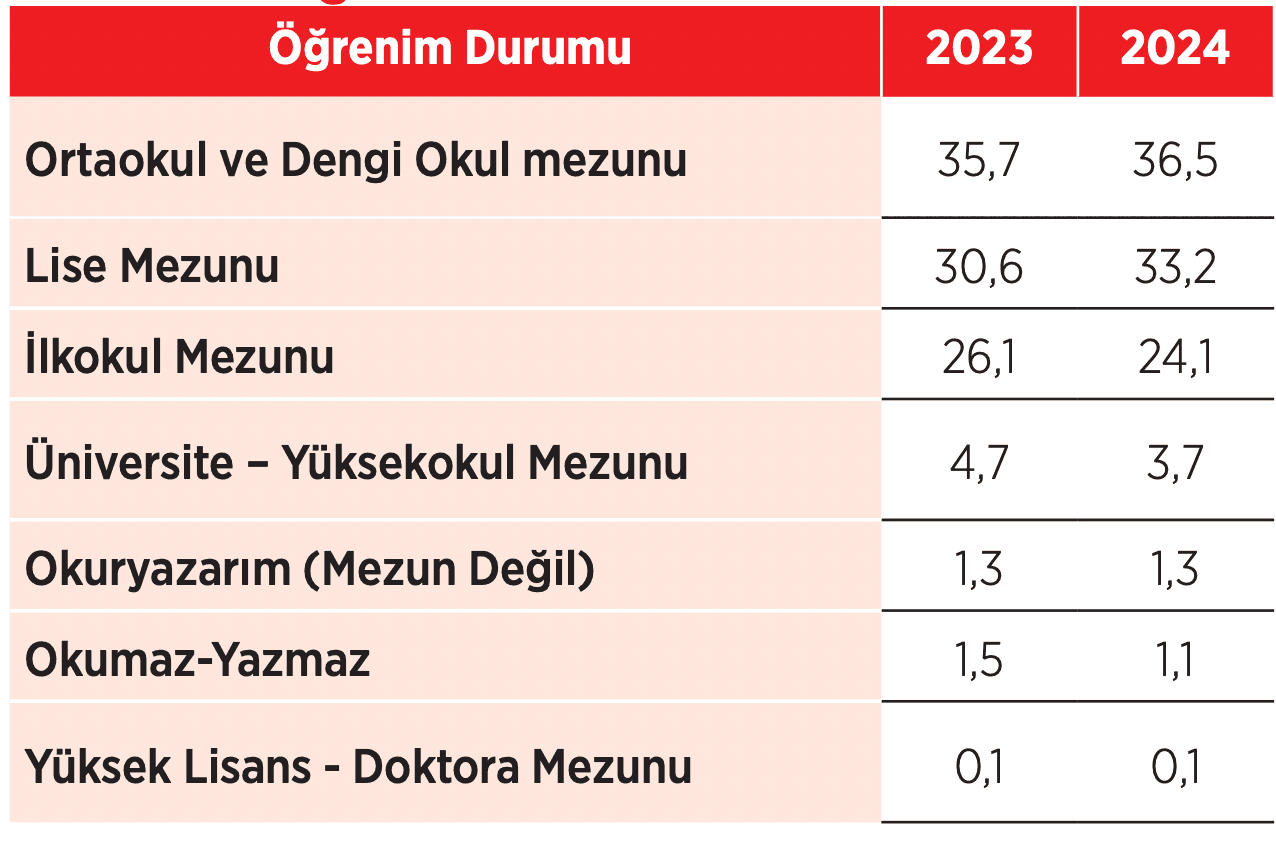
Educational Status - NARKOLOG 2025
Regarding education level, only 37% have completed high school or higher. This aligns with literature indicating that higher education correlates with lower likelihood of involvement in drug-related offenses. On the other hand, 60.8% of participants report having regular employment, with labor and construction sectors being the most common occupations. Thus, the drug problem cannot be simply explained by the cliché of a “jobless, entirely marginalized population.”
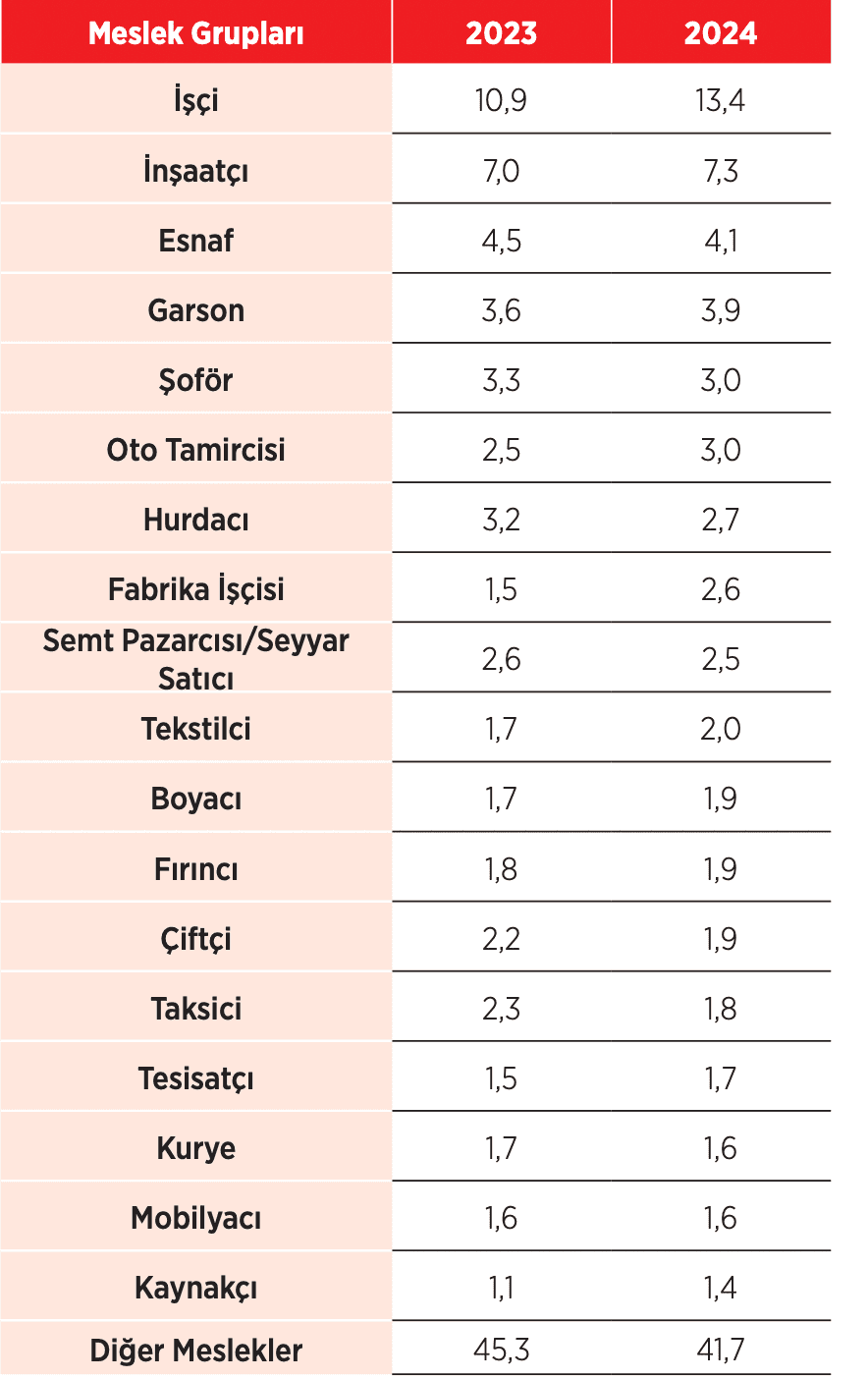
Occupational Distribution by Employment Status - NARKOLOG 2025
Data show that the majority of drug users do not live in isolation from their families; in fact, most continue to reside in the same household as their family members. 86.1% of the sample live with their families, and even among those who use drugs at home, 82.8% share the same roof with family members.
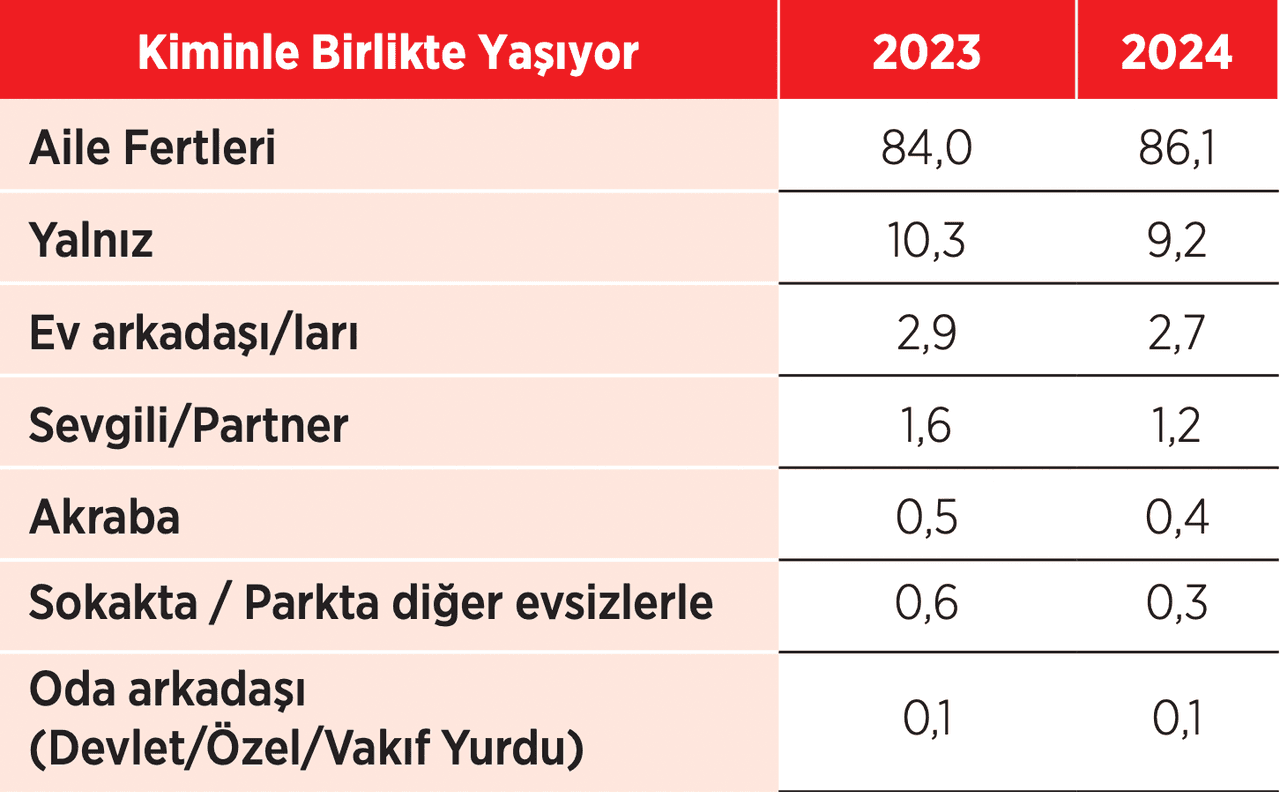
Who Do They Live With? - NARKOLOG 2025
The majority of mothers are homemakers, and a significant portion of fathers have regular incomes. Thus, a “non-working, disorganized family structure” alone cannot explain the phenomenon. Data on domestic violence also reveal a complex picture: more than one-third of participants report no violence within their families; however, when examining specific drug groups and female users, violence and conflict emerge far more prominently.
The average age of first drug use is around 22.5. However, the most at-risk group is those aged 15 to 24, which constitutes two-thirds of all users. To be more precise: initiation into drug use is predominantly confined to adolescence and early adulthood.
Prior to drug use, tobacco use stands at 83.3% and alcohol use at 38.8%. This suggests tobacco serves as a critical gateway to further substance use. As in most countries, the first substance tried in Türkiye is overwhelmingly cannabis, followed by methamphetamine and synthetic cannabinoids (bonzai).
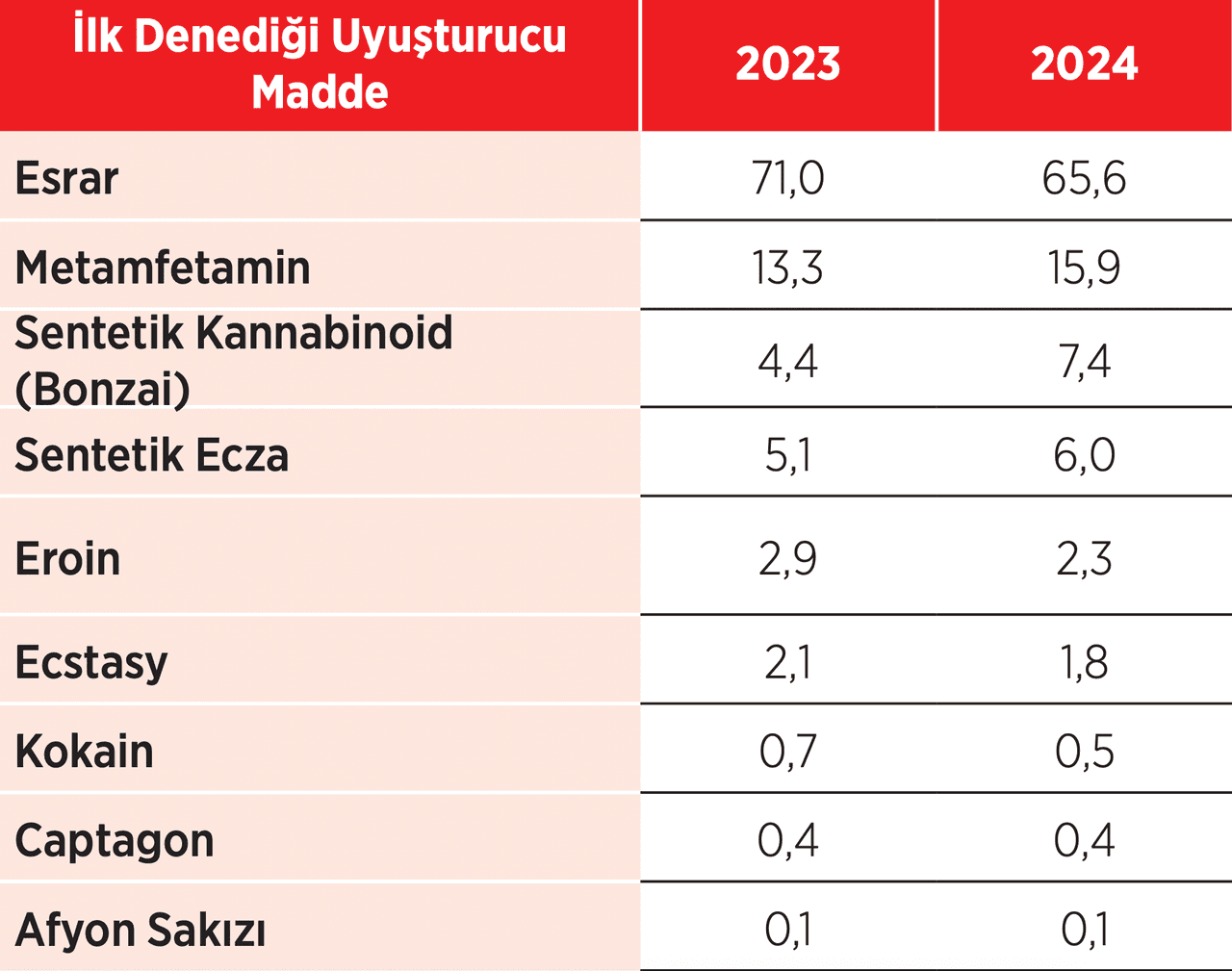
First Drug Tried - NARKOLOG 2025
A similar shift is observed over time in usage trends: cannabis remains the most common, but the rates of methamphetamine and bonzai use have risen significantly. This pattern indicates that cannabis often functions as a “gateway substance”, with a substantial portion of users progressing over time to more potent narcotics.
The most frequently cited reason for initiation is curiosity. More than one-third of participants explain their first use as driven by curiosity. Peer pressure and the pursuit of entertainment or pleasure further reinforce this motivation.
The primary source of initial access to drugs is overwhelmingly peer networks. 80.7% of participants report obtaining drugs for the first time from a friend or someone in their close circle. This transforms the drug problem from a mere individual choice into a matter of social environment and belonging.
According to NARKOLOG data, more than half of users consume drugs in their own homes. Use in public spaces has declined significantly compared to previous years. This reflects the impact of law enforcement pressure and monitoring mechanisms, while also indicating that drug use is becoming more hidden and confined to private spaces.
Families often recognize the problem too late. Only 43.1% of cases are known to the family, and on average, families become aware 17 months after the onset of use. The first family member to notice is most often the mother. This underscores that mothers are central to the process, both emotionally and observationally, highlighting how critical the role of mothers is in prevention and early intervention programs.
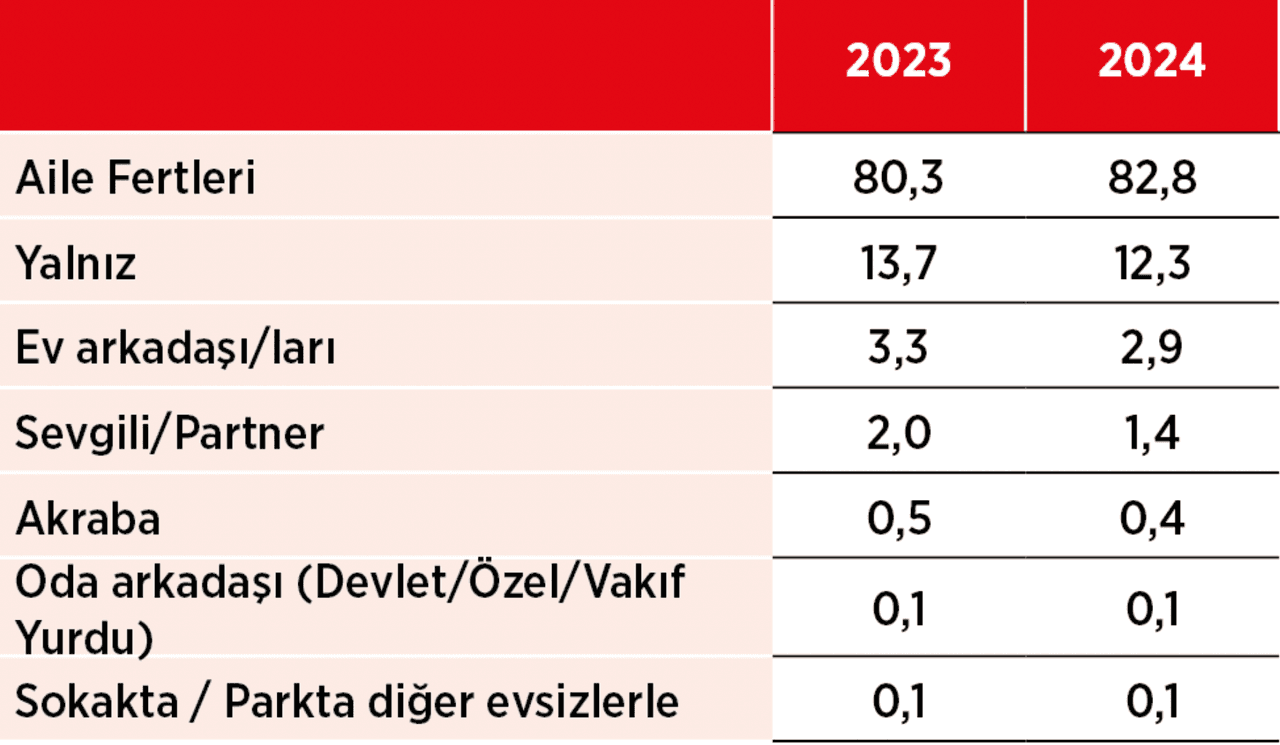
Who Do Those Who Use Drugs at Home Live With? - NARKOLOG 2025
Forty percent of participants report experiencing social difficulties, with deterioration of family relationships being the most prominent. Drug use is not merely an individual health and security issue; it emerges as a factor that damages family bonds and disrupts household equilibrium.
The second section of the report examines how specific user groups differ from the general profile. Two substances stand out particularly: methamphetamine and synthetic cannabinoids (bonzai).
Methamphetamine users constitute approximately 43% of the total sample. In this group, the proportion of women is higher than the overall average. Indicators such as living alone, being divorced, or initiating drug use within marriage occur more frequently than in other user groups.
When examining the reasons for initiation among methamphetamine users, it is clear that curiosity alone is not the primary driver; peer pressure, personal problems, and family conflicts also play significant roles. Rates of domestic violence and violence between spouses are higher in this group.
A notable observation is that methamphetamine users are more likely to attempt quitting and more frequently express a desire for treatment. At the same time, they are less likely to deny being addicted. This suggests that methamphetamine has a high addictive potential and rapidly pushes users to recognize their problem.
Use occurs not only at home but also in abandoned buildings, derelict structures, hotels, and daily rental properties. Additionally, methamphetamine users show a higher rate of encounters with crimes such as violations of firearms regulations.
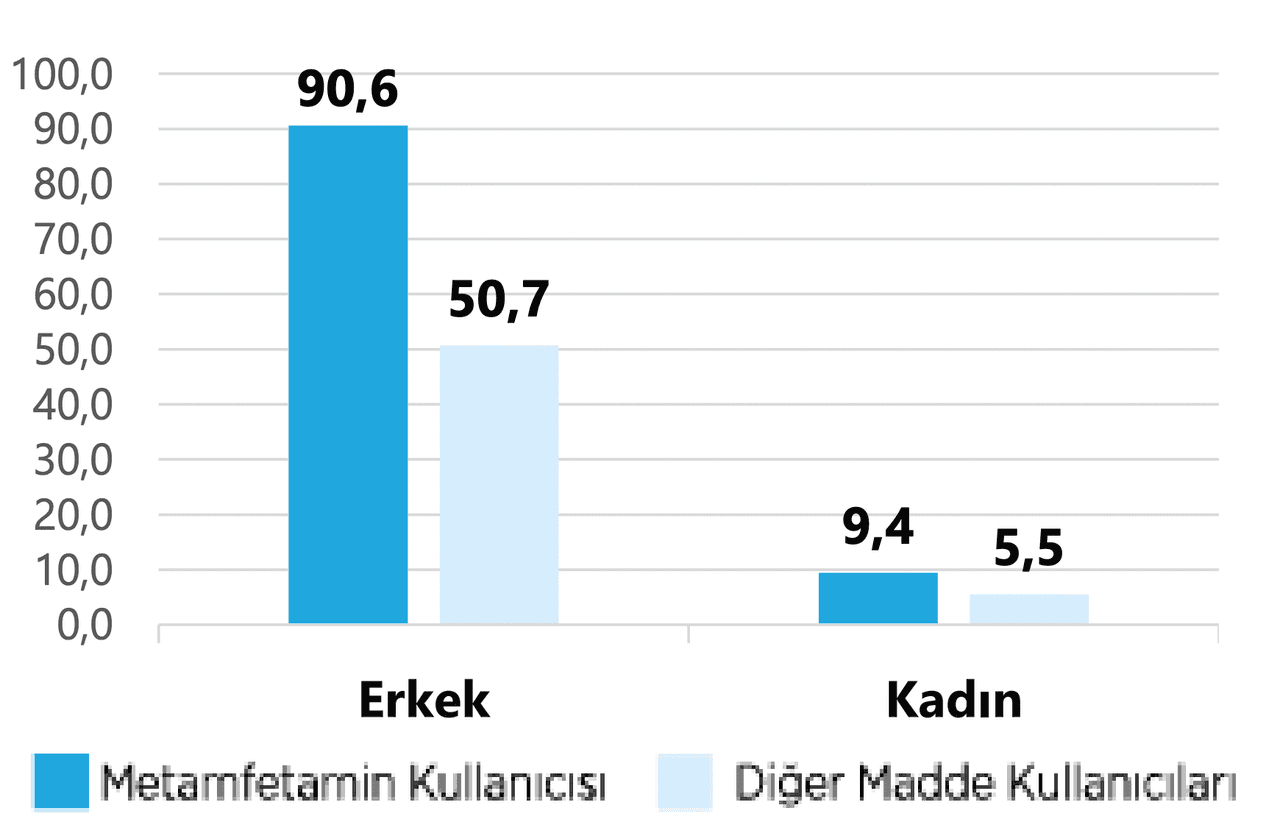
Gender Distribution Among Methamphetamine Users - NARKOLOG 2025
Users of synthetic cannabinoids (bonzai) form approximately 24% of the sample. This group has a lower age of initiation and a lower educational level than the general profile. Non-literate individuals and those with only primary or middle school education are relatively more numerous in this group. The proportion reporting “regular employment” is low, while the proportion working in casual labor is high.
Regarding family structure, low parental cohabitation and high rates of domestic violence and conflict are striking. Family-related problems are more frequently cited as reasons for initiation; entertainment, pleasure-seeking, and escapism are also significant triggers.
Among bonzai users, property-related crimes (such as theft) are more prevalent. This reveals that drug use reinforces a cycle of economic pressure, criminal behavior, and social exclusion.
Although the overall user population is predominantly male, data on female users present a distinct alarm. Women have higher educational levels than men, with a greater proportion holding high school or university degrees. Yet, unemployment rates among women are significantly higher. Among employed women, jobs in the service sector—such as waitressing, hairdressing, cashiering, and cleaning—are most common.
Women begin using drugs later than men but show a stronger tendency to move toward heavier substances such as methamphetamine, heroin, synthetic drugs, and ecstasy. Personal problems, family issues, and peer pressure are more frequently cited as reasons for initiation.
Rates of domestic violence, divorce, and parental conflict in the family history are also much higher among female users. Often, their first substance is obtained through a partner or romantic partner, demonstrating how relationship dynamics can be decisive in drug use. Use occurs most frequently at home, at friends’ homes, or in hotels and daily rental spaces.
The NARKOLOG Project is a system designed not merely to track how many drugs are seized, but to understand who the users are in the fight against drugs.
The collected data scientifically identify:

NARKOLOG Cover Image - NARKOLOG 2025
This enables more targeted actions across numerous areas—from designing educational campaigns and planning social services to developing school-based programs and family-focused awareness initiatives.
We can summarize NARKOLOG with this metaphor:
This report functions like a navigation chart for a vessel combating drugs. It does not merely indicate where dangerous waters lie (drug use), but also where the people caught in those waters come from (demographic and family profiles), why they set sail (initiation reasons), and which currents (specific risks of substances like methamphetamine and bonzai) are driving them toward certain destinations. With this knowledge, enforcement teams can now chart their course not in darkness, but in the light of scientific data.
T.C. Ministry of Interior General Directorate of Security, Narcotic Crimes Combatting Presidency. *NARKOLOG 2025*. Accessed November 20, 2025.https://www.narkotik.pol.tr/kurumlar/narkotik.pol.tr/TUB%C4%B0M/Ulusal%20Yay%C4%B1nlar/2025-NARKOLOG-SON.pdf
Who Uses Drugs? General Profile: Young, Male, Urban
Family Dynamics: Invisible Distance Within the Same Home
Age of Initiation, First Substances, and the Cost of Curiosity
Home Use, Delayed Recognition, and the Role of the Family
Methamphetamine and Bonzai: Special Profiles, Higher Risks
Methamphetamine Users: High Addiction, High Conflict
Bonzai Users: Low Education, High Vulnerability
Female Users: Later Onset, Heavier Substances
What Is the Purpose of NARKOLOG? From Data to Strategy
