This article was automatically translated from the original Turkish version.
Category | Experimental Oblique Wing Aircraft | ||||||||
|---|---|---|---|---|---|---|---|---|---|
Origin(s) | USA (NASA) | ||||||||
Engine(s) | Two Ames Industrial TRS-18 turbojet engines | ||||||||
Crew | 1 | ||||||||
First Flight(s) | 1979 | ||||||||
Wing Angle | 0° (vertical) - 60° (maximum tilt) | ||||||||
Empty Weight | 658 kg | ||||||||
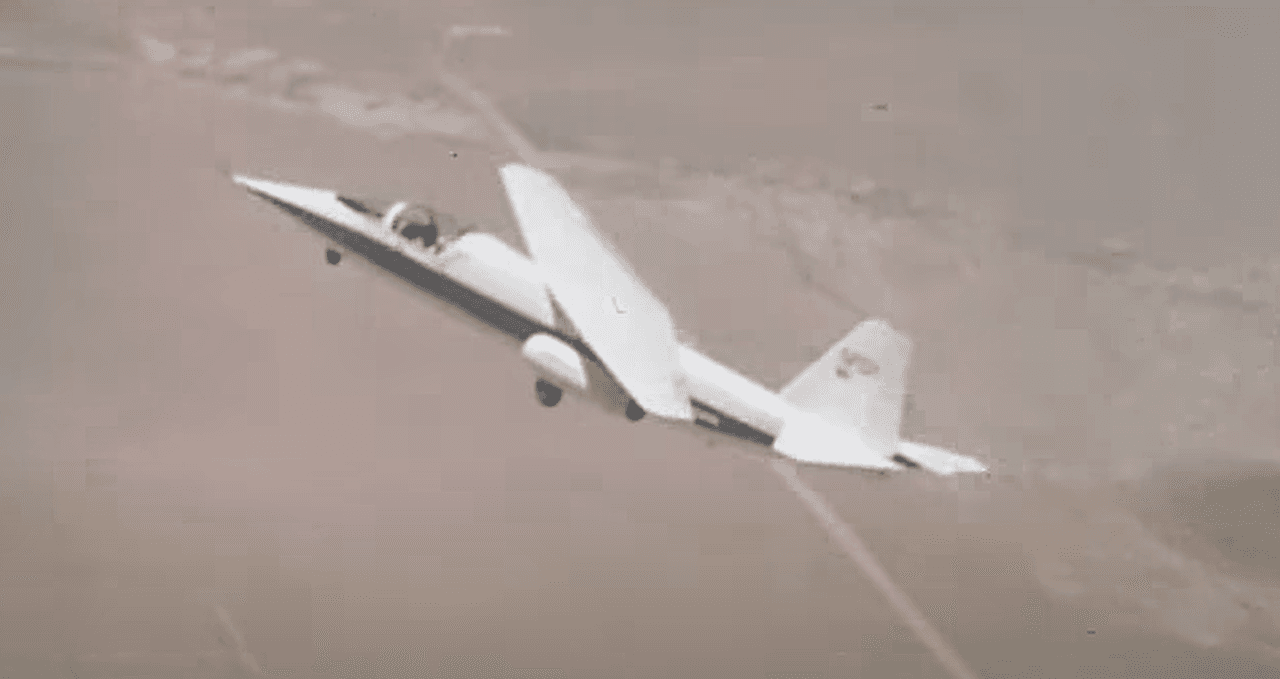
NASA AD-1 (Ames-Dryden-1) is a single-engine experimental aircraft from aviation history featuring wings that can be pivoted up to 60 degrees relative to the fuselage. This innovative design was developed by NASA’s Ames and Dryden (now Armstrong) Research Centers in the 1970s to test the low-speed behavior of the “oblique wing” concept. The aircraft’s primary objective was to improve fuel efficiency by positioning its wings at varying angles, thereby optimizing both takeoff and landing performance as well as cruise speed performance.

NASA AD-1 (NASA Video)
The most distinctive feature of the AD-1 is its wings, which rotate around a single pivot point. This concept was proposed by NASA engineer Robert T. Jones to reduce aerodynamic drag at supersonic speeds and thereby achieve higher speeds and greater range with less fuel consumption. The project was launched in 1975 with a budget of $240,000 and was intended to serve as a low-cost research platform.
NASA AD-1 (NASA Video)
The AD-1 completed a total of 79 flights between 1979 and 1982. This test program was designed to examine the effects of wing sweep angle on the aircraft’s control characteristics and performance.
The AD-1 project concluded with its final flight in 1982. The project demonstrated the feasibility of the oblique wing concept at low speeds and provided valuable data on the aerodynamic and control challenges that arise at high speeds. The findings laid a foundation for future aircraft designs. Although plans were considered to modify an F-8 fighter jet for supersonic testing of the concept, these plans were later canceled. Today, the AD-1 aircraft is on display at the Dryden Flight Research Center at Edwards Air Force Base in California.
HistoryNet. "Flying at an Oblique Angle: The NASA AD-1." Accessed August 16, 2025. https://www.historynet.com/flying-at-an-oblique-angle-the-nasa-ad-1
Mentour Pilot. "NASA AD-1 – What Was It, And Could We See It Again?" Accessed August 16, 2025. https://mentourpilot.com/nasa-ad-1-what-was-it-and-could-we-see-it-again
NASA Video. "AD-1 Wing Pivoting in Flight." YouTube. Accessed August 16, 2025.
NASA. "AD-1." Accessed August 16, 2025. https://www.nasa.gov/reference/ad-1/
NASA. "NASA Dryden Fact Sheet: AD-1 Oblique-Wing Research Aircraft." Accessed August 16, 2025. https://www.nasa.gov/wp-content/uploads/2021/09/fs-019_afrc.pdf
Plane Historia. "The NASA AD-1 - Flying Scissors." Accessed August 16, 2025. https://planehistoria.com/ad-1
UAS. "Unique Flying Machines: NASA AD-1." Accessed August 16, 2025. https://www.uas.aero/unique-flying-machines-nasa-ad-1

Category | Experimental Oblique Wing Aircraft | ||||||||
|---|---|---|---|---|---|---|---|---|---|
Origin(s) | USA (NASA) | ||||||||
Engine(s) | Two Ames Industrial TRS-18 turbojet engines | ||||||||
Crew | 1 | ||||||||
First Flight(s) | 1979 | ||||||||
Wing Angle | 0° (vertical) - 60° (maximum tilt) | ||||||||
Empty Weight | 658 kg | ||||||||
Development and Unique Design Features
Flight Test Program and Obtained Data
Project Conclusion and Legacy