
This article was automatically translated from the original Turkish version.
Date of Acceptance | 11 | ||||||||
|---|---|---|---|---|---|---|---|---|---|
Name | NATO Hymn | ||||||||
Affiliated Institution | North Atlantic Treaty Organization (NATO) | ||||||||
Composer | André Reichling | ||||||||
Date of Composition | 1989 | ||||||||
Official Acceptance Date | 3 January 2018 | ||||||||
Approving Body | North Atlantic Council | ||||||||
Status Before Official Recognition | Was used as NATO's de facto anthem between 1989 and 2018 | ||||||||
Lyrics | None (entirely instrumental) | ||||||||
First Actual Usage | NATO's 40th anniversary celebrations (1989) | ||||||||
The NATO Hymn is an instrumental musical composition officially approved by the North Atlantic Council on 3 January 2018 to represent the institutional identity and unity of the North Atlantic Treaty Organization (NATO). 【1】
NATO 10th Anniversary Song (Bing Crosby)
The first efforts to create an official hymn for NATO date back to the late 1950s. As the alliance approached its 10th anniversary in 1959, numerous composers submitted their compositions for consideration as the official hymn, but these initial proposals were rejected by NATO. In 1958, British diplomat Thomas Hildebrand Preston composed a "NATO ceremonial march" to greet visitors at NATO Headquarters in the Palais de Chaillot in Paris.
In 1959, Captain Hans Lorenz of the German Air Force, together with Dutch Captain Stephanus van Dam and American Leon van Leeuwen, created a lyrical "NATO Song," which was performed by an orchestra and choir during the alliance’s 10th anniversary ceremonies. That same year, a different "NATO Song," composed by Bing Crosby as part of a U.S. government publicity campaign, was also made public. In 1960, British Air Marshal Sir Edward Chilton proposed a march composed by combining the national anthems of the then 15 member states, arranged by Fleet Commander JL Wallace.【2】
During the celebration of NATO’s 40th anniversary in 1989, the composition "NATO Hymn" by Captain André Reichling, conductor of the Luxembourg Military Band, emerged as the most successful proposal. At the same event, the "Atlantic Hymn," composed in 1952 by Portuguese composer José Ludovice and the only choral piece ever written specifically for NATO, was also performed.
Reichling’s composition gained popularity from 1989 onward and was played at numerous NATO events, being widely accepted as the organization’s de facto anthem for approximately 30 years. During this period, the piece was also performed at high-level diplomatic gatherings such as the Meeting of Allied Heads of State and Government in May 2017.【3】
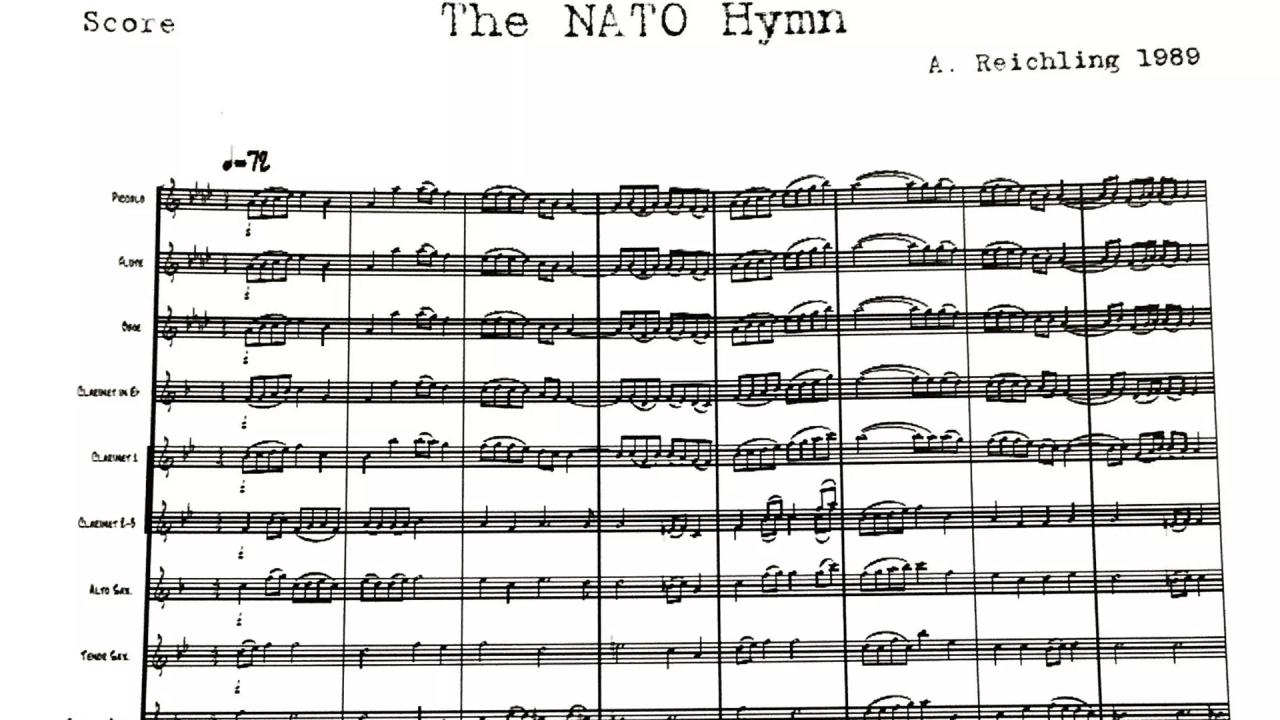
NATO Hymn Sheet Music (NATO)
The NATO Hymn is entirely instrumental and contains no lyrics. The composition is scored for a total of twenty instruments. This ensemble includes piccolo, flute, oboe, three clarinets, three saxophones, two cornets, two trumpets, horn, baritone horn, three trombones, tuba, and trumpet. The absence of lyrics allows the music to serve as a universal language, consistent with NATO’s multicultural structure.【4】
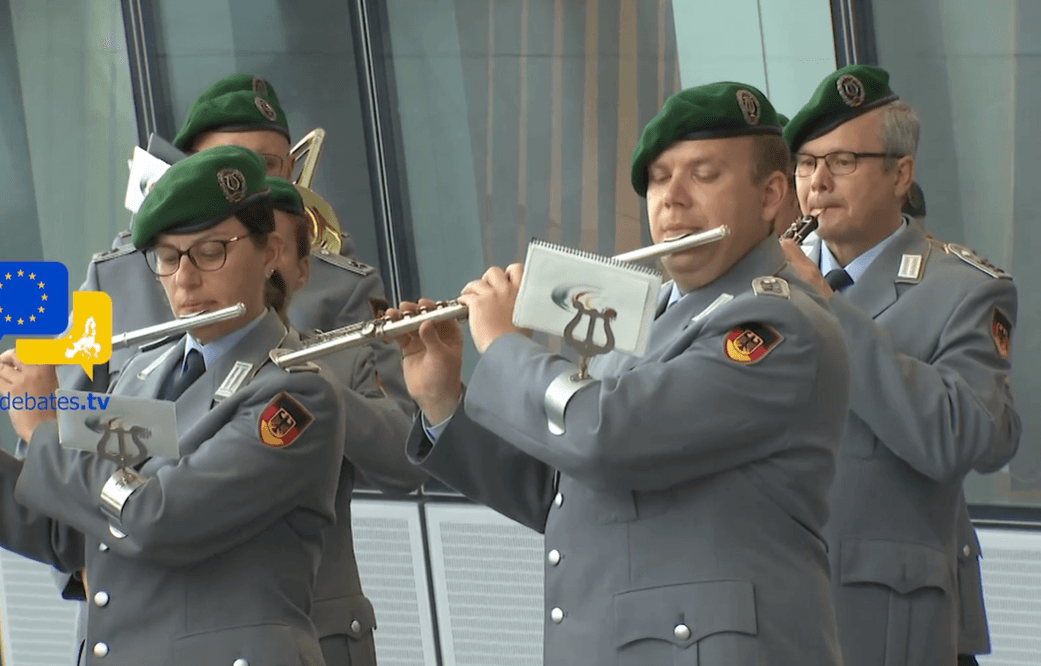
NATO Hymn (EU Debates | eudebates.tv)
Following approximately thirty years of de facto use, Captain André Reichling’s 1989 composition was officially adopted as NATO’s first official hymn on 3 January 2018 by the North Atlantic Council.
After its formal adoption, the hymn was performed as the opening piece at a concert by the Oxford Philharmonic Orchestra held at NATO’s new headquarters in Brussels in 2019 to mark the alliance’s 70th anniversary. It continues to be performed by ensembles such as the Bundeswehr Military Band at significant diplomatic and military ceremonies, including the planned 2025 celebrations marking the 70th anniversary of Germany's accession to NATO.【5】
Accessed November 26, 2025. https://www.aa.com.tr/tr/kultur/ahlatta-acilan-kurslarla-geleneksel-tas-isciligi-yasatiliyor/3116279.
Accessed November 26, 2025. https://www.aa.com.tr/tr/kultur/ahlatta-acilan-kurslarla-geleneksel-tas-isciligi-yasatiliyor/3116279.
Bing Crosby. "The NATO Song." YouTube. Accessed June 26, 2026.
EU Debates | eudebates.tv. "NATO Hymn - United in Harmony: Bundeswehr's Emotional NATO Anthem Performance | 70 Years Together." YouTube. Accessed June 26, 2026.
NATO. "NATO OTAN official hymn." Accessed June 26, 2026. https://www.nato.int/en/news-and-events/articles/news/2018/01/04/nato-adopts-official-hymn
NATO. "NATO's milestone anniversaries." Accessed June 26, 2026. https://www.nato.int/en/about-us/nato-history/history-by-theme/symbols-of-nato/special-anniversaries
NATO. "TheNATO OTAN." Accessed June 26, 2026. https://www.nato.int/en/about-us/nato-history/history-by-theme/symbols-of-nato/nato-hymn
[1]
NATO OTAN. "NATO adopts official hymn" Access Date 26 June 2026. https://www.nato.int/en/news-and-events/articles/news/2018/01/04/nato-adopts-official-hymn
[2]
NATO OTAN. "NATO's milestone anniversaries." Access Date 26 June 2026. https://www.nato.int/en/about-us/nato-history/history-by-theme/symbols-of-nato/special-anniversaries
[3]
NATO OTAN. "NATO adopts official hymn" Access Date 26 June 2026. https://www.nato.int/en/news-and-events/articles/news/2018/01/04/nato-adopts-official-hymn
[4]
NATO OTAN. "NATO's milestone anniversaries." Access Date 26 June 2026. https://www.nato.int/en/about-us/nato-history/history-by-theme/symbols-of-nato/special-anniversaries
[5]
NATO OTAN. "The NATO Hymn." Access Date 26 June 2026. https://www.nato.int/en/about-us/nato-history/history-by-theme/symbols-of-nato/nato-hymn

Date of Acceptance | 11 | ||||||||
|---|---|---|---|---|---|---|---|---|---|
Name | NATO Hymn | ||||||||
Affiliated Institution | North Atlantic Treaty Organization (NATO) | ||||||||
Composer | André Reichling | ||||||||
Date of Composition | 1989 | ||||||||
Official Acceptance Date | 3 January 2018 | ||||||||
Approving Body | North Atlantic Council | ||||||||
Status Before Official Recognition | Was used as NATO's de facto anthem between 1989 and 2018 | ||||||||
Lyrics | None (entirely instrumental) | ||||||||
First Actual Usage | NATO's 40th anniversary celebrations (1989) | ||||||||
Historical Development and Initial Proposals
Captain André Reichling’s Composition and Practical Use
Technical Features and Instrumentation
Official Adoption and Subsequent Performances