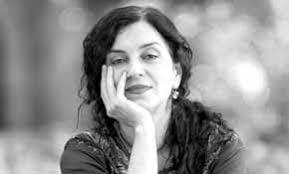
+1 More

Doğum tarihi | 1957-05-03 | ||||||||
|---|---|---|---|---|---|---|---|---|---|
Yaş | 68 | ||||||||
Educational Life | Associate Professorship: With the study 'Poet Nigâr Hanım' (1995) PhD: On Halide Edip Adıvar Master's: On Ömer Seyfettin (1981) Atatürk University Department of Turkish Language and Literature (1979) Trabzon High School (1974) Trabzon İskenderpaşa Primary School (1968) | ||||||||
Award(s) | 1987: Mention for the study Ruh Adam 2006: TYB Short Story Award (Cam Irmağı Taş Gemi) 2003: TYB Essay Award (Cümle Kapısı) | ||||||||
Institutions Served | Trabzon University Karadeniz Technical University (KTÜ) | ||||||||
Nazan Bekiroğlu was born in 1957 in Trabzon as the third child of Sabri and Nuran Karanis. She spent her early childhood years in the Pazarkapı neighborhood, in a mansion with a sea view. Her father was a journalist interested in history and literature and the owner of the local newspaper “Hedef.” Her mother was a cultured and disciplined individual of Azerbaijani origin. To preserve her Turkish language, her family restricted Bekiroğlu’s playtime on the streets during childhood and carefully selected her peer group. As a result, her speech does not include the Black Sea dialect. Because her physical features resemble her mother’s, she has found it difficult to establish kinship ties with Trabzon’s established families. She is a mother of two children, whose names are Didar and Nilbeste. Family structure and individual values frequently reflect in her works.
She completed her primary education in 1968 at Trabzon İskenderpaşa Primary School and her secondary education in 1974 at Trabzon High School. In 1979, she graduated from the Department of Turkish Language and Literature at Erzurum Atatürk University. In 1981, she completed her master’s degree with a thesis titled “Europe and the Turks in Ömer Seyfettin’s Stories.” She earned her doctorate in 1987 with a dissertation titled “A Technical Analysis of Halide Edip Adıvar’s Novels,” supervised by Orhan Okay. In 1995, she attained the rank of associate professor with her work titled “Poet Nigâr Hanım.”
She began her literary career in 1985 with articles published in the journal Dolunay, which was under the editorship of Bahattin Karakoç. Subsequently, her writings, essays, stories, and scholarly articles appeared in journals such as Millî Kültür, Türk Edebiyatı, Yedi İklim, Milli Eğitim, and Dergâh, as well as in newspapers Yeni Ufuk and Zaman.
Although she initially wrote poetry, she turned to prose under the guidance of Mustafa Kutlu. This transition enhanced the poetic elements in her narrative style. In her stories, she avoids delivering direct messages and emphasizes the reader’s emotional engagement with the text.
Bekiroğlu’s language features a structure rich in poetic quality, deep meaning, and symbolic elements. Her narrative is marked by long, comma-separated sentences, frequent use of ellipses, and meticulous word choice. Her texts frequently draw on themes derived from Sufism, classical literature, mythology, and history. Her verb structures and linguistic organization are well suited to academic analysis.
In addition to short stories and novels, Bekiroğlu has produced works in the essay genre. To date, seven essay collections have been published. She has also written biographical works on Şair Nigâr Hanım and Halide Edib Adıvar. In 2015, a lengthy interview she conducted with cartoonist Hikmet Aksoy was compiled into a book titled “Karınca İzleri.”
Aşcı, Menşure. "Nazan Bekiroğlu’nun Romanlarında Karmaşık Fiiller." Folklor Akademi Dergisi, Volume 8, Issue 1, 2025, pp. 112–140.
Değirmenci, Hakan. "Analitik Psikoloji Kuramı Bağlamında Nazan Bekiroğlu’nun ‘Nar Ağacı’ Romanındaki Kişilik Tipleri." Kesit Akademi Dergisi, Volume 6, Issue 25, 2020, pp. 528–542.
Tonga, Necati. "Nazan Bekiroğlu." Türk Edebiyatı İsimler Sözlüğü (TEİS).
Trabzon Üniversitesi. "Prof. Dr. Nazan Bekiroğlu’nun Emekliliği."

Doğum tarihi | 1957-05-03 | ||||||||
|---|---|---|---|---|---|---|---|---|---|
Yaş | 68 | ||||||||
Educational Life | Associate Professorship: With the study 'Poet Nigâr Hanım' (1995) PhD: On Halide Edip Adıvar Master's: On Ömer Seyfettin (1981) Atatürk University Department of Turkish Language and Literature (1979) Trabzon High School (1974) Trabzon İskenderpaşa Primary School (1968) | ||||||||
Award(s) | 1987: Mention for the study Ruh Adam 2006: TYB Short Story Award (Cam Irmağı Taş Gemi) 2003: TYB Essay Award (Cümle Kapısı) | ||||||||
Institutions Served | Trabzon University Karadeniz Technical University (KTÜ) | ||||||||
No Discussion Added Yet
Start discussion for "Nazmiye Nazan Bekiroğlu" article
Education and Academic Career
Writing Career
Narrative Style and Language Use
Notable Works
Other Works