

This article was automatically translated from the original Turkish version.
+1 More
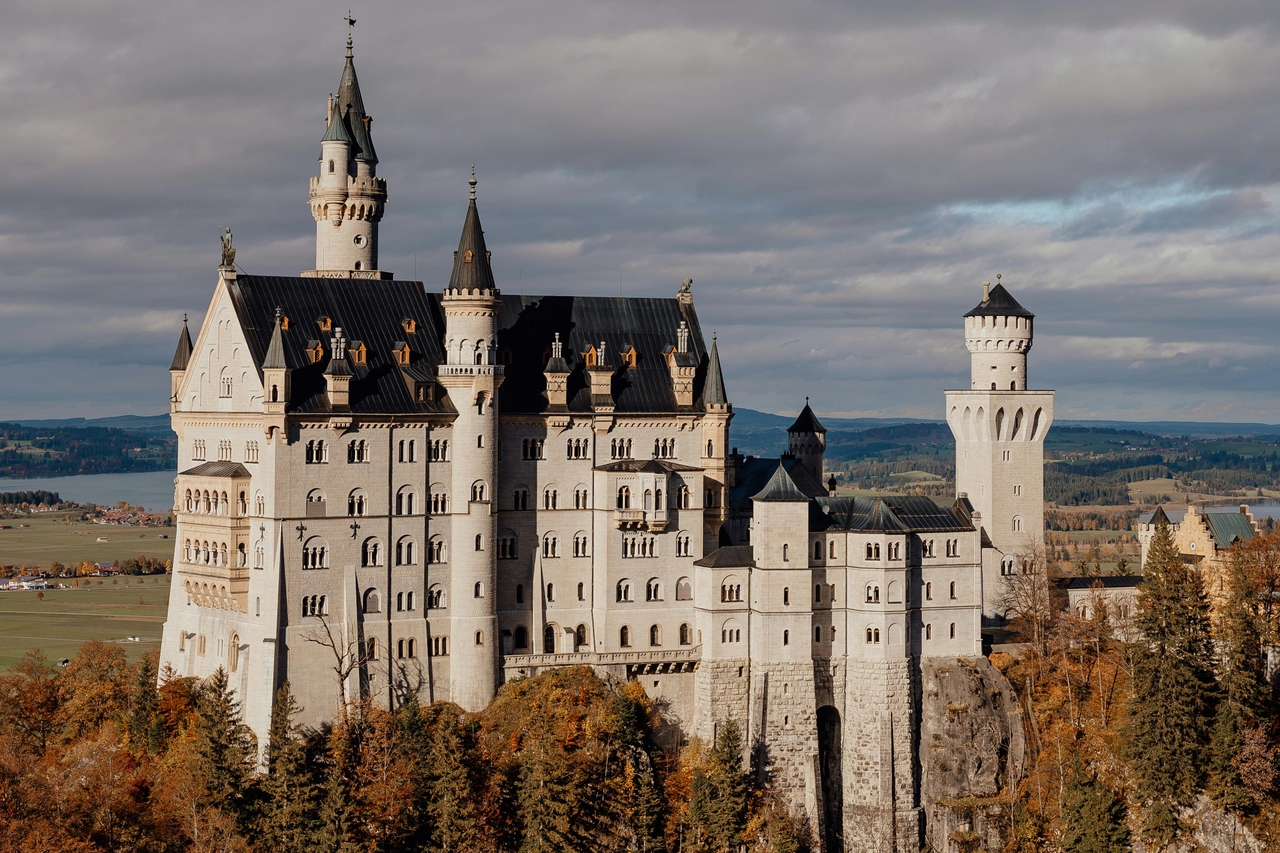
Neuschwanstein Castle is a palace-fortress located in the village of Schwangau, in the Bavarian state of southern Germany. It is situated on a high elevation overlooking the Pöllat Valley at the foot of the Alps. Its geographical position was strategically chosen for both observation and defense purposes. This placement also creates a visual system connected to the surrounding natural and artificial structures, reinforcing the relationship between the building and its environment.

Neuschwanstein Castle (Jonethan Goerke, Pexels)
Construction of the castle began in 1869 under the orders of King Ludwig II of Bavaria. Christian Jank was responsible for the architectural plans and details during the design phase. Neuschwanstein was built based on a reinterpretation of medieval castles, combining elements of Gothic and Romantic architectural styles.
King Ludwig II intended the castle as a personal retreat and a space for artistic endeavors. Its construction was left unfinished at the time of the king’s death, leaving many interior spaces incomplete. The interior decoration was designed primarily around scenes from Richard Wagner’s operas and Germanic mythology.
Neuschwanstein Castle exhibits a complex architectural arrangement through its multi-story structure, towers, ramparts, and interior spaces:
Ramparts and Towers: The castle includes towers and lookout points at varying elevations. These structural elements ensure environmental control and structural integrity.
Interior Spaces: Salons and rooms are arranged with stone craftsmanship, decorative embellishments, and motifs. Notable areas include the Knights’ Hall and the Lousen Hall. These spaces can be examined for both their structural organization and decorative details.
Passages and Entrances: The main entrance and connecting pathways support the building’s unity and functionality, facilitating access and security.
The castle’s interior decoration features detailed depictions of Germanic legends, medieval heroic tales, and scenes from Wagner’s operas. Wall paintings, ceiling ornaments, and decorative elements reflect the cultural context of the period and contemporary artistic sensibilities. King Ludwig II’s deep interest in Wagner’s operas is prominently evident in the castle’s decorative program.

Neuschwanstein Castle (pexels)
The castle is situated on a high point at the foot of the Alps, in direct interaction with the surrounding natural formations and valleys. This location supports its defensive and surveillance functions. Additionally, its position and elevation determine its relationship with the surrounding landscape, enhancing its environmental context.
Neuschwanstein Castle has been included on UNESCO’s tentative list of World Heritage Sites. Its cultural and historical importance is confirmed by the large number of tourist visits. Thousands of visitors each year examine the castle and its surrounding structures, gaining information through guided tours. Restoration efforts aim to preserve both the historical integrity and structural coherence of the building.

No Discussion Added Yet
Start discussion for "Neuschwanstein Castle" article
History and Construction Process
Architectural Layout and Structural Features
Artistic and Mythological Details
Strategic Location and Landscape
Cultural and Touristic Significance