


This article was automatically translated from the original Turkish version.
+2 More
Location | Nevşehir | ||||||||
|---|---|---|---|---|---|---|---|---|---|
Elevation(s) | 1.285 m | ||||||||
Architecture(s) | Asymmetric Plan | ||||||||
Excavations | 2018 Rescue Excavation | ||||||||
Current Use | Park Area | ||||||||
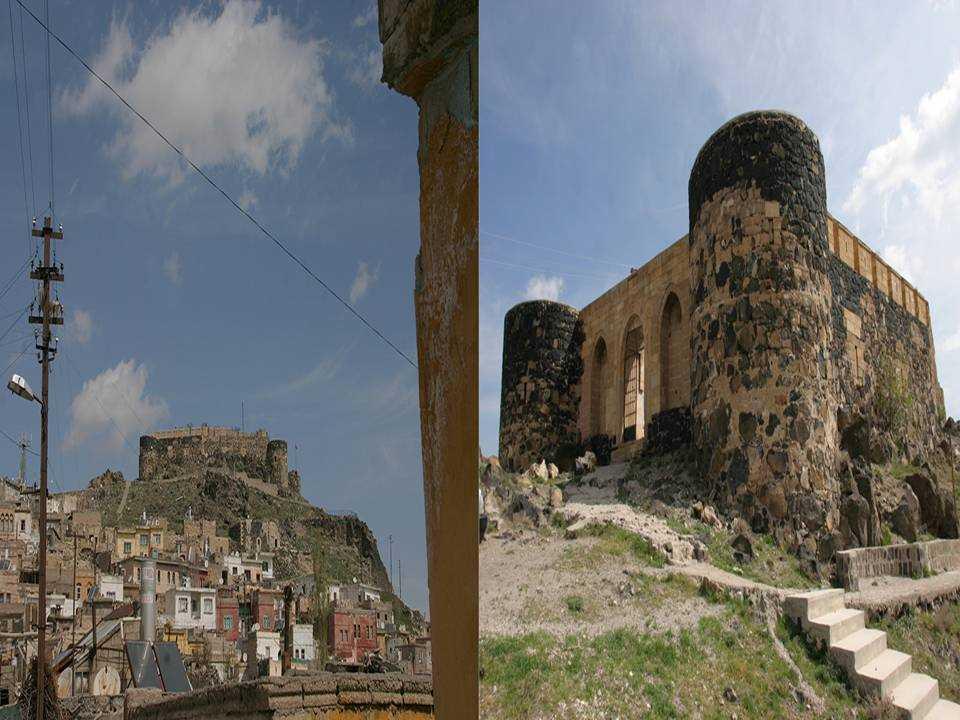
Nevşehir Castle is located on a dominant hill at an elevation of 1,285 meters in the center of Nevşehir province. The castle attracts attention due to its proximity to the city center and the surrounding rock settlement remains from the Byzantine and Ottoman periods. The asymmetrical structure extends parallel to the orientation of the hill on which it stands and features two gates: one to the east and one to the west. The western gate has a rounded arch, measuring 2.10 meters in width and 2.45 meters in height. The eastern gate is rectangular with a flat lintel stone and measures 1.52 by 3.40 meters. On either side of both gates are pointed-arch niches.
The castle is supported by walls reinforced with four circular towers. The height of the walls ranges between 5.50 and 6.75 meters and the castle covers an area of approximately 1,288 square meters with a perimeter of 196.53 meters. Access to the fortress is provided via stairways on the north and south sides leading to the zigzag paths. The defensive system consists of 46 small sections, each containing defensive openings. The castle was constructed using locally quarried black stone with rough-hewn surfaces and finely cut yellow stone. Different mortar repairs from various historical periods are observable on the walls.
Limited data regarding the construction and use of the castle were obtained during rescue excavations carried out in 2018. No clear evidence of structural foundations was identified in the excavation areas. The discovery of oil lamps, ceramic fragments, and pipe pieces indicates that the castle was in use particularly during the Late Ottoman period. The absence of archaeological evidence related to residential construction suggests that the residential building activities previously mentioned in archival documents did not take place.
There are differing opinions regarding the date of the castle’s construction. Some sources claim the structure dates to the Seljuk period, but no concrete evidence supports this dating. Conversely, the Nevşehir Cultural Inventory states that the castle was built during the Byzantine period, though no details substantiating this claim are provided. The presence of sixth-century cross-relief spaces near the castle indicates Byzantine settlement in the region. The earliest documented reference to the castle is an Ottoman archival record from the 18th century, which states that the castle was reconstructed during the tenure of Damat İbrahim Paşa. According to İsmail Çerçi, an inscription dated 1874 on the western gate indicates that the castle has Byzantine origins and was restored by the Karamanids.
The castle’s strategic location supports the hypothesis that it may have served as an observation post or garrison in early periods. Although documents from the Arab-Byzantine conflicts mention various fortifications in the region, Nevşehir Castle is not named among them. It is believed that rather than serving primarily military functions, the castle, along with other structures built during the tenure of Damat İbrahim Paşa, emerged as a symbolic element within Nevşehir’s urban planning policy.
Archival records from the time of Damat İbrahim Paşa indicate that the castle was reconstructed and that residential buildings were planned for its interior; however, due to insufficient space, this plan was only partially implemented. Various repairs were carried out during the 19th and 20th centuries. In 1874, the western gate was renovated, and another restoration took place in the 1950s. Today, the interior of the castle is used as a park area.
Erpek, Can, Enes Kavalçalan, and B. Tolga Uyar. 2021. “Yeni Veriler Işığında Nevşehir Kent Tarihi ve Nevşehir Kalesi Üzerine Bir Değerlendirme.” Hacettepe Üniversitesi Edebiyat Fakültesi Dergisi 38, no. 1: 164–181.
Erpek, Can. 2024. “Nevşehir Kalesi.” Türkiye Turizm Ansiklopedisi. Accessed June 17, 2025. https://turkiyeturizmansiklopedisi.com/nevsehir-kalesi.
Ministry of Culture and Tourism of the Republic of Turkey, Turkey Culture Portal. "Nevşehir Kalesi - Nevşehir." Accessed June 17, 2025. https://www.kulturportali.gov.tr/turkiye/nevsehir/gezilecekyer/nevsehr-kales.

Location | Nevşehir | ||||||||
|---|---|---|---|---|---|---|---|---|---|
Elevation(s) | 1.285 m | ||||||||
Architecture(s) | Asymmetric Plan | ||||||||
Excavations | 2018 Rescue Excavation | ||||||||
Current Use | Park Area | ||||||||
Architectural Structure and Material Properties
Archaeological Findings and Excavation Studies
Chronological Debates
Function and Use
Restorations and Later Use