


This article was automatically translated from the original Turkish version.
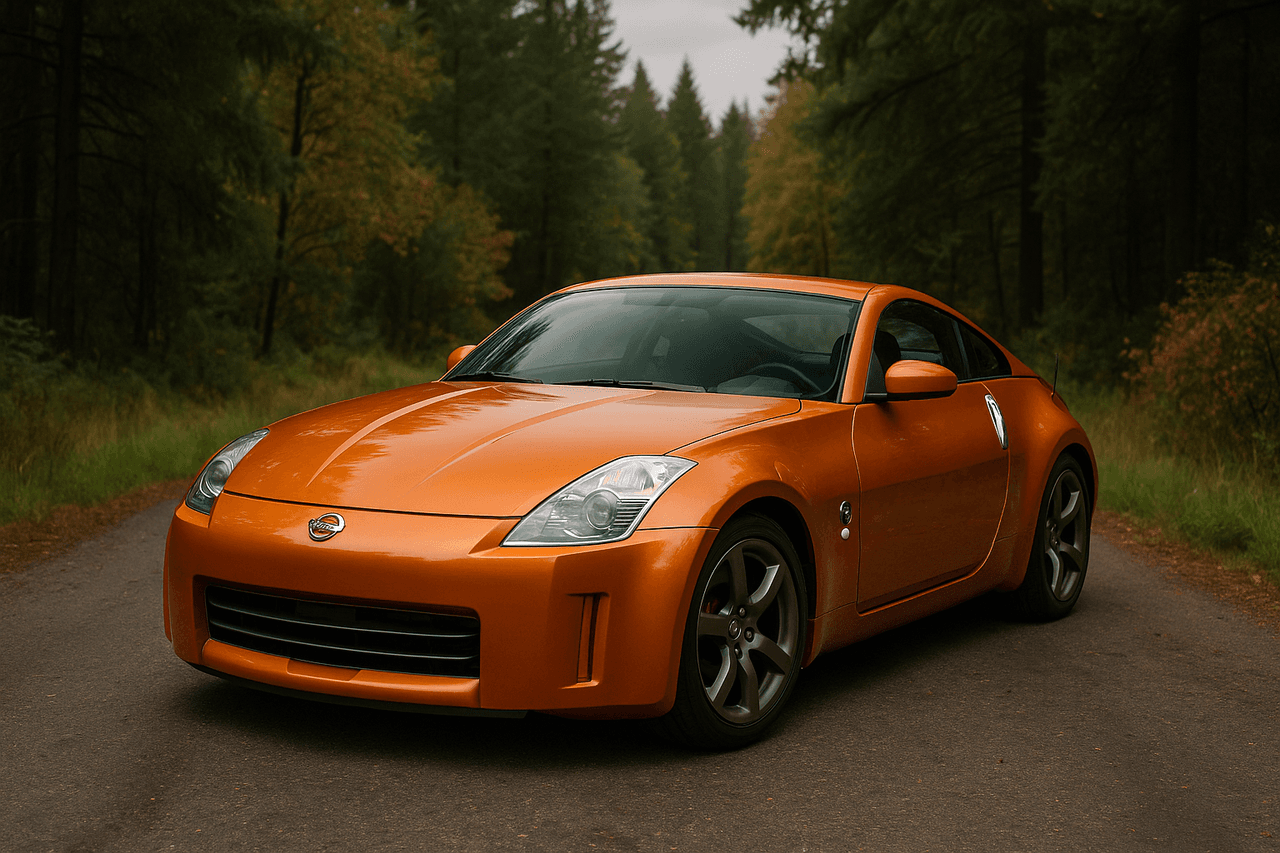
Nissan 350Z
Producer(s) | Nissan | ||||||||
|---|---|---|---|---|---|---|---|---|---|
Years of Production | 2002–2009 | ||||||||
Transmission Options | 5-speed automatic 6-speed manual | ||||||||
Body Types | Coupe - Roadster | ||||||||
Engine(s) | 3.5L V6 (VQ35DE / VQ35HR) | ||||||||
Body Styles | Coupe and Roadster | ||||||||
Platform | FM (Front Midship) | ||||||||
Weight(s) | ~1500–1600 kg | ||||||||
Suspension | Independent multi-link (front/rear) | ||||||||
Structure(s) | Aluminum hood and suspension components | ||||||||
Usage Areas | Autocross Time attack Drift | ||||||||
Equipment Packages | NISMO: Special aerodynamics - increased rigidity - track-focused Grand Touring: Luxury and performance combined Track/Performance: Brembo brakes - Rays wheels Touring: Leather seats - Bose audio system Enthusiast: Cruise control - LSD Base: Standard driving equipment | ||||||||
Nissan 350Z is a sports car developed by Japanese automaker Nissan and produced between 2002 and 2009. As the fifth generation of the Z series, this model combines the company’s performance-oriented heritage with modern engineering. The 350Z was offered in coupe and roadster (convertible) body styles and gained particular recognition for its driving enjoyment, design language and price-to-performance balance.
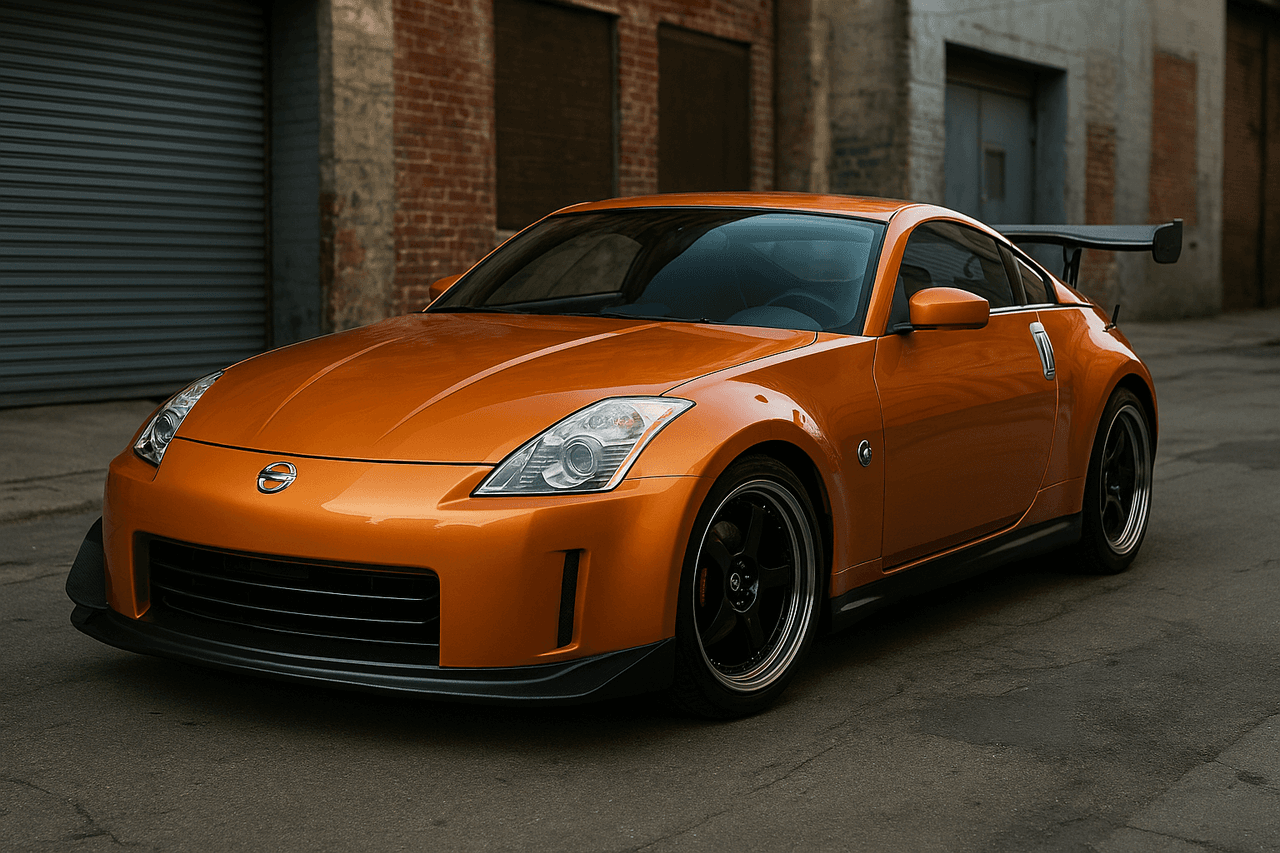
Nissan 350Z (generated by artificial intelligence.)
Nissan 350Z is the fifth-generation model of the Z series, developed by Nissan Motor Company and introduced in 2002. Its development process began in the late 1990s with the goal of reviving the Z series. By the 1990s, Nissan had begun losing competitiveness in the sports car segment and temporarily discontinued the Z series after the 300ZX ceased production in 1996. However, strong demand for the Z series in North America prompted the company to reintroduce the iconic line with a modernized version.
The design of the 350Z was carried out by Nissan Design America (San Diego, California), while overall engineering and technical development were conducted at Nissan’s technical centers in Japan. The design process was shaped not only by aesthetics but also by criteria such as vehicle dynamics, weight distribution and aerodynamic efficiency.
The Nissan 350Z is built on a new chassis platform called FM (Front Midship). In this layout, the engine is positioned behind the front axle but closer to the cabin than in traditional front-engine vehicles. This configuration achieves a superior front-to-rear weight distribution (approximately 53:47) and delivers a more balanced driving character. The FM platform was later used in models such as the Infiniti G35, G37 and Nissan Skyline V35/V36.
The 350Z’s exterior design is characterized by short front and rear overhangs, wide fender arches and a sloping roofline. With a coefficient of drag (Cd) of approximately 0.30, this body shape balances sporty aesthetics with aerodynamic efficiency. The vehicle measures approximately 4,310 mm in length, 1,815 mm in width and 1,325 mm in height.
The use of lightweight materials such as an aluminum hood and suspension components aimed to control overall weight and optimize the rigidity-to-weight ratio.
The interior of the 350Z was designed around a driver-centric cockpit philosophy. All controls are ergonomically positioned around the steering wheel, and instruments are mounted in deeply recessed housings for high visibility. The three-section instrument cluster (tachometer, speedometer and information display) is placed directly in the driver’s line of sight. Additionally, the instrument panel moves with the steering column, ensuring visibility remains consistent during steering adjustments.
The interior materials meet the average standards of sports cars of that era. Touring and Grand Touring trim levels included leather upholstery, a Bose sound system and automatic climate control. The vehicle was designed as a two-seater, prioritizing ideal weight distribution and a compact structure over a large trunk capacity.
The chassis of the Nissan 350Z was engineered to high standards of bending and torsional rigidity. This significantly improved cornering ability, suspension effectiveness and overall driving response. In roadster (convertible) versions, additional reinforcements were incorporated to maintain this rigidity.
Throughout the design process, Nissan aimed to create a model consistent with the Z series legacy in the North American market. The vehicle was derived from the “Z Concept” prototype unveiled at the 2001 Detroit Auto Show and received widespread acclaim in its near-production form. The final production version was launched in Japan in 2002 as the “Fairlady Z” and in other markets as the “350Z”.
Throughout its production run, the Nissan 350Z was equipped exclusively with Nissan’s VQ-series 3.5-liter V6 engines. These engines, designed with naturally aspirated architecture and robust block construction, are suitable for both daily driving and high-performance applications. The engine used in all 350Z models was continuously refined and offered in two main variants: VQ35DE and VQ35HR.
The VQ35DE, used in the initial production years of the 350Z from 2002, is a 3,498 cc V6, DOHC, 24-valve engine with an aluminum alloy block and cylinder head. Its core characteristics are high torque output in the mid-range and smooth acceleration.
The VQ35DE was manufactured in Nissan’s ISO 9001-certified facilities with high-quality tolerances and repeatedly appeared on Ward’s 10 Best Engines list in the early 2000s. The crankshaft is forged steel, and the crank bearings and piston components are built with material tolerances suited for high-revving operation.
Introduced in 2007 alongside the facelifted 350Z, the VQ35HR (High Revving) engine offers enhanced mechanical and thermal characteristics compared to its predecessor, the VQ35DE. The “HR” designation refers to the engine’s ability to rev higher, up to 7,500 rpm. The engine block and cylinder head were redesigned, and the intake and exhaust systems were revised. The lubrication system was also optimized for high-revving operation.
This updated engine delivered more stable thermal management and a more responsive throttle, particularly under track and aggressive driving conditions. The higher rev limit enabled a broader power band and enhanced driving enjoyment.
The 350Z offered several transmission options to transfer engine power to the wheels:
Alongside the transmission, a viscous limited-slip differential (LSD) balances torque between the rear wheels, enhancing traction especially during corner exits.
The Nissan 350Z features a rear-wheel-drive (RWD) configuration and an independent multi-link front and rear suspension system, delivering dynamic handling characteristics. The front suspension uses aluminum double-wishbone arms, while the rear employs a multi-link setup. This combination ensures stability at high speeds and minimal body roll during cornering.
Its road-holding performance is highlighted by the following factors:
This architecture provides high grip and precise cornering control, especially on dry asphalt. The steering system is hydraulically assisted and delivers direct, responsive feedback.
One of the most distinctive features of the VQ engines is the characteristic sound of the naturally aspirated powerplant. The exhaust note, prominent at high revs, stems from both the engine’s mechanical design and a resonant dual-exhaust system. In NISMO variants, optimized pipe diameters and muffler design produce a sharper, more race-oriented sound.
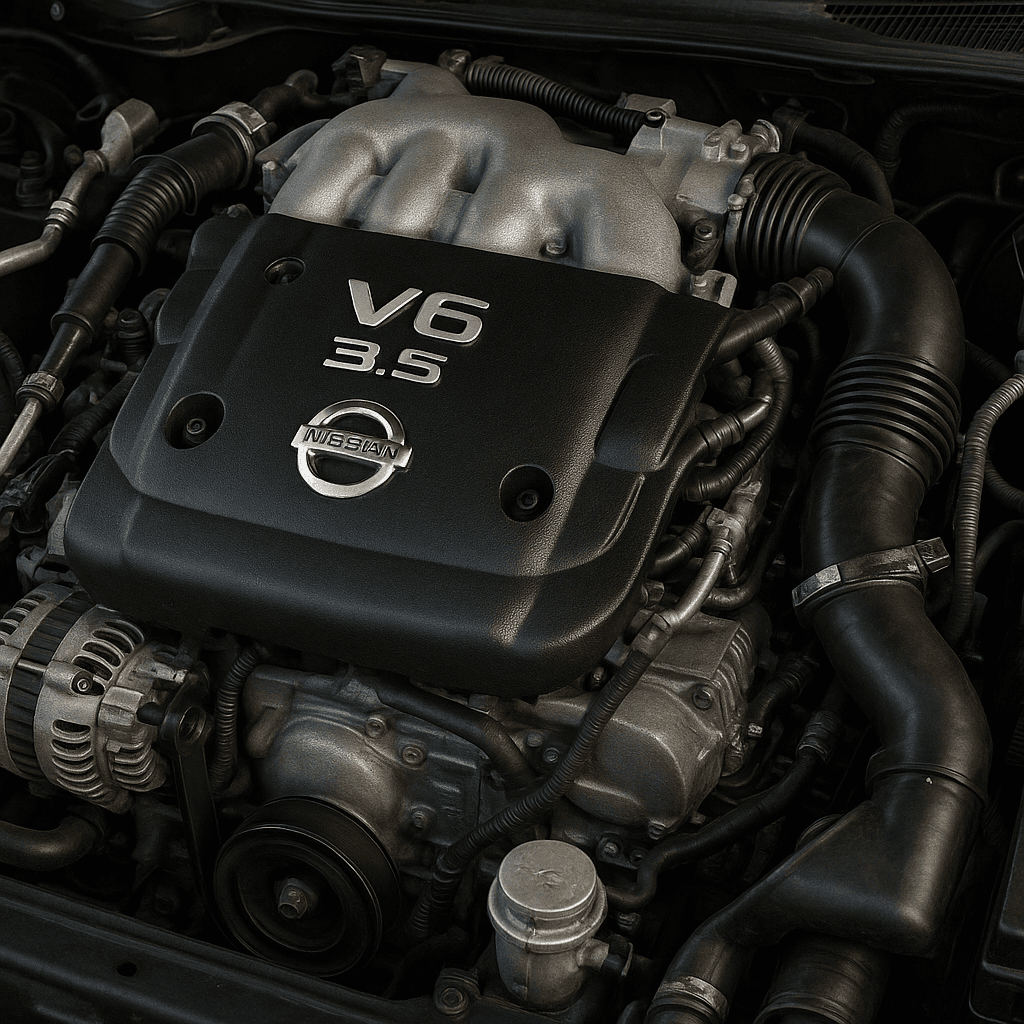
VQ35DE Engine Image (generated by artificial intelligence.)
During its production from 2002 to 2009, the Nissan 350Z was offered in various trim levels, body styles and special editions. This variety was designed to appeal to different customer profiles and to optimize the balance between performance, comfort and daily usability. Variants differed based on geographic market, production year and technical updates.
In the North American market, the 350Z coupe was offered in the following trim levels:
The entry-level model, designed for weight savings and cost optimization.
Offers enhanced comfort and safety features compared to the Base model.
Emphasizes luxury and comfort features.
Available exclusively with a manual transmission, this variant is optimized for track use.
Combines the comfort and performance features of the Touring trim.
The Nissan 350Z Roadster was first introduced in the 2003 model year. Its body structure was redesigned based on the coupe, incorporating a retractable roof mechanism and structural reinforcements.
Performance figures are very close to the coupe, though slightly reduced acceleration and road holding occur due to increased weight.
This special variant was developed by Nissan’s motorsport division, NISMO (Nissan Motorsport), to bring the 350Z’s track character to the road. Limited production began in the 2007 model year and was offered exclusively with a manual transmission.
The NISMO 350Z is optimized for track and high-performance use rather than daily driving. Comfort is secondary due to its stiff suspension and aerodynamic components.
In the Japanese domestic market, the same vehicle was sold under the name “Fairlady Z” with different trim levels and technological options. Notable variants include:
Variants sold in Europe were typically divided into “Pack” and “GT Pack” configurations. Additionally, braking and suspension settings were optimized for EuroNCAP safety standards.
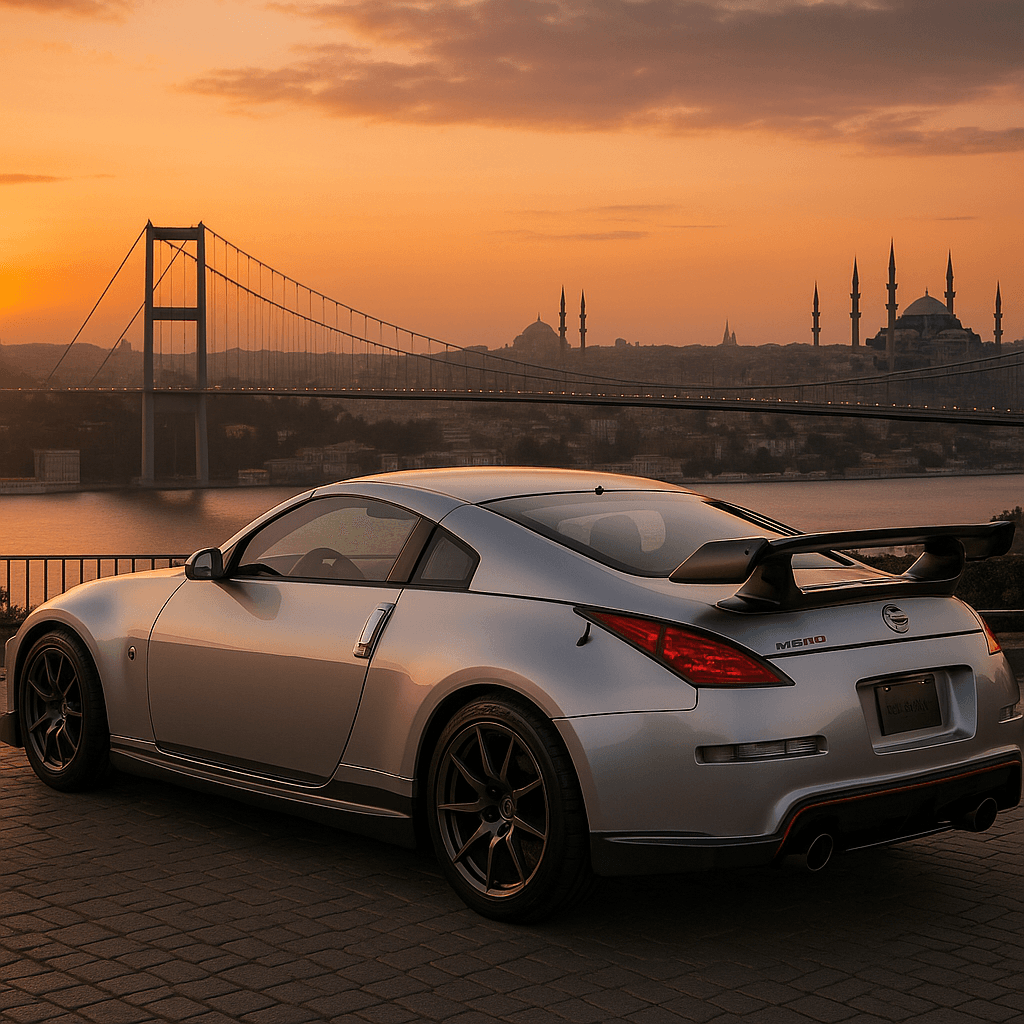
Nissan 350Z with Nismo Body Kit (generated by artificial intelligence.)
During its production from 2002 to 2009 and beyond, the Nissan 350Z was not only regarded as a sports car but also as a vehicle with high modification potential, suitability for track use and strong cultural influence. Its robust chassis, powerful and tunable VQ35DE/HR engine, and widespread aftermarket support made it a favorite among amateur and professional enthusiasts worldwide. The model also gained widespread cultural recognition through appearances in popular media and video games.
Thanks to its rear-wheel-drive layout, balanced weight distribution, independent suspension systems and mechanical durability, the Nissan 350Z has been used in numerous racing disciplines:
The 350Z has frequently appeared in Formula Drift, D1 Grand Prix and local drifting events. The VQ engine’s high torque output, combined with its RWD configuration, enables controlled oversteer. Prominent drift drivers such as Chris Forsberg and Tyler McQuarrie have chosen the 350Z for their professional drift cars.
Reasons for the 350Z’s popularity in drifting include:
Amateur and semi-professional users widely selected the 350Z for time attack and autocross events. Especially the “Track Pack” and “NISMO” variants achieved strong lap times in near-stock condition. Its agile steering response, low ride height and compatibility with high-grip tires make it well-suited for these time-based competitions.
Although factory 350Z models are not ideal for drag racing, turbocharged or supercharged variants have achieved success in quarter-mile (1/4 mile) events with power outputs ranging from 400 to 700 hp. Such modified examples are particularly common in the United States.
Since the 2000s, the Nissan 350Z has established a strong presence in global popular culture and interactive media, appearing frequently in street racing-themed films and driving simulations.
The 350Z has been featured numerous times in racing games, often associated with drifting or street modification themes. Notable titles include: Need for Speed: Underground 2, Need for Speed: Carbon, Gran Turismo series, Forza Motorsport / Horizon series, Midnight Club series and CarX Drift Racing.
Marketing campaigns for the 350Z targeted young, performance-oriented consumers. In early 2000s Nissan advertisements, the 350Z was portrayed as a high-revving driving machine. Some campaigns in Japan also used the domestic market name “Fairlady Z”.
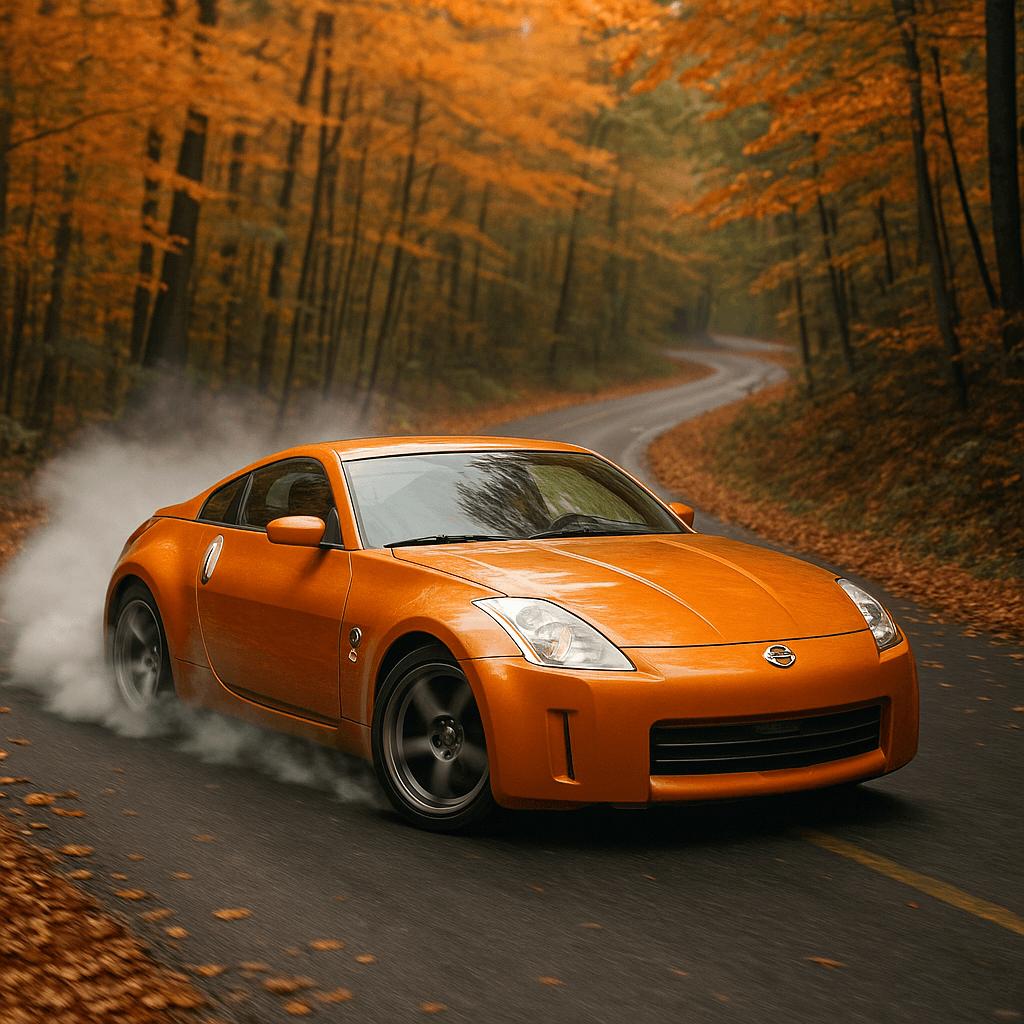
Nissan 350Z in Drift (generated by artificial intelligence.)
Total worldwide production of the Nissan 350Z is recorded at approximately 248,000 units. Production took place between 2002 and 2009 at Nissan’s Oppama Plant in Japan. The largest markets were North America, Japan and Europe, with the highest sales figures occurring in the United States during the initial launch years. Production ended in 2009, succeeded by the Nissan 370Z.
During its production run, the Nissan 350Z stood out in the modern sports car segment due to its technical specifications, price-to-performance balance and platform versatility. As the fifth-generation Z series, it upheld the brand’s performance heritage through its rear-wheel-drive layout, 3.5-liter V6 engine and FM platform. The model offered a balanced character between daily usability and sporty driving, and its modifiability, track capabilities and media presence ensured long-term user interest. Even after production ended in 2009, the 350Z continues to be regarded as an important sports car, maintaining its significance in the used car market and automotive culture.
Autoevolution. "Nissan 350Z." Autoevolution. Accessed June 7, 2025. https://www.autoevolution.com/nissan/350z/.
Coleman, Dave. "NISMO 350Z Review." *MotorTrend*. Accessed June 7, 2025. https://www.motortrend.com/reviews/nismo-350z.
Daw, Chad. "History of the Nissan Z." *Top Speed*. Accessed June 7, 2025. https://www.topspeed.com/history-of-the-nissan-z/.
Irwin, Austin, and John Pearley Huffman. "My Fair Lady: A Visual History of the Nissan Z-Car." *Car and Driver*. Accessed June 7, 2025. https://www.caranddriver.com/features/g15377615/my-fair-lady-a-visual-history-of-the-nissan-z-car/.
McGann, John. “2003 Nissan 350Z.” *MotorTrend*. Accessed May 30, 2025. https://www.motortrend.com/reviews/2003-nissan-350z-2-2.
Nissan USA. "Nissan Z-Car." Nissan USA. Accessed June 7, 2025. https://www.nissanusa.com/experience-nissan/news-and-events/nissan-z-car.html.
Walker Jones Nissan. "Nissan Z History." Walker Jones Nissan. Accessed June 7, 2025. https://www.walkerjonesnissan.com/nissan-z-history/.
Winfield, Barry. “Tested: 2005 Nissan 350Z 35th Anniversary Edition.” *Car and Driver*, February 2005. Accessed May 30, 2025. https://www.caranddriver.com/reviews/a18202645/nissan-350z-35th-anniversary-edition-short-take-road-test/.
Wright, Ian. "History of the Nissan Z-Car." Carbuzz. Accessed June 7, 2025. https://carbuzz.com/features/history-of-the-nissan-z-car/.


Nissan 350Z
Producer(s) | Nissan | ||||||||
|---|---|---|---|---|---|---|---|---|---|
Years of Production | 2002–2009 | ||||||||
Transmission Options | 5-speed automatic 6-speed manual | ||||||||
Body Types | Coupe - Roadster | ||||||||
Engine(s) | 3.5L V6 (VQ35DE / VQ35HR) | ||||||||
Body Styles | Coupe and Roadster | ||||||||
Platform | FM (Front Midship) | ||||||||
Weight(s) | ~1500–1600 kg | ||||||||
Suspension | Independent multi-link (front/rear) | ||||||||
Structure(s) | Aluminum hood and suspension components | ||||||||
Usage Areas | Autocross Time attack Drift | ||||||||
Equipment Packages | NISMO: Special aerodynamics - increased rigidity - track-focused Grand Touring: Luxury and performance combined Track/Performance: Brembo brakes - Rays wheels Touring: Leather seats - Bose audio system Enthusiast: Cruise control - LSD Base: Standard driving equipment | ||||||||
Design and Development Process
Strategic Positioning of the Design
Use of the FM (Front Midship) Platform
Aerodynamics and Body Architecture
Interior Design and Ergonomics
Structural Rigidity and Chassis
Design’s Commercial Strategy
Engine and Performance
VQ35DE (2002–2006)
VQ35HR (2007–2009)
Transmission Options
Driving Characteristics and Road Holding
Exhaust and Acoustic Properties
Trim Levels and Variants
Coupe Body Style – Trim Levels
Base (Base Trim)
Enthusiast
Touring
Track (or Performance)
Grand Touring
Roadster Body Style (Cabriolet)
Technical Specifications
NISMO Edition (2007–2008)
NISMO-Specific Technical Features
Japan Market: Fairlady Z Variants
European Market Trim Levels
Track Use, Modification Culture and Media Representation
Use in Track and Racing Categories
Drifting
Time Attack and Autocross
Drag Racing
Presence in Media, Film and Video Games
Film and Television
Video Games
Advertising and Promotional Media
Production Numbers