


This article was automatically translated from the original Turkish version.
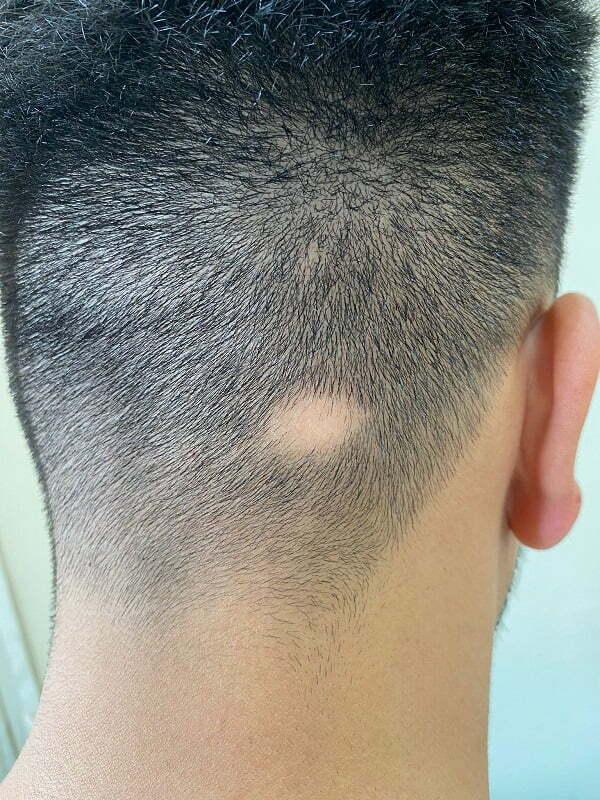
Non-scarring alopecia refers to a group of hair loss disorders in which hair follicles are not permanently destroyed and no scarring (fibrosis) is observed on the scalp. This type of hair loss is typically reversible, and hair may regrow with treatment of the underlying cause. Non-scarring alopecia occurs in both men and women and can affect quality of life to varying degrees. The most common forms include androgenetic alopecia, alopecia areata, telogen effluvium, and traumatic alopecia.
Non-scarring alopecia can occur in any age group and does not discriminate by sex. However, certain forms are more prevalent in specific age groups or genders. For example, androgenetic alopecia is more common in men, while telogen effluvium is frequently observed in women. Non-scarring alopecia can be classified as follows:
The pathophysiology of non-scarring alopecia varies depending on the underlying condition:
Non-scarring alopecia presents clinically in various patterns:
The diagnosis of non-scarring alopecia is primarily based on clinical examination and patient history. The following methods may be used to confirm the diagnosis:
The treatment of non-scarring alopecia is tailored to the underlying cause and severity of the condition.
Bolognia, Jean L., Joseph L. Jorizzo, and Julie V. Schaffer. *Dermatology*. 4th ed., Elsevier, 2018. James, William D., Dirk M. Elston, and Timothy G. Berger. *Andrews' Diseases of the Skin: Clinical Dermatology*. 13th ed., Elsevier, 2020. Mubki, Thamer, et al. "Evaluation and Diagnosis of the Hair Loss Patient." *Journal of the American Academy of Dermatology*, vol. 71, no. 3, 2014, pp. 415.e1–415.e15. Shapiro, Jerry. "Clinical Practice: Hair Loss in Women." *New England Journal of Medicine*, vol. 357, no. 16, 2007, pp. 1620–1630. Tosti, Antonella, and Bianca Maria Piraccini. *Diagnosis and Treatment of Hair Disorders: An Evidence-Based Atlas*. Informa Healthcare, 2006.

No Discussion Added Yet
Start discussion for "Non-Scarring Hair Loss (Non-Scarring Alopecia)" article
Epidemiology and Classification
Androgenetic Alopecia (Male and Female Pattern Hair Loss):
Alopecia Areata:
Telogen Effluvium:
Traumatic Alopecia:
Pathophysiology
Clinical Features
Androgenetic Alopecia
Alopecia Areata
Telogen Effluvium
Traumatic Alopecia
Diagnosis
Treatment
Androgenetic Alopecia
Alopecia Areata
Telogen Effluvium
Traumatic Alopecia