+1 More

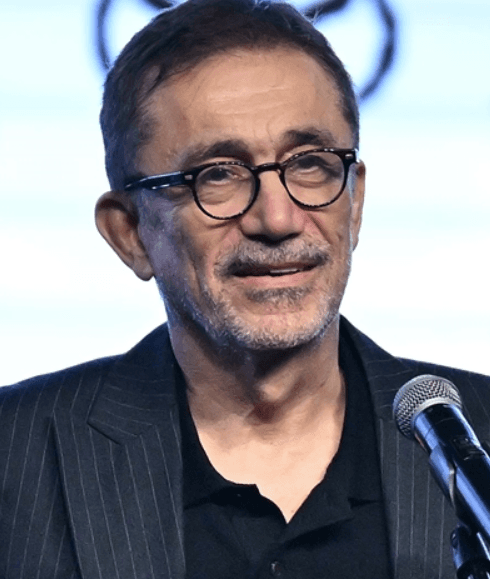
Birth | January 26, 1959 | ||||||||
|---|---|---|---|---|---|---|---|---|---|
Profession(s) | Producer Cinematographer Editor Screenwriter Film Director | ||||||||
Education | Mimar Sinan University - Cinema-TV (Did Not Complete) Boğaziçi University - Electrical Engineering (Graduated) Istanbul Technical University - Chemical Engineering (Started) | ||||||||
International Achievements | FIPRESCI Prize: Climates (2006) Best Director: Three Monkeys (2008) Grand Prix: Distance (2003) - Once Upon a Time in Anatolia (2011) Golden Palm: Winter Sleep (2014) | ||||||||
Nuri Bilge Ceylan was born on 26 January 1959 in the Bakırköy district of Istanbul. His mother is Fatma Ceylan and his father is Mehmet Emin Ceylan. When he was still two years old, his family moved to Yenice, his father’s hometown, where he spent his childhood in the rural surroundings alongside his sister and cousin. The family continued living in Yenice until his sister completed middle school; due to the absence of a high school in the town, they returned to Istanbul in 1969. Ceylan completed his education from fifth grade of primary school through high school graduation at state schools in Bakırköy.
After high school, in 1976 he enrolled in the Chemical Engineering department at Istanbul Technical University; however, his studies were disrupted by the political conditions of the period and frequent student boycotts, which prevented the creation of a productive academic environment. In 1978, Ceylan took the university entrance exam again and was admitted to the Electrical Engineering department at Boğaziçi University, from which he graduated in 1985.

Nuri Bilge Ceylan – Graduation from Boğaziçi University (Nuri Bilge Ceylan)
During his university years, his interest in photography became prominent; he gained experience by taking passport-style photographs with the Boğaziçi University Photography Club and also joined other student clubs such as mountaineering and chess. The elective cinema courses he took and the film screenings at Sinematek formed foundational elements of his cinematic knowledge.
After graduating from university in 1985, Ceylan traveled to London and Kathmandu to determine his career direction, and during his time in the Himalayas in 1986 he entered a period of personal reflection. Upon returning to Türkiye, he completed an 18-month military service in Ankara’s Mamak district, during which he made a firm decision to devote the rest of his life to cinema.

Nuri Bilge Ceylan – Himalayan Trek (Nuri Bilge Ceylan)
After his military service, he enrolled in the Cinema department at Mimar Sinan University; however, after two years he left the program, feeling that its pace did not align with his expectations. During this time, he supported himself through commercial photography and purchased an Arriflex 2B camera to develop his technical skills and produce his own short film. In late 2003, during location scouting for his film Climate, Ceylan returned to photography and has since pursued both cinema and photographic production simultaneously.
Nuri Bilge Ceylan’s film works between 1995 and 2023 are listed chronologically as follows:

Nuri Bilge Ceylan – Koza Film Shoot (
Ceylan’s films have won numerous awards, particularly achieving significant success at the Cannes Film Festival:
Ceylan’s cinema is grounded in a realist aesthetic and is described by critics as “thought-provoking cinema”.
His early films have been associated with Italian Neorealism; their simple narratives centered on everyday life reflect the belief that ordinary details possess cinematic value. His films frequently address sociological elements such as migration, generational conflict, unemployment and social deprivation, with characters’ inner turmoil and routine life cycles becoming prominent.
Ceylan’s films predominantly focus on provincial settings, rural atmospheres and the socio-cultural structures of small communities. His characters are generally introverted, silent and alienated individuals. Nature, in most of his films, functions as an independent character and at times assumes a symbolic role in conveying the theme of death.
The director favors long takes and a slow-paced editing structure. The use of static cameras, minimal movement and the prominence of natural sounds lend his films a distinctive sense of realism. Additionally, elements of humor appear subtly in certain scenes, aiming to balance the contemplative rhythm of his narratives.
AA. “46. Kahire Uluslararası Film Festivali’nin Jüri Başkanı Nuri Bilge Ceylan Oldu.” Anadolu Ajansı. Accessed November 26, 2025. https://www.aa.com.tr/tr/kultur/46-kahire-uluslararasi-film-festivalinin-juri-baskani-nuri-bilge-ceylan-oldu/3737668.
Aslan, Mustafa. “Gerçekçi Sinema Perspektifinden Nuri Bilge Ceylan’ın Koza, Kasaba ve Mayıs Sıkıntısı Filmlerinin İncelenmesi.” Çankırı Karatekin Üniversitesi Sosyal Bilimler Enstitüsü Dergisi 4, no. 2 (2013): 157–174. Accessed November 26, 2025. https://dergipark.org.tr/tr/pub/jiss/issue/25895/272901
Cannes Film Festival. “Nuri Bilge Ceylan.” Festival de Cannes. Accessed November 26, 2025. https://www.festival-cannes.com/en/p/nuri-bilge-ceylan/.
IMDb. “Nuri Bilge Ceylan Biography.” IMDb. Accessed November 26, 2025. https://www.imdb.com/name/nm0149196/bio/?ref_=nm_ov_bio_sm
MUBI. “Nuri Bilge Ceylan.” MUBI. Accessed November 26, 2025. https://mubi.com/tr/cast/nuri-bilge-ceylan.
Nuri Bilge Ceylan Official Website. "Biography." *nuribilgeceylan.com*. Accessed November 26, 2025. https://www.nuribilgeceylan.com/bio-english.php.
Sayar, Tahsin Eren. “Nuri Bilge Ceylan Sinemasında Kasaba Kültürünün Tasviri: Bir Zamanlar Anadolu’da ve Kasaba Örneği.” Academia.edu. Accessed November 26, 2025. https://www.academia.edu/45139080/Nuri_Bilge_Ceylan_Sinemas%C4%B1nda_Kasaba_K%C3%BClt%C3%.
Özyazıcı, Kurtuluş. “Nuri Bilge Ceylan ve Yavaş Sinema.” *Sinecine* 11, no. 2 (2020): 563–589. doi:10.32001/sinecine.776492. Accessed November 26, 2025. https://dergipark.org.tr/tr/pub/sinecine/issue/57083/776492.

Birth | January 26, 1959 | ||||||||
|---|---|---|---|---|---|---|---|---|---|
Profession(s) | Producer Cinematographer Editor Screenwriter Film Director | ||||||||
Education | Mimar Sinan University - Cinema-TV (Did Not Complete) Boğaziçi University - Electrical Engineering (Graduated) Istanbul Technical University - Chemical Engineering (Started) | ||||||||
International Achievements | FIPRESCI Prize: Climates (2006) Best Director: Three Monkeys (2008) Grand Prix: Distance (2003) - Once Upon a Time in Anatolia (2011) Golden Palm: Winter Sleep (2014) | ||||||||
Transition to Cinema and the Beginning of His Career
Filmography
Awards
Cinema: Themes, Aesthetics and Narrative Features
Realism and Narrative Structure
Place, Character and Themes
Cinematic Techniques