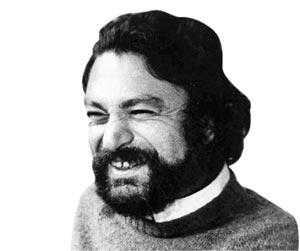
Doğum tarihi | 1934-10-12 | ||||||||
|---|---|---|---|---|---|---|---|---|---|
Eş | Pakize Kutlu Fikriye Gürbüz | ||||||||
Place of Birth | Kastamonu | ||||||||
Ölüm tarihi | 1977-12-13 | ||||||||
Place of Death | İstanbul | ||||||||
Educational Life | Istanbul Technical University Faculty of Civil Engineering TED Yenişehir High School | ||||||||
Profession(s) | Author Academic Engineer | ||||||||
Çocuk | Özge Atay | ||||||||
Theme(s) | Loneliness Concept of 'Game' Existential Anguish Social Criticism Alienation | ||||||||
Approaches | Existentialism, Individualism | ||||||||
Oğuz Atay was born on 12 October 1934 in Kastamonu/İnebolu. His father was Cemil Atay, a lawyer who served as a member of parliament for Sinop in the sixth and seventh terms and for Kastamonu in the eighth term. His mother was Muazzez Zeki Hanım, a primary school teacher. His maternal grandmother, Melek Hanım, had fled to Istanbul from Greece after meeting Zeki Bey while attending a French girls’ school, converted to Islam, and placed great importance on educating her three daughters; his mother Muazzez Hanım graduated from the Edirne Teacher Training School as one of the first working women of the Republic.
After spending his early years in Kastamonu and İnebolu, the family moved to Ankara in 1939 following his father’s election to parliament. Atay completed his primary, secondary, and high school education in Ankara, beginning primary school in 1940. A serious illness during his early childhood affected his entire life.
He graduated from TED Yenişehir High School with top honors. In 1951 he enrolled in the Faculty of Civil Engineering at Istanbul Technical University (İTÜ), from which he graduated in 1957 with a degree as a higher engineer. He stated that he pursued engineering not out of personal desire but due to his father’s pressure and admitted he did not particularly enjoy his profession. In later years he wrote a professional book titled Topografya related to his field. From 1960 until the onset of his illness at the end of 1976, he worked as a teaching member in the Civil Engineering Department of the Istanbul State Academy of Engineering and Architecture (now Yıldız Technical University). He attained the title of associate professor in 1975.
In 1961 he married Fikriye Gürbüz, with whom he had a daughter named Özge. After their divorce in 1967, he began living alone. In 1968 he began a relationship with Sevin Seydi, with whom he had long been part of the same social circle. Atay dedicated his novels Tutunamayanlar and Tehlikeli Oyunlar to Seydi and modeled the female characters Günseli and Bilge in his novels after her. This relationship ended in 1969, and in Tehlikeli Oyunlar he explored the relationship between Hikmet and Bilge within this context. In 1974 he married Pakize Kutlu, an art journalist working for the newspaper Yeni Ortam, whom he had met during an interview she conducted with him about Tutunamayanlar in 1972.
Oğuz Atay portrays the isolation of the individual within modern urban life, their alienation from society, and the inner worlds of individuals who cannot adapt to social morality and conventional thinking. His works contain criticism, humor, and irony. He employs a style attentive to detail. In his writings, Atay examines how the promises of modernism in the social sphere were lost amid the ruins of two world wars and how, in an increasingly mechanized world, the individual became alienated from himself and everything around him.
He was influenced by philosophers and writers such as Kierkegaard, Nietzsche, Dostoyevski, Beckett, Ionesco, Unamuno, Pirandello, Kafka, Sartre, and Camus. From Turkish literature, he was also influenced by Yusuf Atılgan, Kemal Tahir, Sabahattin Ali, Vüs’at Bener, and Ahmet Hamdi Tanpınar.
Tutunamayanlar (1971): His first novel, which won the TRT Novel Prize in 1970. He had to wait a year for publication and approached numerous publishers before it was finally printed in 1971. The novel explores the isolation of the individual in modern urban life, their alienation from society, and the inner world of those who “cannot adapt.”
Tehlikeli Oyunlar (1973): His second novel, written after Tutunamayanlar. The novel is the product of a difficult and troubled period in the author’s life; fragmentation dominates its narrative structure and character development.
Bir Bilim Adamının Romanı (1974): A biographical novel about Professor Mustafa İnan, Atay’s former professor at the technical university. It was commissioned under a project by TÜBİTAK aimed at encouraging the development of scientific talent.
Oyunlarla Yaşayanlar (1985): Atay’s fourth book and a theatrical work. In this piece, the concept of “play” becomes a technique in its own right. It brings to the forefront the conflicts and contradictions between Turkish intellectuals and society. The play was staged after the author’s death.
Eylembilim (1998): Atay’s final novel, left unfinished. It addresses the political upheavals and student protests at the university where he worked from 1960 until the end of 1976, as well as the concepts of university, science, and the scientist.
Oğuz Atay (TRT Archive)
In late 1976, Atay fell ill and was diagnosed with a tumor in his brain. He traveled to England for treatment, but the year-long therapy proved ineffective. He died in Istanbul on 13 December 1977 and was buried at the Edirnekapı Sakızağacı Cemetery. His funeral on 15 December 1977 was attended by a large crowd. Since 2007, the Kastamonu Governorship has awarded the Oğuz Atay Literature Awards in his name.
Anadolu Ajansı. "Çağının ötesine geçen edebiyatçı: Oğuz Atay." Accessed July 2, 2025. https://www.aa.com.tr/tr/portre/caginin-otesine-gecen-edebiyatci-oguz-atay/2074403
Balcı, Yunus. "Parça-Bütün Diyalektiğinde Çağdan Yazara, Yazardan Kurgu Kişisine Oğuz Atay." *Yeni Türk Edebiyatı Araştırmaları / Modern Turkish Literature Researches* 15, no. 29 (2023): 19–39. Accessed June 30, 2025. https://dergipark.org.tr/en/download/article-file/3220074
Bayrak Akyıldız, Hülya. “Oğuz Atay.” *Türk Edebiyatı İsimler Sözlüğü (TEİS).* Accessed June 30, 2025. https://teis.yesevi.edu.tr/madde-detay/atay-oguz
Hacettepe University Libraries. "Oğuz Atay." *Kütüphaneler Kişi Dizini*. Accessed June 30, 2025. http://kaynakca.hacettepe.edu.tr/kisi/93045/oguz-atay.
TRT Haber. "Oğuz Atay kimdir? Oğuz Atay’ın hayatı… Google’dan Oğuz Atay’a özel Doodle." Accessed June 30, 2025. https://www.trthaber.com/haber/guncel/oguz-atay-kimdir-oguz-atayin-hayati-googledan-oguz-ataya-ozel-doodle-522750.html
YouTube. "Oğuz Atay | TRT Arşiv." Video. TRT Arşiv. Accessed June 30, 2025. https://www.youtube.com/watch?v=eRdtiXq6aO4
Çetin, Berkay. "Kemal Tahir-Oğuz Atay İlişkisini Anlamayı Denemek." *Sosyologca*, no. 26 (2023): 197–212. Accessed June 30, 2025. https://sosyologca.org/files/sosyologca/b607d114-2692-4967-ac1e-4f80e1d99f0b.pdf.
İnebolu Municipality. “Oğuz Atay’s House in İnebolu.” Photograph. Accessed June 30, 2025. https://www.inebolu.bel.tr/Icerik/Alt/Large/www.inebolu.bel.tr_33_XN6P48SHDTJC.jpg.
Şahin, Veysel. "Oğuz Atay’ın Romanlarında Toplumsal Yabancılaşma." Turkish Studies - International Periodical for the Languages, Literature and History of Turkish or Turkic 8, no. 9 (Summer 2013): 2313–2322. Accessed June 30, 2025. https://turkoloji.cu.edu.tr/pdf/veysel_sahin_oguz_atay_roman_toplumsal_yabancilasma.pdf.

Doğum tarihi | 1934-10-12 | ||||||||
|---|---|---|---|---|---|---|---|---|---|
Eş | Pakize Kutlu Fikriye Gürbüz | ||||||||
Place of Birth | Kastamonu | ||||||||
Ölüm tarihi | 1977-12-13 | ||||||||
Place of Death | İstanbul | ||||||||
Educational Life | Istanbul Technical University Faculty of Civil Engineering TED Yenişehir High School | ||||||||
Profession(s) | Author Academic Engineer | ||||||||
Çocuk | Özge Atay | ||||||||
Theme(s) | Loneliness Concept of 'Game' Existential Anguish Social Criticism Alienation | ||||||||
Approaches | Existentialism, Individualism | ||||||||
Personal Life and Relationships
Literary Identity and Works
Death and Legacy