

Doğum tarihi | 1914-06-10 | ||||||||
|---|---|---|---|---|---|---|---|---|---|
Eş | Sabiha Omay Türkan Dilber Aksoy | ||||||||
Place of Birth | Trabzon | ||||||||
Ölüm tarihi | 1988-04-18 | ||||||||
Place of Death | İstanbul | ||||||||
Profession(s) | Poet Painter Lawyer Translator Writer | ||||||||
Literary Period | Republican Era Turkish Literature | ||||||||
Literary Movement(s) | Garip Movement (First New) Social Poetry | ||||||||
Çocuk | Samih Rifat | ||||||||
He was born on June 10, 1914, in Trabzon. His father was the renowned poet Samih Rifat, who served as the governor of Trabzon and the first founding president of the Turkish Language Association. His mother was Münevver Hanım, daughter of Hasan Enver Pasha and sister of Ayşe Celile Hanım, mother of Nâzım Hikmet. His family was known in Manastır as "Horozcu". Although he himself did not use this surname in some sources, he is still referred to as "Horozcu". His maternal grandfather was Mustafa Celaleddin Pasha and his paternal grandfather was Ali Rifat Bey.
He spent his early childhood in Istanbul. After his father joined the War of Independence and their home was occupied, he moved with his mother and older brother to Antalya and later to Ankara. During his military service he married Türkan Hanım but lost her to tuberculosis in the same year. In late 1944 he married Sabiha Hanım and a year later their only child, Samih Rifat, was born.
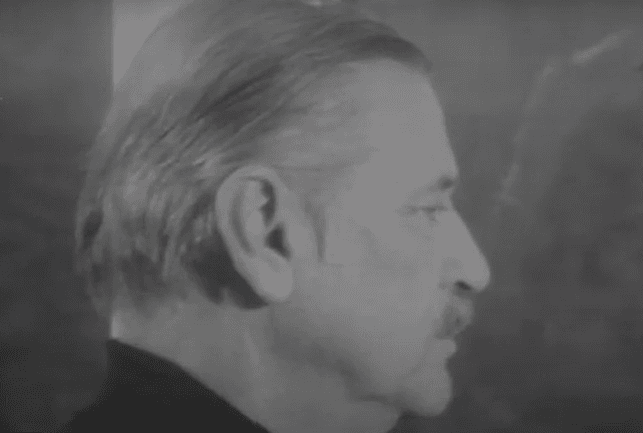
Oktay Rifat (TRT Archive)
He was sent to Istanbul for better education and learned French at the private school run by his grandfather Hasan Enver Pasha. He later returned to Ankara and attended Latife Hanım Primary School and then the Ankara High School, known as Taş Mektep. At Ankara High School he met Orhan Veli and Melih Cevdet Anday. He graduated from Ankara Boys High School in 1934 with third place.
After high school he enrolled in the Ankara Faculty of Law in 1933 and graduated in 1937. He spent some time in Paris for doctoral studies but was unable to complete his education due to the war.
He published his first literary works in Sesimiz, the publication organ of Ankara Boys High School. His first piece was the free verse poem "Hepsi Var. Sevgilim Yok" published in the sixth issue of Sesimiz. He also published a hybrid prose and free verse story titled "Ağlayan Evler. İskelet Parmaklı Kadın" and another piece titled "Mide Karar Verirse" in the same journal. His first poem, "Mermer Merdivenler", also appeared in Sesimiz. His poetry from this period shows influences from the Five Syllabists, Ahmet Haşim and Ahmet Hamdi Tanpınar. From 1933 onward his writings and poems were also published in İnkılâp, a journal where his uncle Cevat Rifat worked as director of publications. During this period he wrote poems such as "Merdiven", "Kadife" and "Komşunun Balkonu" under the name "Oktay Samih Rifat". While studying at the Faculty of Law he worked as a court clerk. He began his civil service at the Ministry of Trade’s accounting department, completed his military service, and later held positions including head of the General Directorate of Press and Publication and Ankara Radio Directorate (1947–1948), and lawyer at the TCDD Haydarpaşa Regional Directorate (1959–1972). He retired in 1972.
After Orhan Veli returned to Ankara in 1936, he resumed poetic collaboration with Melih Cevdet and Orhan Veli. His poems began appearing in Varlık magazine in the last two months of 1936. In May 1941, at Orhan Veli’s initiative, selected poems by the three poets were published under the title Garip. This book contains 23 poems, two of which were co-authored with Orhan Veli. With the preface of the Garip book, a new poetic approach known in literary circles as the Garip Movement emerged: free verse, devoid of rhyme, grounded in everyday language, concrete and materialist. Other collections containing poems from this period include Yaşayıp Ölmek Aşk ve Avarelik Üzerine Şiirler (1945) and Güzelleme (1945).
Under Orhan Veli’s leadership, he wrote socially engaged poems in the journal Yaprak, launched in 1949. He joined his friends in a hunger strike in support of Nâzım Hikmet’s hunger strike and announced it through Yaprak. He compiled these poems into a book titled Aşağı Yukarı in 1952, followed by the poetry collection Karga ile Tilki in 1954, which earned him the 1955 Yeditepe Poetry Award. Later, he returned to socially engaged poetry with Elleri Var Özgürlüğün (1966), redirected social realism from urban to rural contexts with Çobanıl Şiirler (1976), and addressed village and peasant realities through a social realist lens in Bir Cıgara İçimi (1979).
In 1956 he turned toward a new poetic approach with the book Perçemli Sokak, whose poems had never been published in any journal. This book is one of the key examples of the Second New movement, which reacted against Garip poetry. The preface-like essay accompanying Perçemli Sokak is regarded as the first poetic manifesto of the Second New. He continued this approach in Âşık Merdiveni (1958).
These include Şiirler (1969), Yeni Şiirler (1973), Elifli (1980), Denize Doğru Konuşma (1982), Dilsiz ve Çıplak (1984), and his final poetry collection Koca Bir Yaz (1987).
Novels: He wrote three novels: Bir Kadının Penceresinden (1976), Danaburnu (1980), and Bay Lear (1982).
Plays: He produced significant works in theater. His plays explore the individual’s struggle with fate or social conditions, and issues of adaptation or resistance to economic and cultural change. Published plays include Birtakım İnsanlar (1961), Kadınlar Arasında (1966), and Yağmur Sıkıntısı (1969). The collection Toplu Oyunlar (1988) includes the plays "Atlarla Filler" and "Çil Horoz". He also wrote unpublished plays: "Oyun İçinde Oyun", "Zabit Fatma’nın Kuzusu", and "Kıskançlık", co-written with Melih Cevdet.
Translations: From the 1960s onward he turned to Greek and Latin poets, publishing translations in Latin Ozanlarından Çeviriler (1963) and Yunan Antologyası (1964). He also translated works by Molière, Alfred de Musset, Turgenev, François Mauriac, Balzac, Jean Giraudoux and Georges Simenon.
Essays and Articles: He wrote essays and articles on poetry and culture under the title "Söz Gelişi" in the newspaper Tanin. His writings and articles on poetry were also published in newspapers and journals such as Ulus, Cumhuriyet, Yaprak, Yeditepe, Esi, Milliyet Sanat, Yazko Edebiyat, Yeni Dergi, Gösteri, Düşün. He also authored the essay collection Şiir Konuşması (1992).
1955 Yeditepe Poetry Award (for Karga ile Tilki).
1980 Sedat Simavi Foundation Award (for Bir Cıgara İçimi).
Ankara Society of Art Lovers Annual Best Play Award and TRT 1970 Stage Works Competition Achievement Award (for Yağmur Sıkıntısı).
1981 Madaralı Novel Award (for Danaburnu).
He died on the night of Monday, April 18, 1988, following a heart attack. He was buried at Karacaahmet Cemetery. His wish to be buried beside Orhan Veli was not fulfilled due to the absence of available space at Aşiyan Cemetery.
Anadolu Ajansı. "'Garip' akımı şairi: Orhan Veli Kanık." Accessed June 30, 2025. https://www.aa.com.tr/tr/kultur-sanat/garip-akimi-sairi-orhan-veli-kanik/965039
Tiken, Servet. “Ali Oktay Rifat (10 Haziran 1914 – 18 Nisan 1988).” *Atatürk Ansiklopedisi*. Accessed June 30, 2025. https://ataturkansiklopedisi.gov.tr/detay/1072/Ali-Oktay-Rifat-(10-Haziran-1914-18-Nisan-1988)
YouTube. "Oktay Rifat Horozcu (1973) | TRT Arşiv." TRT Arşiv. Accessed June 30, 2025. https://www.youtube.com/watch?v=SDOHpGpunAg
YouTube. Screen Capture. (Oktay Rifat Horozcu, 1973 | TRT Archive.) TRT Archive. Video, 0.00 min. Accessed June 30, 2025. https://www.youtube.com/watch?v=SDOHpGpunAg
Özcan, Tarık. “Oktay Rifat.” *Türk Edebiyatı İsimler Sözlüğü (TEİS)*. Accessed June 30, 2025. https://teis.yesevi.edu.tr/madde-detay/oktay-rifat

Doğum tarihi | 1914-06-10 | ||||||||
|---|---|---|---|---|---|---|---|---|---|
Eş | Sabiha Omay Türkan Dilber Aksoy | ||||||||
Place of Birth | Trabzon | ||||||||
Ölüm tarihi | 1988-04-18 | ||||||||
Place of Death | İstanbul | ||||||||
Profession(s) | Poet Painter Lawyer Translator Writer | ||||||||
Literary Period | Republican Era Turkish Literature | ||||||||
Literary Movement(s) | Garip Movement (First New) Social Poetry | ||||||||
Çocuk | Samih Rifat | ||||||||
No Discussion Added Yet
Start discussion for "Oktay Rifat Horozcu" article
Educational Life
Beginning of Literary Career and Early Works
Literary Movements and Poetic Vision
Garip Movement
Social Realist Poems
Poems in the Second New Style
Poems with Pure Poetry Characteristics
Other Works
Awards
Death