This article was automatically translated from the original Turkish version.
+1 More
Name(s) | Old Datça Neighborhood | ||||||||
|---|---|---|---|---|---|---|---|---|---|
Province(s) | Muğla | ||||||||
District | Datça | ||||||||
Neighborhood Status | Official neighborhood (dependent on Datça Municipality) | ||||||||
Geographic Location | 2 km west of the Datça district center | ||||||||
Settlement Type | Historical neighborhood | ||||||||
Architectural Fabric | Stone houses, narrow streets, traditional architecture | ||||||||
Protection Status | Historical fabric is preserved construction is controlled | ||||||||
Infrastructure | Electricity, water, and sewage services are available | ||||||||
Eski Datça is a neighborhood within the Datça district of Muğla Province. It is one of the historic settlement centers of the district, characterized by its traditional stone architecture and preserved urban fabric. Administratively, it falls under the jurisdiction of the Datça Municipality and District Governorship.

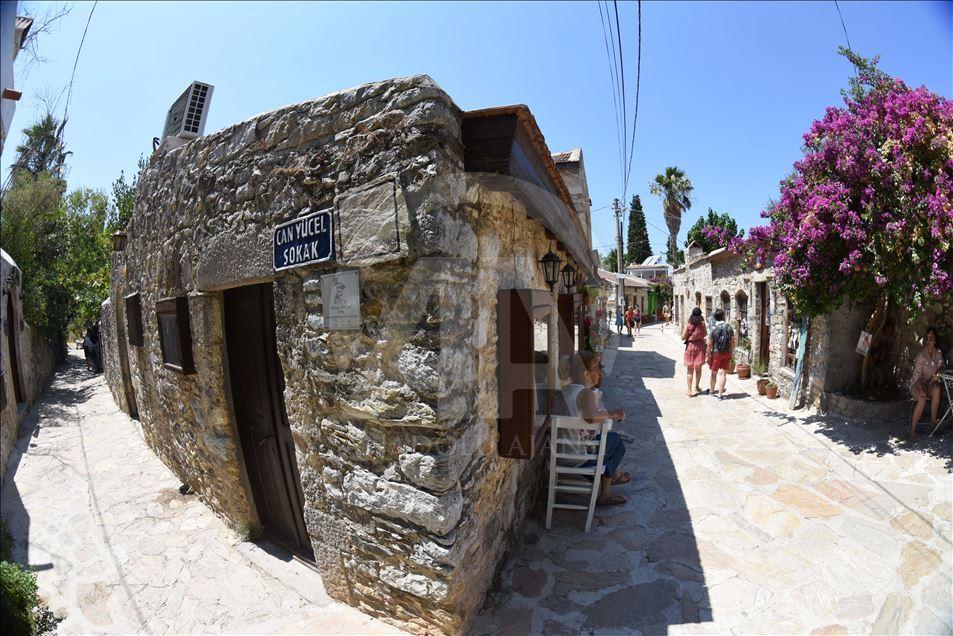
Eski Datça Neighborhood (AA)
Eski Datça Neighborhood is located approximately two kilometers from the center of Datça district. Situated on the western tip of the Datça Peninsula, it lies inland from the sea. The neighborhood’s built environment is organized around narrow streets, reflecting its traditional settlement pattern.
Buildings in the neighborhood are typically single or two-story structures constructed using local stone materials. Small-windowed houses with internal courtyards define the architectural character of the area. Traditional stone architecture has been prominently preserved in Eski Datça.
Eski Datça holds the status of a neighborhood within the administrative structure of the Republic of Türkiye and is subordinate to the Datça district of Muğla Province. Its population is annually updated by the Turkish Statistical Institute (TÜİK). The neighborhood’s population increases temporarily during the summer months.

Eski Datça Neighborhood (Muğla Governorate)
Eski Datça Neighborhood is associated with tourism due to its stone buildings, street layout, and historical character. The neighborhood hosts various craft workshops, small businesses, and visitor sites. The fact that the poet Can Yücel lived here for a period adds to its cultural references.
Development in Eski Datça Neighborhood is carried out in accordance with existing plans and conservation principles. Many buildings in the neighborhood have been restored in line with traditional architecture or have been subject to controlled development guidelines.

Eski Datça Neighborhood (Muğla Governorate)
Access to Eski Datça is provided by road from the center of Datça district. Basic infrastructure systems including electricity, water, and sewage are available within the neighborhood under municipal services.
Anadolu Ajansı. “Türk Şiirinin ‘Can Baba’sı, Datça ile Özdeşleşti.” Foto Galeri, September 5, 2015. Photograph: Durmuş Genç. Anadolu Ajansı. Accessed July 9, 2025. https://www.aa.com.tr/tr/pg/foto-galeri/turk-siirinin-can-babasi-datca-ile-ozdeslesti/.
Datça Belediyesi. "Datça Hakkında." Accessed July 9, 2025. https://datca.bel.tr/datca-hakkinda/.
Datça Kaymakamlığı Governorship. "Eski Datça Mahallesi." Accessed July 9, 2025. http://datca.gov.tr/eski-datca-mahallesi.
Muğla Büyükşehir Municipality. "Datça Hakkında." Accessed July 9, 2025. https://www.mugla.bel.tr/sayfa/datca-hakkinda.
Muğla Valiliği. "Datça." Accessed July 9, 2025. http://mugla.gov.tr/datca.

Name(s) | Old Datça Neighborhood | ||||||||
|---|---|---|---|---|---|---|---|---|---|
Province(s) | Muğla | ||||||||
District | Datça | ||||||||
Neighborhood Status | Official neighborhood (dependent on Datça Municipality) | ||||||||
Geographic Location | 2 km west of the Datça district center | ||||||||
Settlement Type | Historical neighborhood | ||||||||
Architectural Fabric | Stone houses, narrow streets, traditional architecture | ||||||||
Protection Status | Historical fabric is preserved construction is controlled | ||||||||
Infrastructure | Electricity, water, and sewage services are available | ||||||||
No Discussion Added Yet
Start discussion for "Old Datça Neighborhood" article
Geographical Location and Settlement
Historical Fabric and Architectural Features
Administrative Status and Population
Cultural and Touristic Significance
Conservation Status and Development
Transportation and Infrastructure