


This article was automatically translated from the original Turkish version.
+2 More
Ömerli (District)
Ömerli (District)
Location | Mardin Türkiye Southeastern Anatolia Region | ||||||||
|---|---|---|---|---|---|---|---|---|---|
Former Name(s) | Maserti | ||||||||
District Formation Date | 1953 | ||||||||
Area(s) | 401-409 km² | ||||||||
Neighboring Districts | Midyat (east), Yeşilli (west), Nusaybin and Mardin (south), Savur (north) | ||||||||
Distance to Mardin | 28 km | ||||||||
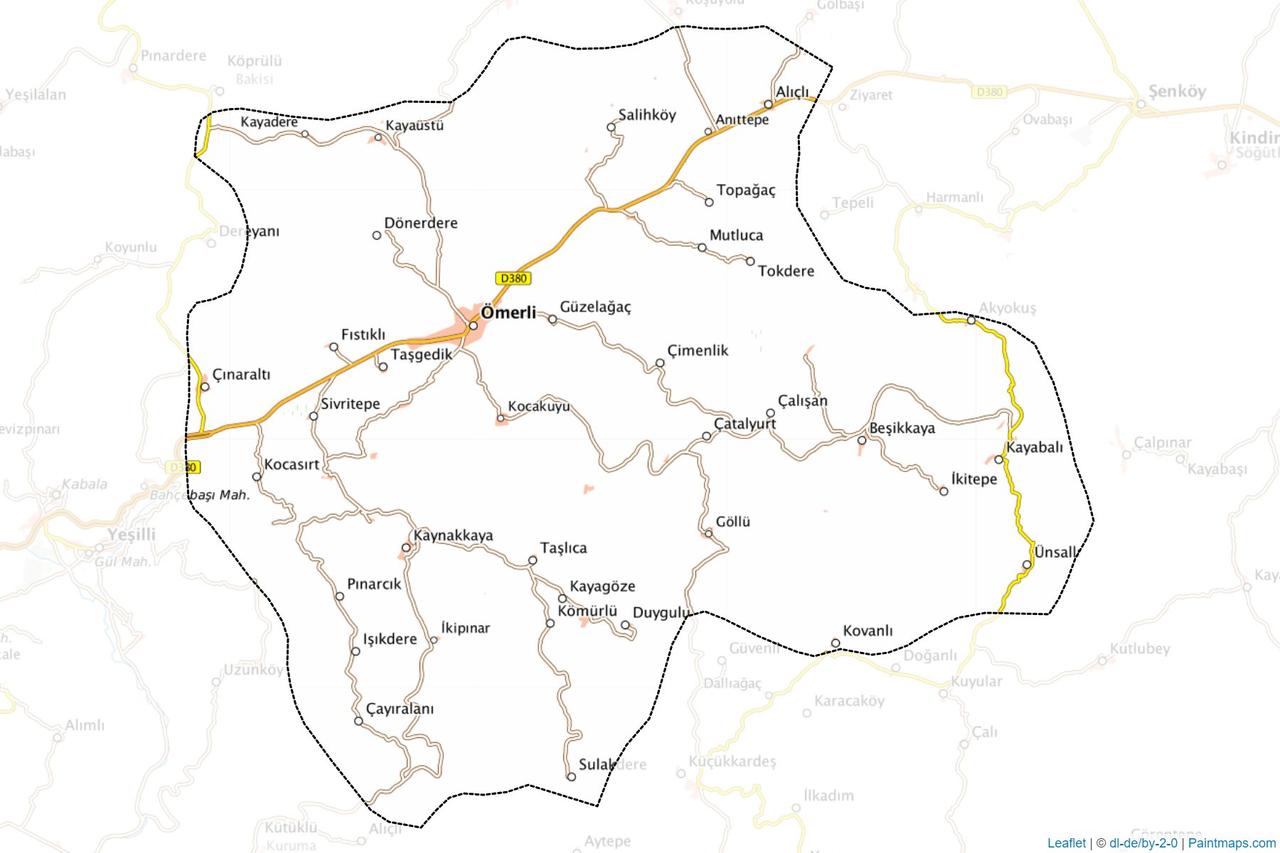
Ömerli is a district of Mardin Province in the Southeastern Anatolia Region of Türkiye. This settlement, formerly known as Maserti, attracts attention due to its rich history, diverse cultural fabric and geographical features. Granted district status in 1953, Ömerli is located east of Mardin place and covers an area ranging between 401 and 409 km², making it a part of the region’s important territory.
Although no definitive record exists regarding the founding of Ömerli information, archaeological findings reveal that the district has a very ancient past. Located in the region known as Upper Mesopotamia, Ömerli has been under the rule of the Sumerians, Assyrians, Persians, Romans, Byzantines and Turkish-Islamic states throughout history. Excavations at archaeological sites in the district—including Yaylatepe (Hırbatok), Göllü, İkipınar, Beşikkaya (Fafit) and Maserti—have uncovered coins, statues, stone-built houses, clay pots, cubes and decorative objects from the Assyrian, Persian, Byzantine, Arab and Ottoman periods, confirming continuous habitation since antiquity. The high value placed by the Sumerians and Assyrians on sculpture is corroborated by the large number of statues discovered during excavations importance.
The Ancient Syriac Mor Cırcıs Church, located in the district center, is an important historical monument whose original construction date is unknown but has been restored and reopened for worship. Assyrian sources dated to 1305–1274 BCE mention the Kaşinarı Mountains (Turabidin: Midyat, Ömerli, Mardin and Cizre regions). In Roman and Byzantine sources, Greek writers Arrian and Ptolemy refer to the Mardin-Midyat Basin as “Mount Masion”; the center of this basin is identified as the village of Beşikkaya (Fafit). By 589 CE, it is known that Syriac, Nestorian, Chaldean and Mahalmi communities lived in the region, and according to tradition, these communities converted to Islam during the Sotfo period in 1609 CE Patriarch.
After the 1071 Battle of Manzikert, Turkish raiders entered the region, and in 1517, Mardin and its surroundings were incorporated into the Ottoman Empire following the victories of Mercidabık and Ridaniye Yavuz Sultan Selim. In the early years of the Republic, Ömerli was a village under Savur; in 1925 its subdistrict center was moved from Ovabaşı (Metina) to Maserti, and in 1953 it became a district.
Ömerli is located 28 km from the city center of Mardin, bordered by Midyat to the east, Yeşilli to the west, Nusaybin and Mardin to the south, and Savur to the north. The district’s area ranges between 401 and 409 km². Its topographical structure consists of hills with elevations between 800 and 1100 meters, arranged around rivers flowing in a north-south direction. The district has a closed terrain structure, with flat areas in the valleys irrigated by these rivers source.
A continental climate prevails in the district. Summer months are hot and dry, while winter months are severely cold and snow rainy. Occasional extreme snowfall or rain precipitation has been recorded. The vegetation cover consists of oak forests with heights ranging from 0.50 to 3.5 meters, with density decreasing toward the north Plant.
Ömerli consists of the district center, which includes three neighborhoods—Cumhuriyet, Şafak and Yeni Neighborhood—along with 43 village and three mezras. Although the official language is Turkish, Arabic is spoken in the district center and five villages, while Kurdish is spoken in the other villages. Traditionally, the district features stone-built stone houses, with buildings rarely exceeding four stories. Ömerli, situated along the Mardin-Midyat highway, is a settlement composed of reinforced concrete and stone structures. Along Hürriyet Avenue, tradespeople offer various consumer goods; however, small industry economic sectors remain weak. Increasing communication is observed between People and state units, while inadequate electricity distribution systems and frequent outages are social challenges.
Ömerli’s economy is based on agriculture and animal husbandry. The irrigable lands in the valleys are suitable for farming, while oak forests support livestock activities. Small-scale trade are concentrated along Hürriyet Avenue in the district center. However, development in industry and production sectors remains limited. Power outages and infrastructure shortages are among the factors negatively affecting economic activity.
Ömerli possesses significant tourism potential due to its rich historical and cultural heritage. The restored and reopened Ancient Syriac Mor Cırcıs Church is an important gravity center. The Beşikkaya (Fafit) such as archaeological sites, including structures such as “Darius’s Castle” from the Roman period, as well as ancient mosaic-floored houses, statues and decorative objects, are attractive to history enthusiasts. However, its mountainous terrain and lack of major main routes limit tourism development. This potential could be better realized through infrastructure investments active.
According to 2013 data, Ömerli’s population was 15,045 (51.31% male, 48.69% female). According to 2018 TÜİK data, the total population was 14,289 (6,676 urban, 7,613 rural). In 2019, the population was recorded as 14,289 and rose to 14,805 in 2020. According to population registry records, approximately 130,000 people have been registered in Ömerli since the proclamation of the Republic. In 2020, there were 296 births, 197 death, 114 marriages and 13 divorces. Ethnic diversity is notable in the district; the transition of Syriac, Nestorian, Chaldean and Mahalmi communities to Islam shaped this building, which today continues with Turkish, Arab and Kurdish populations.
Ömerli stands out as one of Mardin’s most notable districts due to its rich history extending from antiquity to the present, its continental climate, its oak forest vegetation and its multicultural structure. It emerges as a region with potential for enhanced development through infrastructure and tourism investments.
Mardin Valiliği. “Ömerli.” Accessed April 8, 2025. http://www.mardin.gov.tr/omerli.
Ömerli Belediyesi. “Ömerli İlçesinin Eskiçağ Tarihi ve Arkeolojisi.” Accessed April 8, 2025. http://www.omerli.bel.tr/omerli-ilcesinin-eskicag-tarihi-ve-arkeolojisi.
Ömerli Kaymakamlığı. "İlçemiz Hakkında." Accessed April 8, 2025. http://www.omerli.gov.tr/ilcemiz-hakkinda.

Ömerli (District)
Ömerli (District)
Location | Mardin Türkiye Southeastern Anatolia Region | ||||||||
|---|---|---|---|---|---|---|---|---|---|
Former Name(s) | Maserti | ||||||||
District Formation Date | 1953 | ||||||||
Area(s) | 401-409 km² | ||||||||
Neighboring Districts | Midyat (east), Yeşilli (west), Nusaybin and Mardin (south), Savur (north) | ||||||||
Distance to Mardin | 28 km | ||||||||
History
Geographical Structure
Climate and Vegetation
Social Structure
Economic Structure
Tourism Potential
Demographic Structure