


This article was automatically translated from the original Turkish version.
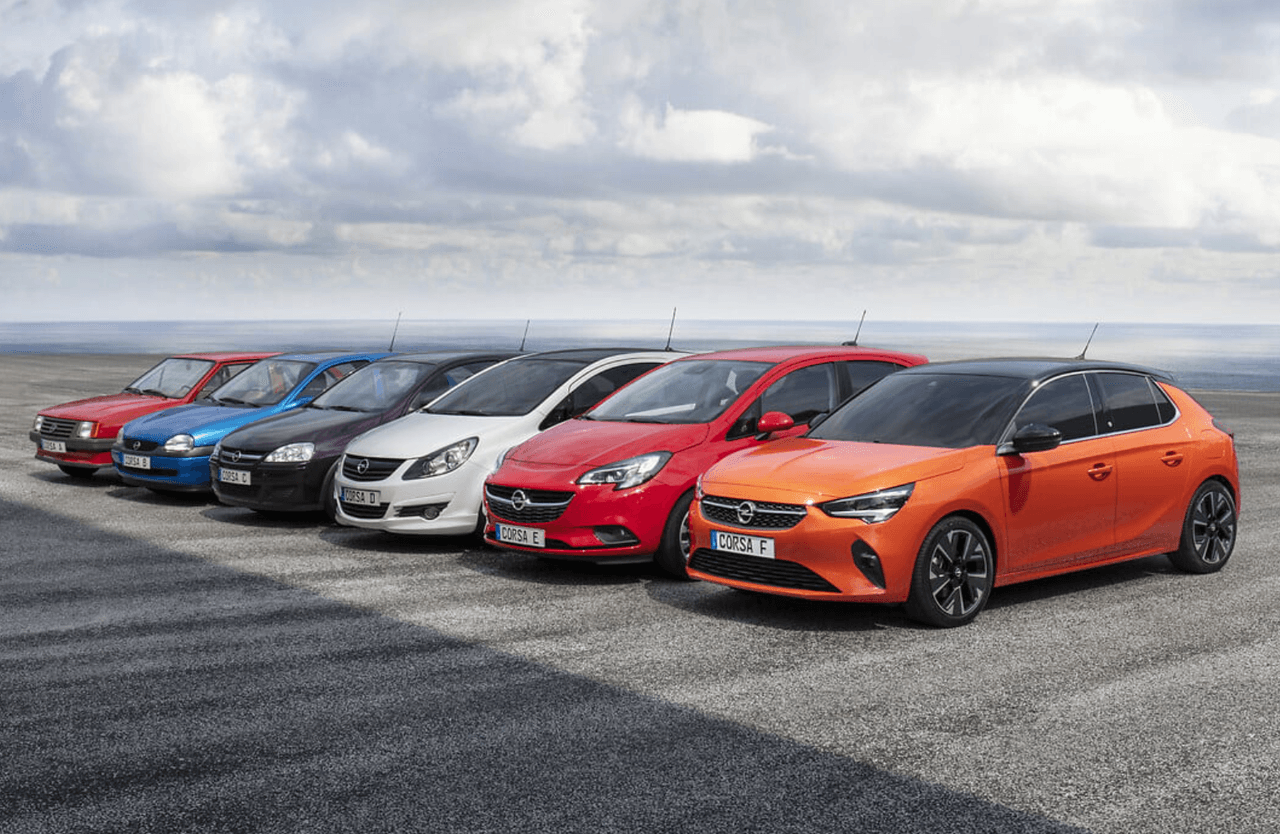
Opel Corsa series
Description | The Opel Corsa is a subcompact car series produced since 1982 and developed through six different generations. | ||||||||
|---|---|---|---|---|---|---|---|---|---|
Corsa A (1982–1993) | The first model, designed by Erhard Schnell, was 3.62 meters long and 3.1 million units were produced. | ||||||||
Corsa B (1993–2000) | With a design by Hideo Kodama, it adopted more rounded lines and over 4 million units were sold. | ||||||||
Corsa C (2000–2006) | The body was fully galvanized and equipped with ECOTEC engines; 2.5 million units were produced. | ||||||||
Corsa D (2006–2014) | ecoFLEX engines and Start-Stop systems were added; 2.9 million units were produced. | ||||||||
Corsa E (2014–2019) | The body length was 4.02 meters and included Apple CarPlay and advanced safety systems; 1.3 million units were sold. | ||||||||
Corsa F (2019–Present) | The PSA CMP platform was used and the electric Corsa-e was introduced, offering a range of 330 km. | ||||||||
The Opel Corsa is a car series produced by Opel since 1982 in the B segment place. The first Corsa rolled off the production line at the production facility in Zaragoza and achieved significant sales success within short, reaching over 14 million units sold in 40 years. Its design, equipment and safety systems have been renewed in every generation, introducing for the first time in the B segment many technologies previously exclusive to higher segments. It has also been sold under the Vauxhall, Chevrolet and Holden brands in the Europe market. Over its evolution from the first to the current generation, the Corsa has transitioned from internal combustion engines to also being equipped with electric motors, becoming an integral part of Opel’s electric mobility vision important.

The Corsa A, introduced in 1982 as Opel’s first model in the small car segment, began production at the newly established factory in Zaragoza, Spain. This model was designed to fill the gap created by the growing size of Opel’s previous Kadett series in the compact class. The Corsa A was positioned as a practical response to the economic car demands of its time solution.
The Corsa A had a very compact body measuring 3.62 meters in length. Its design was created by Erhard Schnell, a designer working at Opel at the time head. The model featured short, tight proportions, prominent fender flares and sharp lines, giving it a sporty appearance. In aerodynamic terms, it stood out with a drag coefficient of 0.36 cd like, achieving excellent performance for its class during that period.
Initially, the Corsa A was offered in two-door hatchback and notchback (sedan-like) body body styles. However, in 1985 a five-door variant was added to the lineup. This variety enabled the model to appeal to a broader audience.
Regarding engine options, the Corsa A was sold with three different gasoline engines. Over time, a diesel engine option was also introduced to the product range. The Corsa GSi variant, aimed at sporty users, attracted attention with its 100 horsepower engine. The GSi model was designed to compete with the compact sporty cars of its era opponent and was well received successful.
The interior of the Corsa A was simple and functional. The model received strong interest across various regions of Europe due to its different body styles and economical engine options. Both ease of use in daily life and an affordable pricing policy brought the Corsa A to a wide user base. Production of the Corsa A continued until 1993, with approximately 3.1 million units produced in total.

The Opel Corsa B was launched in 1993 following the success of its predecessor. During its design process, the target user base was re-evaluated from a new perspective, and the model was specifically developed to appeal to female drivers. This approach led to a more rounded and softer exterior design. The design task was again entrusted to Opel’s experienced designer Hideo Kodama.
The Corsa B was designed to be 10 cm longer than its predecessor, resulting in a significant increase in both interior space and boot capacity. Its wider seating area also made it a more functional vehicle for family use. One of the notable design features of the exterior was the wide oval-shaped “tea face” look of the front headlights. This design choice helped the model appear softer and friendlier.
Technically, the Corsa B incorporated significant improvements compared to its predecessor. Safety features such as ABS-assisted brake braking, side impact protection structures and front airbags were introduced. These features were uncommon in B-segment vehicles at the time and raised the model’s safety standards.
The engine range was expanded, with gasoline engines now equipped with fuel injection injection systems and catalytic converters. The 1.6-liter 16-valve GSi variant stood out for performance-oriented users, while diesel engine options evolved into turbocharged versions. This variety enabled the model to cater to diverse user profiles.
The sales success of the Corsa B was not limited to Europe. Different body styles such as sedan, station wagon and pick-up were produced in various countries to meet diverse market needs. This strategy strategy allowed the model to reach a wider global audience and enhance its international recognition. With over four million units sold during its production run, it became one of the key milestones in Opel’s history.

The Opel Corsa C is the third generation of the Corsa series, launched in 2000. Following the global success of its predecessor, the Corsa B, Opel continued working with designer Hideo Kodama. Kodama preserved the design lineage of the previous model while shaping the new generation. As a result, the Corsa C shared a similar exterior design philosophy with its predecessor, the Corsa B, but presented a more refined and updated building.
The dimensions of the Corsa C were revised compared to its predecessor, with its length increased by 10 cm to approximately 3.84 meters. The wider stance and longer wheelbase significantly increased interior space, providing a more comfortable living environment for both drivers and passengers. This expansion allowed the car to retain its compact, city-friendly structure while becoming an attractive option for users seeking a more spacious interior space.
Technologically, the Corsa C was equipped with significant innovations compared to its predecessors. For the first time, a fully galvanized body structure was used, aiming to enhance resistance to corrosion and ensure a longer-lasting body. The engine range was also updated, incorporating four-valve ECOTEC gasoline engines and direct-injection turbo diesel engines. All engine options were designed to comply with the newly introduced Euro 4 emission standards, targeting low fuel consumption and eco-friendly values.
In 2003, the Corsa C received a facelift with updated front shutter and bumper designs, along with subtle revisions to the overall design language. Interior modifications were also made. All these updates helped maintain the Corsa C’s relevance and strengthened its market competition.
The Corsa C was among the most popular B-segment cars of its time due to its economical fuel consumption, modern safety features and compact structure. It achieved sales of over 2.5 million units and was widely embraced by users in both Europe and Türkiye.

The fourth generation of the Corsa series, the Corsa D, was launched in 2006. Unlike previous generations, this generation featured distinct design differences between the three-door and five-door variants. The three-door version was produced with a coupé-like design to achieve a more sporty appearance, while the five-door version was optimized for family use with its spacious interior.
This generation grew in size compared to its predecessor, reaching a length of 3.999 meters. Thus, for the first time, the Corsa nearly reached the four-meter mark, offering a larger interior and boot space within the B-segment compact category. The five-seat seating capacity maintained practicality for urban use, while the increased rear chair space attracted attention.
Opel’s ecoFLEX approach was prominent in the Corsa D’s engine technology. This technology was developed to achieve low fuel consumption and reduced emissions. The Corsa D’s 1.3 CDTI ecoFLEX variant consumed only 3.3 liters per 100 kilometers and offered a low emission value of 88 g/km (according to NEDC standards). These figures positioned the Corsa D as an environmentally friendly and economical model in its class.
The model offered a range of gasoline and diesel engine options, paired with manual and automatic transmission transmissions to appeal to a broad user profile. The aerodynamic design, combined with a lightweight body structure, improved driving efficiency. Safety features were prioritized in the equipment lineup, with widespread adoption of active safety systems such as ABS, ESP and traction control.
In terms of exterior design, the Corsa D adopted a more upright stance compared to the Corsa C, giving it a more modern visual appearance. Following a 2011 facelift, updates were made to the grille, bumpers and headlight clusters. Additionally, the quality of interior materials and driver-oriented ergonomic elements were improved.
In terms of sales performance, the Corsa D remained one of Opel’s most produced models, achieving a production figure of approximately 2.9 million units. It was widely preferred in European and Turkish markets due to its wide range of body styles and engine options.

The fifth generation of the Opel Corsa series, the Corsa E, was introduced in 2014 and remained in production until 2019. This model retained the overall design lines of its predecessor, the Corsa D, but was enhanced with significant technological and ergonomic improvements. One of the most notable features of the Corsa E was its exceeding of the four-meter length limit for the first time. With a total length of 4.02 meters, it began to represent a higher level in its segment in terms of both comfort and equipment.
The exterior design of the Corsa E offered a more contemporary look compared to previous generations, with aerodynamic lines and modern styling. This generation preserved both urban driving convenience and a spacious interior. The model offered various body colors and rim options to enhance personalization.
Interior improvements included a heated steering wheel, seat heating, automatic air conditioning climate control and a 7-inch colorful touchscreen display. The Corsa E was integrated with the Apple CarPlay and Android Auto-enabled IntelliLink information-entertainment system, enabling users to establish easier vehicle connectivity with their mobile devices. Such multimedia systems were uncommon in the B segment prior to this model.
In terms of safety and driving assistance systems, the Corsa E was equipped with advanced technologies compared to earlier generations. These included front distance warning, traffic sign recognition and lane keeping assist. These systems elevated the model’s active safety standards and established it as a competitive contender in driver assistance technology within its segment.
Regarding engine options, the Corsa E was offered with various gasoline and diesel alternatives. The sporty Corsa OPC variant delivered a performance of 207 horsepower (152 kW). Later, this variant was replaced by the Corsa GSi with 150 horsepower. These versions targeted sporty users through their dynamic driving characteristics.
The Corsa E was produced at Opel’s Zaragoza plant in Spain and the Germany plant in Eisenach. It remained on the market for five years, achieving sales of approximately 1.3 million units. This figure marked a significant milestone contributing to the overall success of the Corsa series.

The sixth generation of the Opel Corsa, the Corsa F, was introduced in 2019 and made its world premiere at the Frankfurt Motor Show the same year. This model was the first Corsa developed after Opel joined Groupe PSA (now Stellantis). It is built on the same CMP (Common Modular Platform) as the Peugeot 208, enabling both internal combustion and fully electric versions to be offered on the same platform.
The Corsa F maintains its segment’s dimensions with a length of 4.06 meters and five-seat capacity, while enhancing performance-efficiency balance through increased interior space and optimized weight. The model offers gasoline, diesel and electric engine options simultaneously, allowing users to choose from a broad range based on their driving preferences.
The most notable innovation of this generation is the fully electric Corsa-e model. Equipped with a 100 kW (136 hp) electricity motor and a 50 kWh battery system, it offers a range of 330 km according to WLTP standards. With a 0–100 km/h acceleration time of 8.2 seconds, it became a standout option in its segment for both performance and environmental friendliness. Additionally, the Corsa-e was awarded the “Golden Steering Wheel” in 2020.
Traditional internal combustion engine variants were offered with 1.2-liter gasoline and 1.5-liter diesel engines at different power levels. Furthermore, as of 2023, a 48V mild-hybrid technology was added to the product range. This system integrates electric assistance with internal combustion engines to reduce fuel consumption and provides an eco-friendly alternative for urban driving.
In the Corsa F’s exterior design, Opel’s new design philosophy, the “Opel Vizor,” stands out. This design language is characterized by the integration of the grille, LED headlights and the Opel logo into a single black panel. Wide optical air intakes on the front bumper give the car a sportier appearance. Depending on the equipment level, the Opel logo is presented in black or satin silver finishes.
Interior technology is now central to the Corsa F’s appeal. The digital indicator cluster equipped with the Snapdragon Cockpit Platform and a 10-inch color touchscreen form the core of the infotainment system. The Intelli-Lux LED matrix headlight system, introduced with this model, was further enhanced with a 14-LED configuration for more precise illumination. A high-resolution panoramic rear opinion camera supports user experience in urban parking and maneuver.
The Corsa F has achieved new sales records in countries such as Germany and the United Kingdom and has established itself as a prominent player in the small electric vehicle segment. Additionally, the Corsa-e Rally version developed under the ADAC Opel e-Rally Cup has entered motorsport. In line with Opel’s strategy to transition entirely to electric vehicle production by 2028, the electric alternatives offered by the Corsa F play a crucial role in this transition.

Autoevolution. "OPEL Corsa 5 Doors - All Models by Year (1993-Present) - Specs, Pictures & History." Accessed April 10, 2025. https://www.autoevolution.com/opel/corsa-5-doors-1/.
Opel. *40 Years of Opel Corsa: A Success Story in Six Acts*. Accessed April 10, 2025. https://www.opel.ie/about-opel/opel-news/40-years-of-opel-corsa--a-success-story-in-six-acts.html.
Stellantis. *40 Years of Opel Corsa: A Success Story in Six Acts | Opel | Stellantis*. Accessed April 10, 2025. https://www.media.stellantis.com/em-en/opel/press/40-years-of-opel-corsa-a-success-story-in-six-acts.
arabam.com. *Opel Corsa Tarihi*. Accessed April 10, 2025. https://www.arabam.com/blog/genel/opel-corsa-tarihi/.

Opel Corsa series
Description | The Opel Corsa is a subcompact car series produced since 1982 and developed through six different generations. | ||||||||
|---|---|---|---|---|---|---|---|---|---|
Corsa A (1982–1993) | The first model, designed by Erhard Schnell, was 3.62 meters long and 3.1 million units were produced. | ||||||||
Corsa B (1993–2000) | With a design by Hideo Kodama, it adopted more rounded lines and over 4 million units were sold. | ||||||||
Corsa C (2000–2006) | The body was fully galvanized and equipped with ECOTEC engines; 2.5 million units were produced. | ||||||||
Corsa D (2006–2014) | ecoFLEX engines and Start-Stop systems were added; 2.9 million units were produced. | ||||||||
Corsa E (2014–2019) | The body length was 4.02 meters and included Apple CarPlay and advanced safety systems; 1.3 million units were sold. | ||||||||
Corsa F (2019–Present) | The PSA CMP platform was used and the electric Corsa-e was introduced, offering a range of 330 km. | ||||||||
Opel Corsa A (1982–1993)
Opel Corsa B (1993–2000)
Opel Corsa C (2000–2006)
Opel Corsa D (2006–2014)
Opel Corsa E (2014–2019)
Opel Corsa F (2019–present)