
This article was automatically translated from the original Turkish version.
+1 More
Melocan Kavurması
Region(s) | Ordu | ||||||||
|---|---|---|---|---|---|---|---|---|---|
Product Type | Kavurma / Regional Dish | ||||||||
Main Ingredients | Melocan (Smilax excelsa), Onion/Leek, Liquid Oil, Salt | ||||||||
Method of Preparation | Boiled / Fried | ||||||||
Method of Service | Hot / Cold | ||||||||
Registration Number | 1217 | ||||||||
Registration Date | 11.09.2022 | ||||||||
Application Number | C2021/000482 | ||||||||
Application Date | 23.11.2021 | ||||||||
Name of the Geographical Indication | Ordu Melocan Kavurması | ||||||||
Type of the Geographical Indication | Mahreç Mark | ||||||||
Registered by | Ordu Metropolitan Municipality | ||||||||
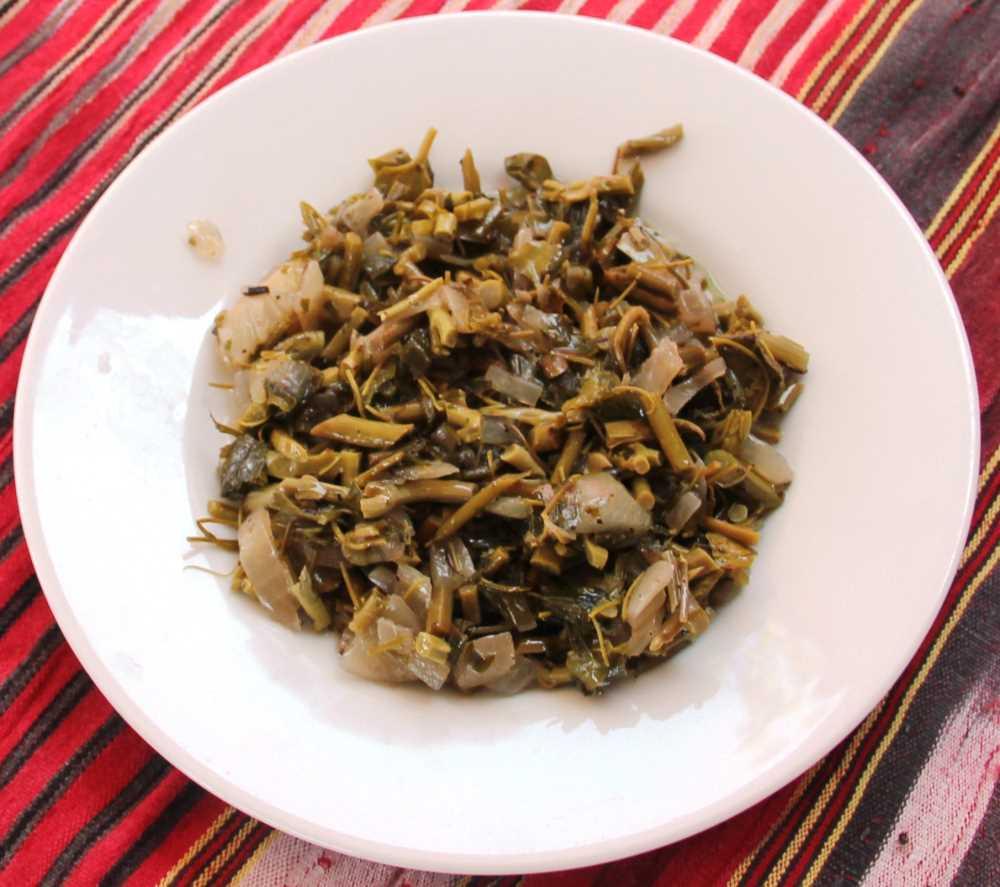
A traditional dish made from a perennial, climbing, thorny plant known locally in the Ordu region as dikenucu, melevcan, or melocan, with the Latin botanical name Smilax excelsa L. and a slightly sour taste. Melocan grows naturally in Ordu’s forested and shrubby areas. Its young shoot tips are harvested in April and May and consumed fresh, canned, or pickled until the end of September.

Melocan Plant (Military Life)
Ordu Melocan Kavurması is prepared by sautéing boiled melocan with onion or leek. Optionally, an egg may be cracked on top before serving. This dish, which can be consumed both hot and cold, has been a cherished traditional delicacy in the region since the Ottoman era and is frequently served during spring festivals and celebrations in Ordu.
The plant has a strong geographical association and was officially registered as a “geographical indication” by the Turkish Patent and Trademark Office on 11 September 2022 (Registration No: 1217).

Geographical Indication Registration Certificate (Ordu Metropolitan Municipality)
Ordu Melocan Kavurması is served both as a side dish accompanying main meals and as a standalone main course. As an integral part of Ordu’s rich culinary culture, this dish frequently appears at local festivals and everyday tables. The use of naturally growing melocan reflects both the region’s culture of living in harmony with nature and its unique gastronomic heritage. The geographical indication registration safeguards the uniqueness and quality of this distinctive flavor and supports the preservation of local production methods.
The production of Ordu Melocan Kavurması in accordance with its geographical indication registration is regularly monitored by a control board established under the coordination of the Ordu Metropolitan Municipality. This board verifies that the ingredients and production methods comply with the criteria specified in the registration certificate. It also ensures that the product is correctly labeled with the name “Ordu Melocan Kavurması” and the geographical indication logo. Inspections are conducted at least once a year, but additional inspections may be carried out if needed or upon complaint. When non-compliance is detected, appropriate warnings are issued to the producer and corrective measures are enforced.
Accessed November 26, 2025.
Kültür Portalı. "Melocan (Diken Ucu) Kavurması." Accessed June 23, 2025.
Ordu Büyükşehir Belediyesi. "Artık Onunda Patenti Var." Accessed June 23, 2025.
Ordu Büyükşehir Belediyesi. Ordu’nun Yeme İçme Kültürü. Sayfa 34. Accessed June 23, 2025.
Ordu İl Kültür ve Turizm Müdürlüğü. Ordu Mutfak Kültürü. Sayfa 40. Accessed June 23, 2025.
Turk Patent and Trademark Office. (2022). *Ordu Melocan Kavurması Coğrafi İşaretTescil Tarihi. Registration No: 1217, Registration Date: 09.11.2022. Accessed June 23, 2025. https://ci.turkpatent.gov.tr/cografi-isaretler/detay/5503

Melocan Kavurması
Region(s) | Ordu | ||||||||
|---|---|---|---|---|---|---|---|---|---|
Product Type | Kavurma / Regional Dish | ||||||||
Main Ingredients | Melocan (Smilax excelsa), Onion/Leek, Liquid Oil, Salt | ||||||||
Method of Preparation | Boiled / Fried | ||||||||
Method of Service | Hot / Cold | ||||||||
Registration Number | 1217 | ||||||||
Registration Date | 11.09.2022 | ||||||||
Application Number | C2021/000482 | ||||||||
Application Date | 23.11.2021 | ||||||||
Name of the Geographical Indication | Ordu Melocan Kavurması | ||||||||
Type of the Geographical Indication | Mahreç Mark | ||||||||
Registered by | Ordu Metropolitan Municipality | ||||||||
No Discussion Added Yet
Start discussion for "Ordu Melocan Kavurması" article
Ingredients
Preparation and Cooking Process
Consumption and Cultural Context
Monitoring