This article was automatically translated from the original Turkish version.
Type of Geographical İndication | Signaling Device | ||||||||
|---|---|---|---|---|---|---|---|---|---|
Registration Number | 269 | ||||||||
Registration Date | 15.12.2017 | ||||||||
Product / Product Group(s) | Processed and Unprocessed Fruits Vegetables and Mushrooms | ||||||||
Province(s) | Ordu | ||||||||
Applicant/Registrant(s) | Kabadüz Municipality | ||||||||
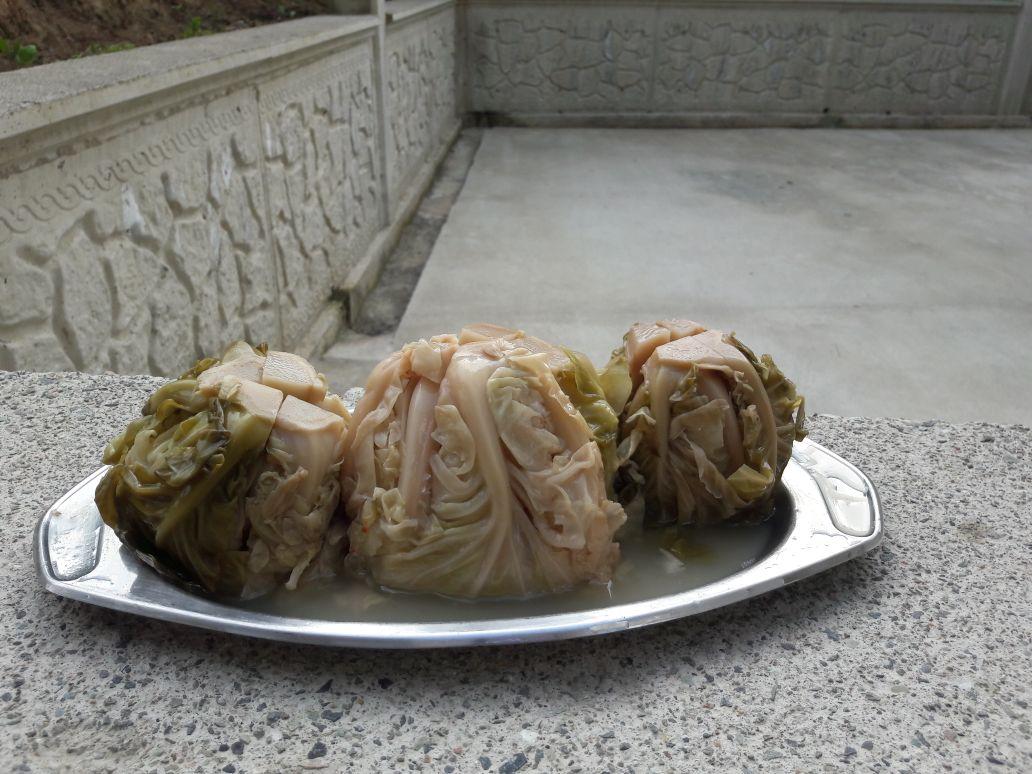
Ordu Highland Cabbage Pickle is a traditional pickle variety produced from white-headed cabbages grown in the Yokuşdibi village of the Kabadüz district in Ordu province, as well as in the Turnalık and Çambaşı highlands. This product, protected by a geographical indication mark, was officially registered on 15 December 2017 and holds geographical indication status under Law No. 6769 on Industrial Property.
The white-headed cabbage known as “yayla pancarı” is locally referred to as “dürme” or “pancar.” This plant matures during the summer months and typically develops compact heads weighing between 250 and 750 grams, with crisp, firm leaves. Its growth under cold climatic conditions enhances the cabbage’s firmness and crunchiness, imparting a distinctive texture and aroma to the pickle.
Ordu Highland Cabbage Pickle is prepared by packing thickly sliced cabbage heads into plastic barrels along with saltwater and garlic. The pickles are then left to ferment for approximately two months in a cool, dark environment. They may be consumed plain or sautéed with onions. When sautéing, the pickles are lightly rinsed, thinly sliced onions are fried in oil, and the pickles are added and cooked for a few additional minutes.
The chemical composition of the product varies within the following ranges: ash content 4–10%, cellulose 0.79–1.12%, crude protein 0.80–2.25%, and salt content 4.00–9.80%.
Seeds are sown in seedbeds on the highlands at the beginning of March. After approximately 35 days, the seedlings reach a height of 15–20 cm and are transplanted into fields in early May at spacing of 40x40 cm. The cabbages are harvested 90–120 days after transplanting, after which outer leaves are removed, washed, sliced, and prepared for pickling. Yield per decare ranges between 1000 and 1500 kg.
The quality of water and salt used in pickle production is critical to the success of the fermentation process. The water must not be hard and must be free of lime and foreign tastes. Salt concentration is adjusted to 3–4%; rock salt or lake salt is generally preferred.
The production of Ordu Highland Cabbage Pickle is restricted exclusively to cabbages grown in the Yokuşdibi village (1250 m elevation) of Kabadüz district in Ordu province, as well as in the Turnalık highland (1600 m) and Çambaşı highland (1800 m), including the surrounding settlements. These altitude and climatic conditions are the fundamental factors determining the product’s distinctive characteristics.
Compliance with the specifications outlined in the geographical indication registration certificate is monitored by a three-member commission composed of experts from the Ordu Provincial Directorate of Food, Agriculture and Livestock, the Faculty of Agriculture at Ordu University, and the Ordu Food Control Laboratory Directorate. Inspections are conducted at least once annually, and must be carried out within one month in the event of a complaint. The commission may seek expert support from public or private institutions when necessary and may initiate legal proceedings as required.
Turk Patent and Trademark Office. *Ordu Yayla Pancarı Turşusu (Ordu Dürme Turşusu): Mahreç İşareti Tescil Belgesi, Tescil No: 269*. Date of Registration December 15, 2017. Accessed October 19, 2025. https://ci.turkpatent.gov.tr/Files/GeographicalSigns/22d84e2d-bf21-44e0-8a96-ae9562f3ddb3.pdf.
Turkish Patent and Trademark Office. "Ordu Yayla Pancarı Turşusu / Ordu Dürme Turşusu." Geographical Indications Portal. Accessed October 19, 2025. https://ci.turkpatent.gov.tr/cografi-isaretler/detay/38108.

Type of Geographical İndication | Signaling Device | ||||||||
|---|---|---|---|---|---|---|---|---|---|
Registration Number | 269 | ||||||||
Registration Date | 15.12.2017 | ||||||||
Product / Product Group(s) | Processed and Unprocessed Fruits Vegetables and Mushrooms | ||||||||
Province(s) | Ordu | ||||||||
Applicant/Registrant(s) | Kabadüz Municipality | ||||||||
No Discussion Added Yet
Start discussion for "Ordu Yayla Pancar Pickle (Ordu Dürme Pickle)" article
Product Characteristics
Preparation Method
Geographical Boundary and Production Conditions
Monitoring