


+2 More

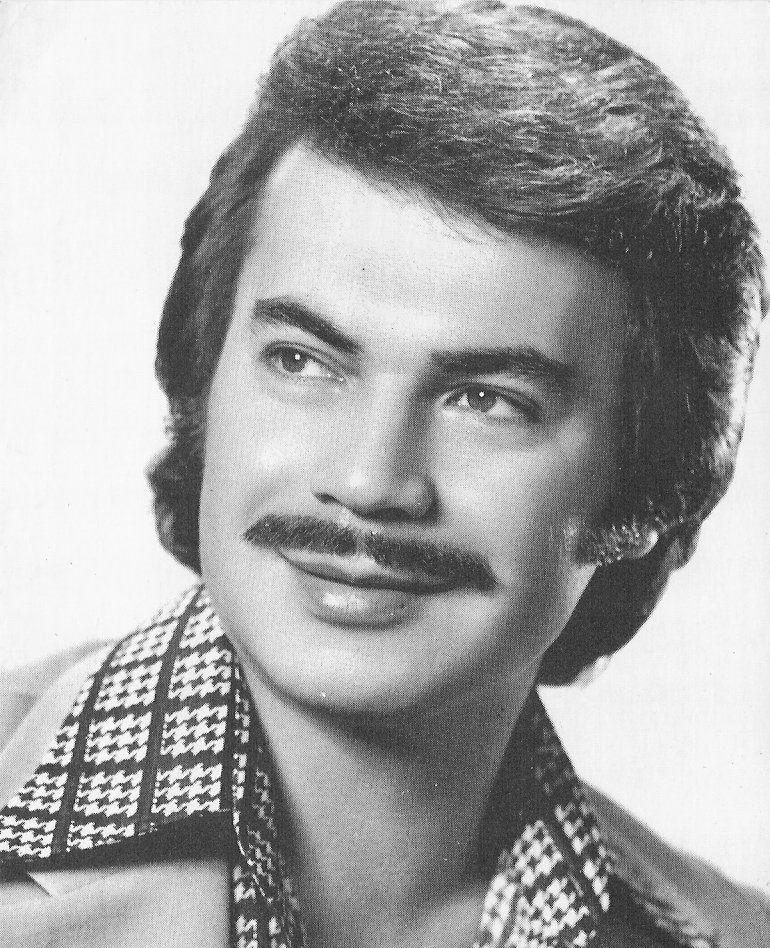
Orhan Gencebay, born in 1944 in Samsun, is a composer, performer, saz, and vocal artist, as well as a music director and film actor. His real name is Orhan Kencebay.
Orhan Gencebay was born in 1944 in Samsun. He encountered music at the age of six, beginning his musical journey with violin and mandolin lessons from Emin Tarakçı, a classical west musician. At seven, he began playing the tambur and gradually mastered the ut and many other instruments. Through his education at the Samsun Musiki Cemiyeti, he expanded his repertoire in together people music and also received formal training in conservatory music.
During his middle school and high school years, Gencebay played various instruments in the music societies of Samsun, Edirne, and Istanbul, while also performing at people’s houses and running his own music schools. In 1964, despite passing the entrance examination for TRT Ankara Radio with high marks, he was conscripted into military service after the exam was canceled. In 1966, he joined TRT Istanbul Radio, where he studied the bağlama alongside Arif Right and Cinuçen Tanrıkorur. In 1967, he resigned to begin his professional music career.

After his time at TRT, Gencebay served as a music director for artists such as Muzaffer Akgün, Yıldız Tezcan, and Ahmet Sezgin, and reached a wide audience with works such as “Sabır Taşı”, “Sevemedim Karagözlüm”, and “Bir Teselli Ver”. In the 1970s, he became a pioneer of arabesk music and played a foundational role in shaping the genre.
Orhan Gencebay has become more than just a artist in Türkiye; he has become a figure whose emotions resonate deeply with broad segments of the public. Although known as the pioneer of arabesk music, he occupies a space beyond this label. His public image is that of an artist who emerges from the people yet possesses exceptional musical mastery. The media’s frequent use of the term “Orhan Father” reflects the emotional bond he has forged with the public.
Gencebay’s music exerts a powerful influence by addressing themes such as societal emotional fractures, migration, loneliness, and love pain. In this sense, he is not merely a only artist but also a “social voice”.
Although rooted in Turkish folk music, Gencebay’s compositions bear traces of Western music and Arab modes. An artist who skillfully blends East-Western synthesis into a harmonic building of depth and complexity, he created a unique style by combining instruments such as the bağlama, tambur, and violin in polyphonic arrangements. This style has been academically defined as “Gencebay Arabeski”.
His works are not only melodically rich but also strong in literary terms. Pieces such as “Batsın Bu World”, “Dil Yarası”, and “Kır Gönlünün Zincirini” have been subject to detailed analyses both linguistically and musically. These studies have revealed the thematic depth of Gencebay’s compositions, the relationship between individual and collective emotions, and his contribution to cultural memory.
Orhan Gencebay is also regarded as a model artist in academic fields such as bağlama instruction and violoncello pedagogy. Academic research that incorporates popular music pieces into violoncello teaching demonstrates the pedagogical potential of Gencebay’s music.

Orhan Gencebay: Bir Teselli Ver, (İstanbul Plak)
The “Gencebay Arabeski”, analyzed in detail by Meral Uzbek, represents critical turning points in Türkiye’s modernization process from the 1970s onward. Here, arabesk is not merely a musical genre; it is the cultural expression of rural-urban conflict and the individual’s search for solitude. Gencebay has become an enduring figure in Türkiye’s cultural heritage as both witness and transmitter of this transformation.

Orhan Gencebay (İstanbul Plak)
Orhan Gencebay’s artistic philosophy is built on the principles of “originality, polyphony, and the primacy of emotion”. As an artist who embraces academic discipline in music, he unites traditional and contemporary elements. In his musical expression, emotional depth is fused with technical mastery, making him a unique creator. His works, which he himself calls “free compositions”, are created without adherence to fixed formulas.
Gencebay has profoundly influenced not only listeners but also generations of artists. Musicians across genres—from arabesk to pop, from fantasy to rap—have interpreted his works and drawn inspiration from his style. Today numerous work still carry his influence in their bağlama solos and melodic structures. In this sense, Gencebay is not merely a music master but also an “school”.
According to thematic and structural analyses, the artist’s music possesses multidimensionality. His socially resonant lyrics transform individual emotions into collective expression.
Orhan Gencebay is not merely a composer or performer; he is a cultural symbol that has left a significant imprint on Türkiye’s social memory. He is a pivotal figure in Türkiye’s modernization process, both musically and socioculturally. His music does not merely represent arabesk as a genre; it is regarded as an expressive form reflecting Türkiye’s societal transformation, fractures, and emotional landscape. His works serve as sociological documents capturing the spirit of an era. Through musical richness, lyrical depth, and the emotional bond he established with the public, he has left a lasting mark on the history and future of Turkish music.
Orhan Gencebay - When Spring Comes (1979) | TRT Archive
Erciyes Üniversitesi Journal of Social Sciences Institute. "Makamsal Viyolonsel Öğretiminde Popüler Müzik Eserlerinden Yararlanma (Orhan Gencebay Örneği)." Erciyes University Journal of Social Sciences Institute, no. 39 (2015): 119–136. https://dergipark.org.tr/en/pub/erusosbilder/issue/23765/253334.
Gencebay, Orhan. Orhan Gencebay Resmi Web Sitesi. Accessed April 6, 2025. https://www.orhangencebay.com.tr/.
Güneş Güner. “Orhan Gencebay.” *Güneş Güner Photography*. Accessed April 6, 2025. https://gunesguner.com/portfolio_page/orhan-gencebay/.
Kınık, Mehmet. "Bağlama Eğitiminde Popüler Müzik Eserlerinden Yararlanma: Orhan Gencebay Örneği." Uluslararası İnsan Bilimleri Dergisi 4, no. 7 (2013): 128–136.
Opus3a. “Orhan Gencebay.” *Opus3a*. Accessed April 6, 2025. https://www.opus3a.com/orhan-gencebay.
Samsun İl Kültür ve Turizm Müdürlüğü. "Orhan Gencebay." Accessed April 6, 2025. https://samsun.ktb.gov.tr/TR-280912/orhan-gencebay.html.
TRT Arşiv. "Orhan Gencebay - Mevsim Bahar Olunca (1979)." YouTube video, 4:30. October 2019. https://www.youtube.com/watch?v=n3BxRRLDKis.
Taş, Selda. “Orhan Gencebay Eserlerinin Müziksel ve Edebi Analizi: Batsın Bu Dünya Albümü Örneği.” EBSCOhost. Accessed April 6, 2025. https://openurl.ebsco.com/EPDB%3Agcd%3A16%3A29944304/detailv2?sid=ebsco%3Aplink%3Ascholar&id=ebsco%3Agcd%3A177172721.
Uğurlu, İsmail. “Türk Arabesk Müziğine Yönelik Sözel ve Müziksel Çok Boyutlu İçerik Çözümlemesi (Orhan Gencebay Örneği).” International Journal of Social and Humanities Sciences Research (JSHSR) 4, no. 19 (2017): 1356–1376. https://jshsr.org/index.php/pub/article/view/2770.
YouTube username. "Berhudar Ol - Orhan Gencebay." YouTube video, [length]. Date Published. https://www.youtube.com/watch?v=QQb7YH0OUKg.
Özbek, Meral. Popüler Kültür ve Orhan Gencebay Arabeski. İstanbul: İletişim Yayınları, 1991.

Life
Public Image
Music and Cultural Legacy
Arabesk and Social Reflections
Artistic Philosophy and Influenced Artists