This article was automatically translated from the original Turkish version.
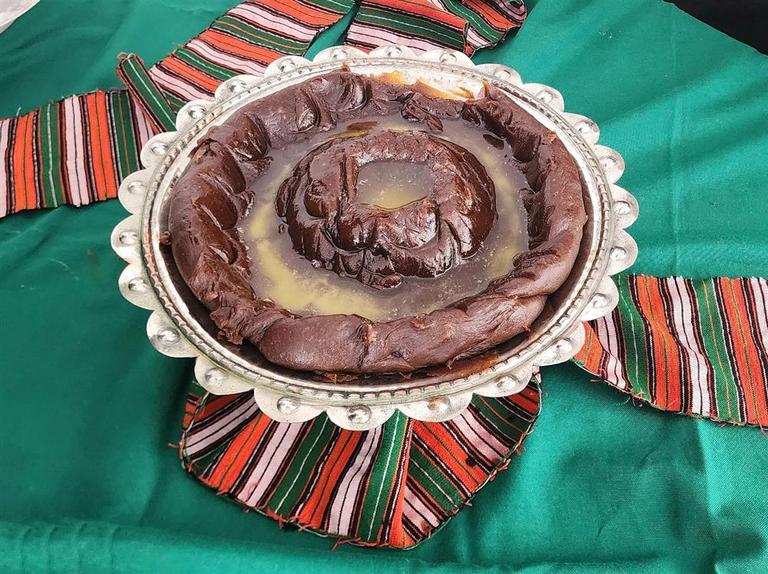
Öksüz helvası is a traditional Turkish halva variety specific to the district of Alanya in Antalya, Türkiye, prepared with grape molasses, water, flour, and butter. The halva is served with a depression made in its center to hold butter; this depression and method of consumption are part of local culinary traditions.
Öksüz helvası is among the regional sweets passed down through generations in Alanya and its surroundings. The ingredients used in its preparation are common in the traditional cuisine of the region. Its method of preparation and presentation have been preserved alongside local culinary practices.
Öksüz helvası has been documented as part of efforts to record local culinary heritage and appears in publications focused on regional dishes.
Öksüz Helvası (Anadolu Ajansı)
The traditional ingredients used in preparing Öksüz helvası are as follows:
In the preparation process, grape molasses and water are boiled together. Flour and butter are then added to the mixture and cooked until the desired consistency is achieved. The cooked halva is transferred to a serving dish, a depression is made in its center, and heated butter is poured into this depression.
The halva is consumed by dipping into the butter-filled depression created during serving. Oral narratives and naming conventions associated with this method of consumption are preserved locally. The names “Öksüz Helvası” and “Öküz Helvası” are both used interchangeably in regional usage.

Origin and Cultural Context
Ingredients and Preparation
Consumption Method and Naming