


This article was automatically translated from the original Turkish version.
Oruk is a traditional dish closely associated with the cuisine of Kilis in southeastern Türkiye, made primarily with fine bulgur and meat. Although structurally similar to içli köfte, it possesses unique characteristics in terms of preparation technique, ingredient ratios, and cooking methods. Oruk is recognized as both a daily food and a dish served on special occasions and festive tables, and it also functions as a cultural element that sustains communal sharing and traditional food preparation practices.
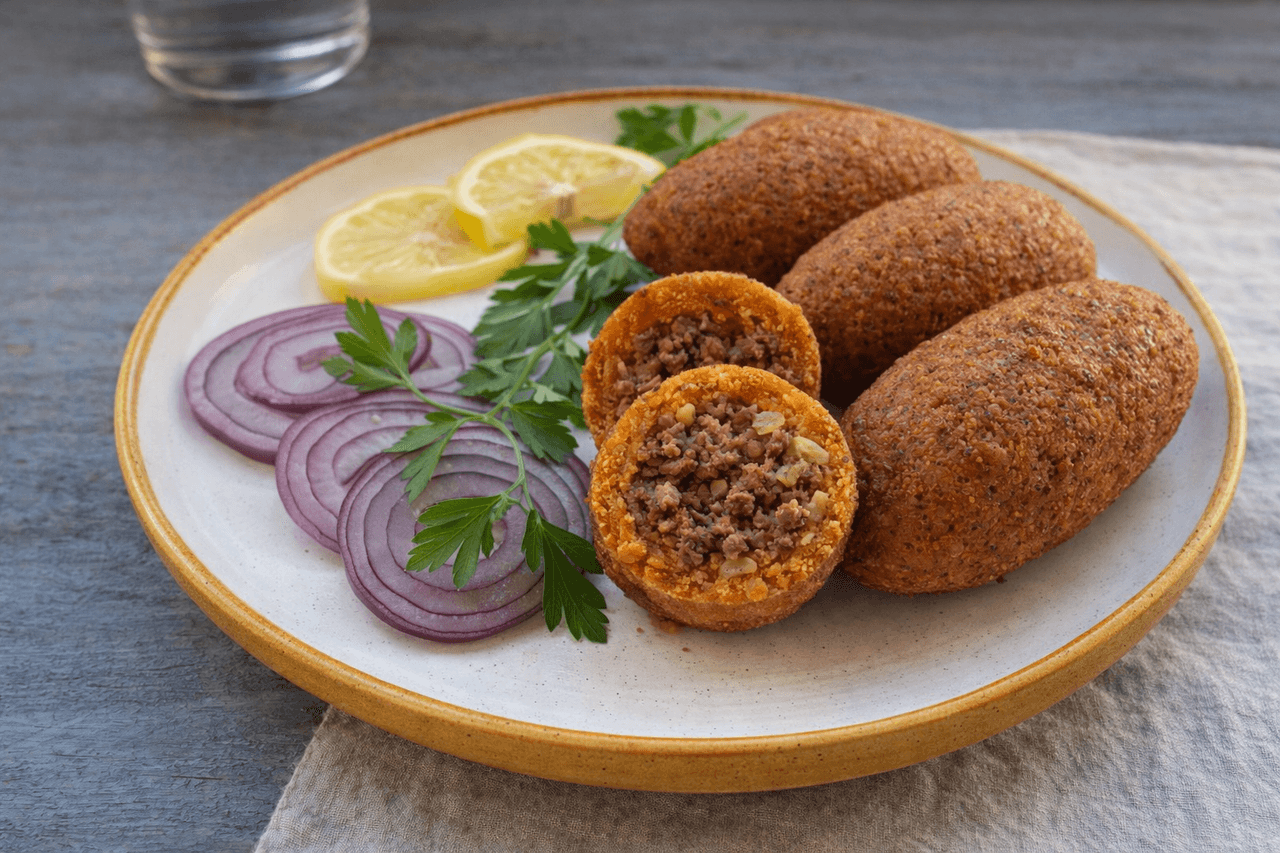
Oruk Dish (Generated by Artificial Intelligence.)
Oruk is a dish prepared by mixing fine bulgur with water to form a dough, which is then filled predominantly with a meat-based stuffing. The outer layer consists of a dense mixture created through kneading the bulgur. The filling typically includes minced meat, finely chopped onion, and various spices. The combination of these two main components results in a dish that is usually shaped into oval or round forms.
Some variations indicate that oruk can also be prepared without any filling, in a plain form. This demonstrates the existence of multiple regional variants. Oruk is not only regarded as a specific dish but also as an example of regional culinary diversity.
The primary ingredient in oruk is fine bulgur. Water is added in measured quantities and the bulgur is kneaded to form the outer layer. The consistency achieved during this stage is crucial for the structural integrity of the dish. During kneading, the bulgur must soften sufficiently to achieve a uniform texture.
The filling is generally made by mixing minced meat, finely chopped onion, and various spices. This mixture is placed inside the outer dough layer. The shaped portions are then prepared for cooking. To prevent the outer layer from breaking apart during shaping, it must have an even and balanced thickness.
Cooking methods vary by region. Oruk can be prepared by frying, baking, or boiling. Frying results in a firmer and crispier outer surface, while baking provides a more even cook. Boiling is considered a lighter method of consumption. These different cooking techniques directly influence the dish’s flavor and texture.
Oruk is widely prepared and consumed in the cuisine of Kilis, where it holds an important place in the local culinary tradition and is regarded as an element of regional gastronomic identity. Kilis’s culinary culture has been shaped by historical and geographical interactions, and oruk reflects this accumulated heritage.
However, oruk is not limited to Kilis; similar recipes are also prepared in neighboring regions. Each region imparts its own distinctive characteristics through ingredient preferences and cooking methods. This variation demonstrates that oruk is a dish that has diversified across local cuisines.
Oruk serves not only as a food for nutrition but also fulfills social and cultural roles. Its preparation within families as a shared activity supports intergenerational knowledge transfer. The time and labor required for its preparation mean that it is typically made during special occasions or when people gather together.
In this context, oruk is recognized as a dish type that helps sustain traditional culinary practices. It also plays a role in hospitality culture, contributing to the strengthening of social bonds.
Oruk holds a significant place among dishes prepared especially during Ramadan. It is commonly chosen for iftar meals. Its filling nature and preparation method have made it a widely consumed food during this period.
During Ramadan, families preparing oruk together highlights its social dimension. This practice illustrates that oruk is not merely a means of meeting nutritional needs but also an integral part of cultural continuity.
Gurme Rehberi. "Geleneksel Oruk Nedir ve Nasıl Yapılır?" Accessed April 13, 2026. https://www.gurmerehberi.com/sozluk/oruk-nedir/
Hürriyet. "Türkiye'nin lezzet başkentinin olmazsa olmaz ramazan lezzeti." Accessed April 13, 2026. https://www.hurriyet.com.tr/lezizz/galeri-turkiyenin-lezzet-baskentinin-olmazsa-olmaz-ramazan-lezzeti-41502487/1
Türkiye Kültür Portalı. "Oruk - Kilis." Accessed April 13, 2026. https://www.kulturportali.gov.tr/turkiye/kilis/neyenir/oruk485651