


This article was automatically translated from the original Turkish version.
+1 More

Othello explores the psychological conversion decline of a Black general serving in the Republic of Venice, triggered by his growing suspicions about his wife Desdemona’s fidelity. After marrying Desdemona, Othello is led by Iago’s elaborate schemes to believe she is unfaithful. Iago deceives Othello into thinking Desdemona is having an affair with Lieutenant Cassio. Othello loses touch with reality and kills Desdemona; he then learns the truth through Emilia’s confession and commits suicide. Iago is arrested, though his punishment is not explicitly shown in the play.
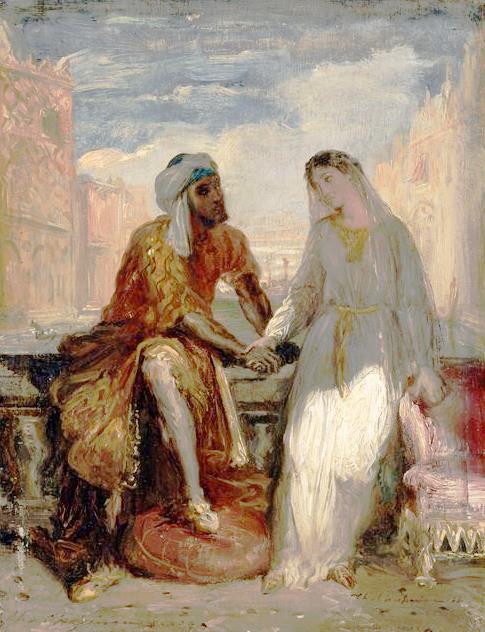
【1】
This central theme is constructed through Iago’s manipulation of others’ psychologies to serve his personal interests on. Iago effectively influences the decision-making processes of Othello, Cassio, Roderigo, and Emilia. He exploits Othello’s emotional vulnerabilities and feelings of alienation to draw him into a vortex of jealousy. Jealousy creates destructive effects on an individual’s inner equilibrium and paves the way for irrational decisions.
Othello’s identity as a Black individual causes him to be perceived as an outsider both in society and within his own psyche. Desdemona’s father Brabantio opposes the marriage and claims that Othello used “magic” to deceive her. Overt or implicit racist rhetoric within Venice’s upper classes fuels Othello’s insecurity and makes him vulnerable to manipulation.
Desdemona is a character who defies contemporary norms of femininity by choosing marriage through her own free will. Yet this personal autonomy is constantly suppressed by the male characters around her. Emilia’s final speech offers a limited but striking critique of the patriarchal order patriarchal. Throughout the play, women are portrayed either as figures whose fidelity is questioned or as individuals expected to remain silent game.
In a world defined by military and social hierarchy, debates about promotion and betrayal remain constant loyalty. Iago’s resentment over Cassio’s promotion and his betrayal of Othello reflect the conflict between personal ambition and loyalty within the hierarchical building structure. The concept of loyalty is also questioned through Emilia and Desdemona in relation to gender and morality dynamics.
Othello’s downfall begins when he detaches from objective reality and relies solely on the evidence presented by Iago movement is not possible to provide a meaningful translation of the single word "hareket" without context. In Turkish, "hareket" can mean:- movement - motion - activity - action - campaign (in political or social contexts) - drive (as in a promotional campaign)Please provide the full sentence or paragraph for an accurate and context-appropriate translation.. The tension between perception and reality forms the foundation of the tragedy. Shakespeare also conducts a discussion on how knowledge is acquired and how it can be manipulated.
A Black general serving in the Republic of Venice. He is renowned for his Military achievements and holds prestige in society, yet suffers from feelings of alienation due to his ethnic background. His love for Desdemona is genuine but, but he succumbs to jealousy under Iago’s manipulation. His emotional fragility and susceptibility to influence accelerate his descent into destruction. Othello is a character who undergoes internal conflict and tragic transformation.
Othello’s wife. Her decision to marry without her family’s consent demonstrates her independence and determination. Throughout the play, she remains faithful to Othello and strives to regain his trust effort consumption. She is a figure who challenges societal gender roles yet is ultimately silenced. Desdemona’s tragedy stems from her lack of agency over how others perceive and decide her fate.
The antagonist who orchestrates the play’s intrigues. He is a trusted officer under Othello but cannot accept Cassio’s promotion. Motivated by jealousy, ambition, and status anxiety, his exceptional manipulative skills enable him to control the thought processes of other characters. Iago acts not out of rational justification but from a desire for personal revenge. His internal motivations are presented as time and darkness at times.
Othello’s lieutenant. He is portrayed as young, inexperienced, yet honest and courteous character. He loses his rank due to Iago’s trap. He treats women with respect; his relationship with Desdemona is platonic but is misinterpreted wrong. Though passive throughout the play, his innocence is ultimately revealed.
Iago’s wife and Desdemona’s attendant. At the beginning of the play, she appears subservient to her husband’s authority, but by the end she undergoes a moral transformation and exposes the truth. She is the only female character who openly challenges the patriarchal order and male authority. Her decision to give Iago Desdemona’s handkerchief and her subsequent realization of its consequences are pivotal to her character development.
Desdemona’s father and a Venetian senator. He opposes his daughter’s marriage to Othello and views it as a deception achieved through magic. He embodies racial prejudice. His perspective represents the broader societal xenophobia of the time.
In love with Desdemona. He is constantly deceived by Iago and acts according to his manipulations. His actions are largely emotional and irrational. He is a weak-willed and easily duped character. He is murdered by Iago at the end of the play.
Shakespeare’s Othello, written at the end of the 16th century, is set in the 1570s. During this period, the Republic of Venice and the Ottoman Empire were engaged in political and military conflict over Cyprus. In 1570, the Ottoman fleet launched a military expedition against Cyprus and by 1571 had captured the island from Venice, incorporating it into Ottoman territory. These events generated widespread Europe in Europe and triggered extensive echo commentary.
The first part of the play takes place in Venice, while the second and larger portion unfolds in Cyprus. Othello is appointed by the Venetian Senate to defend Cyprus against Ottoman attacks. However, shortly after Othello and his companions arrive in Cyprus, news arrives that the Ottoman fleet has been destroyed by a storm. From this point onward, the play shifts focus from the Ottoman threat to personal conflicts and tragedy.
Shakespeare does not directly describe or characterize the Ottoman Empire. However, its presence functions in the background as a military and political threat place. This reflects Venice’s strategic position in the Mediterranean and the prevailing European perception of the Ottomans period. In the play, the Ottomans are positioned as the “other” historical; this parallels how Othello is perceived as an “other” due to his Blackness and implied Muslim heritage other.
The fact that Cyprus lies at the center of the Ottoman-Venetian conflict suggests Shakespeare’s deliberate historical choice. Cyprus functions as a transitional space between east and west, mirroring Othello’s own identity as a like and serving as a symbol of intercultural tension space.
[1]
Chassériau, Théodore. Othello and Desdemona. Arthive. Accessed 31 March 2025. https://arthive.com/sl/artists/593~Theodore_Chassiorio/works/653892~Othello_and_Desdemona

Summary of the Subject
Themes and Thematic Analysis
1. Jealousy and Manipulation
2. Racism and Alienation
3. Gender Roles and Attitudes Toward Women
4. Power, Hierarchy, and Loyalty
5. Reality and Perception
Characters and Their Traits
Othello
Desdemona
Iago
Cassio
Emilia
Brabantio
Roderigo
Othello and the Ottoman Context
Historical Background
Reflections in the Play
Representation of the Ottoman Empire
The Choice of Cyprus