

This article was automatically translated from the original Turkish version.
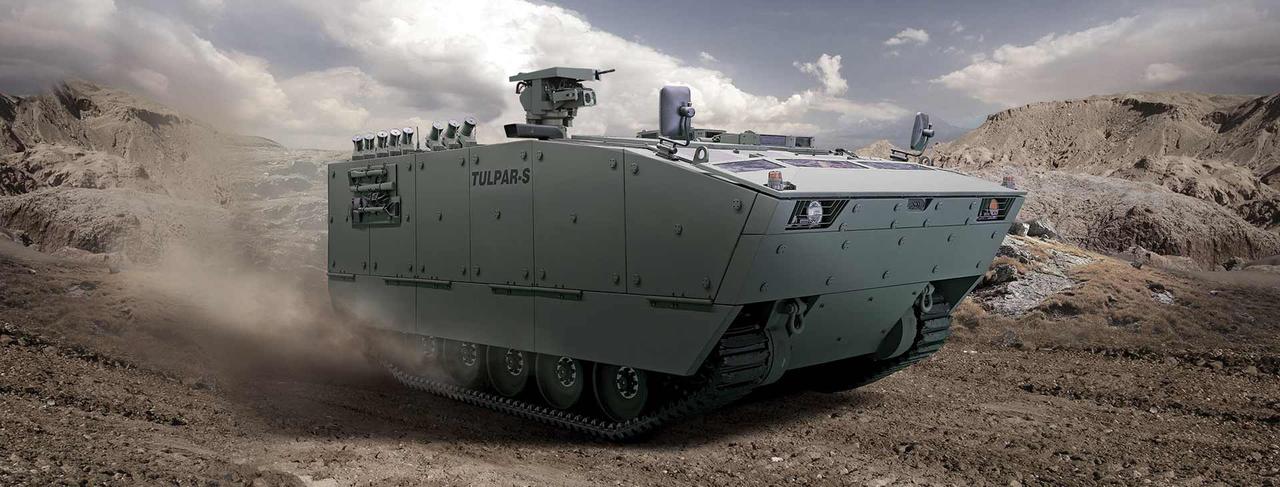
The TULPAR-S is a light tracked armored combat and multi-role tactical vehicle platform developed by Otokar Otomotiv ve Savunma Sanayi A.Ş. As a member of the TULPAR family, this model stands out for its high mobility, amphibious performance, modular armor structure, and compatibility with various turret systems. Designed on a common platform concept, the TULPAR-S can be configured for roles such as infantry fighting vehicle (IFV), armored personnel carrier (APC), command and control, reconnaissance, ambulance, maintenance, or weapons carrier. This enables the production of multiple variants from a single hull, providing logistical convenience, training standardization, and cost advantages.
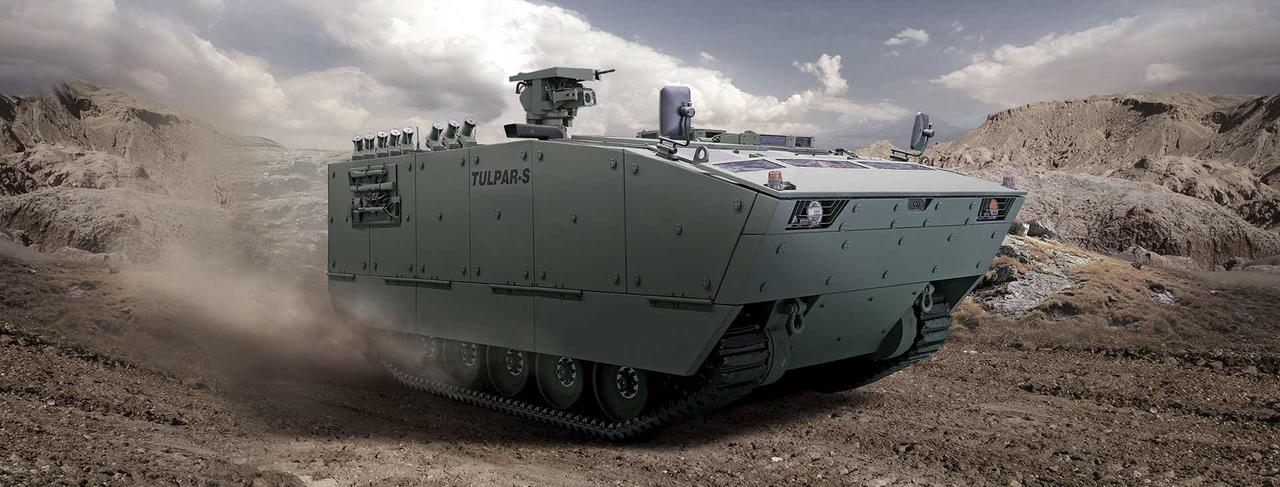
TULPAR-S (Otokar)
Otokar’s development of tracked armored vehicles began in the 2010s with the TULPAR program, which aimed to create a next-generation armored platform to meet the modern combat requirements of the Turkish Land Forces.
Following the main TULPAR platform, the TULPAR-S was developed to fulfill the need for a lighter, more mobile, and amphibious variant.
The vehicle was first introduced to the international public at the FEINDEF 2023 (Madrid) defense exhibition and is regarded as a significant step in Otokar’s global export strategy.
Additionally, prototypes of the TULPAR family successfully passed rigorous field tests conducted in Kazakhstan. These tests validated the vehicle’s durability under extreme conditions including high altitude, wide temperature variations, and challenging terrain such as sand and mud.
The TULPAR-S is built on a welded steel monocoque tracked chassis. The hull is reinforced with modular armor plates and can provide varying levels of ballistic and mine protection according to customer requirements, compliant with STANAG 4569 standards.
The vehicle’s underbelly features a V-shaped structure and specialized energy-absorbing seats to deliver anti-mine protection. The modular design facilitates maintenance and modernization.
Otokar has selected a high-torque diesel engine for the TULPAR-S platform to optimize the power-to-weight ratio. Although official documents do not specify exact technical values, the vehicle is equipped with a turbo-diesel power unit in the 360–400 hp range and an automatic transmission, consistent with other vehicles in the same class from Otokar.
The engine compartment is located at the front, allowing the crew compartment to occupy a spacious rear section of the hull. Cooling and exhaust systems are arranged to minimize thermal signature.
The TULPAR-S is equipped with a torsion bar suspension system, hydraulic shock absorbers on the road wheels, and an optional rubber-track system. This configuration enables the vehicle to traverse gradients of up to 60%, side slopes of 30%, vertical obstacles of 0.8 m, ditches of 2 m, and amphibious crossings of up to 1 m of water depth. The amphibious variant propels itself using water jets or track propulsion.
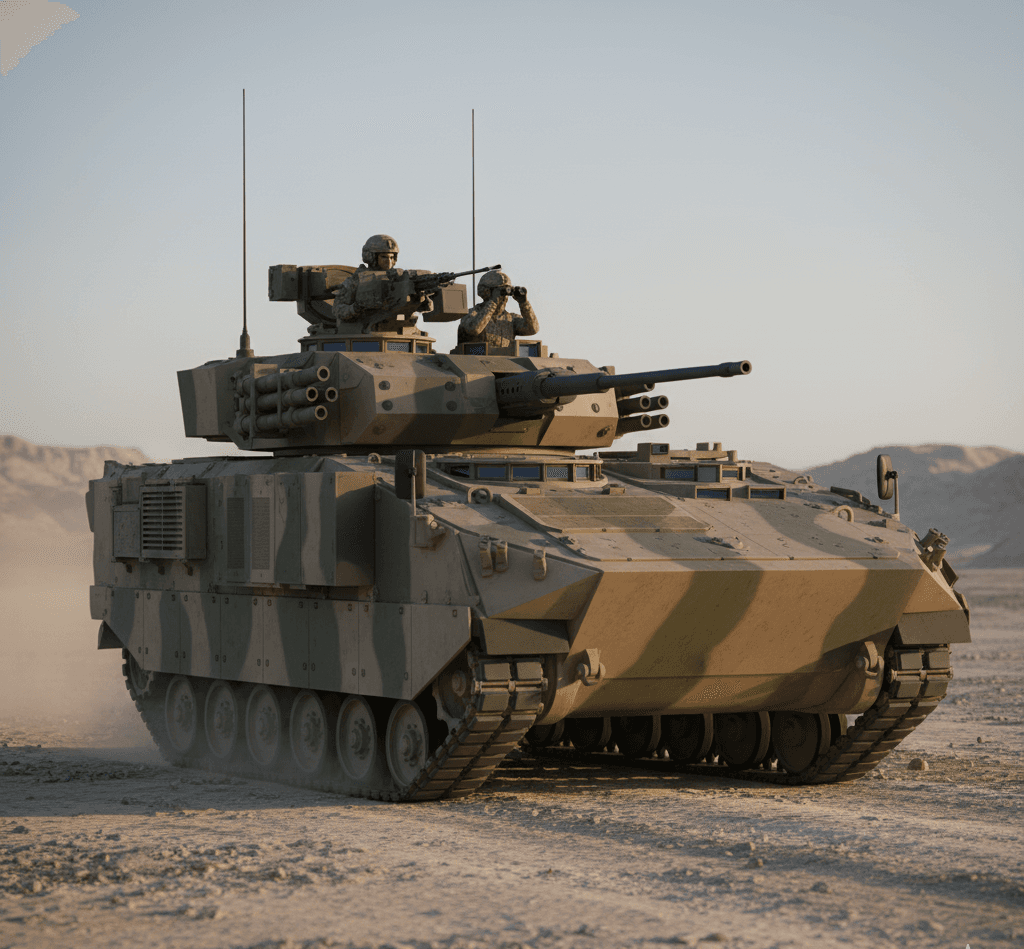
IFV TULPAR-S (Generated by Artificial Intelligence.)
The crew compartment at the front accommodates three personnel: driver, gunner, and commander. The rear section houses a 6–8 soldier infantry compartment. A hydraulic rear ramp and emergency roof hatches facilitate rapid evacuation.
The interior cabin is fitted with a NBC (Nuclear-Biological-Chemical) protection system, automatic fire suppression, and climate control systems.
Armor modules can be modified with composite materials to suit operational needs. The TULPAR-S is also compatible with integration of explosive reactive armor (ERA) or an active protection system (APS). Optional smoke grenade launchers, automatic fire detection, and acoustic gunshot detection sensors enhance situational awareness.
The vehicle features a digital architecture-based mission computer with INS/GPS-assisted navigation, radio communication, and tactical data-sharing infrastructure. In command and control variants (C2), Otokar’s proprietary software solutions provide tactical map display, situational awareness, and data sharing capabilities.
The TULPAR-S is compatible with both remote-controlled weapon stations (RCWS) and manned turret systems.
In the standard configuration, it is armed with a 7.62 mm or 12.7 mm machine gun. Advanced variants may be equipped with a 30 mm or 35 mm automatic cannon, a coaxial machine gun, and optional anti-tank guided missile (ATGM) systems.
The prototype displayed at FEINDEF 2023 was fitted with a turret similar to the Italian-made Hitfist-30. This turret includes stabilized sighting systems, a laser rangefinder, and a thermal camera.
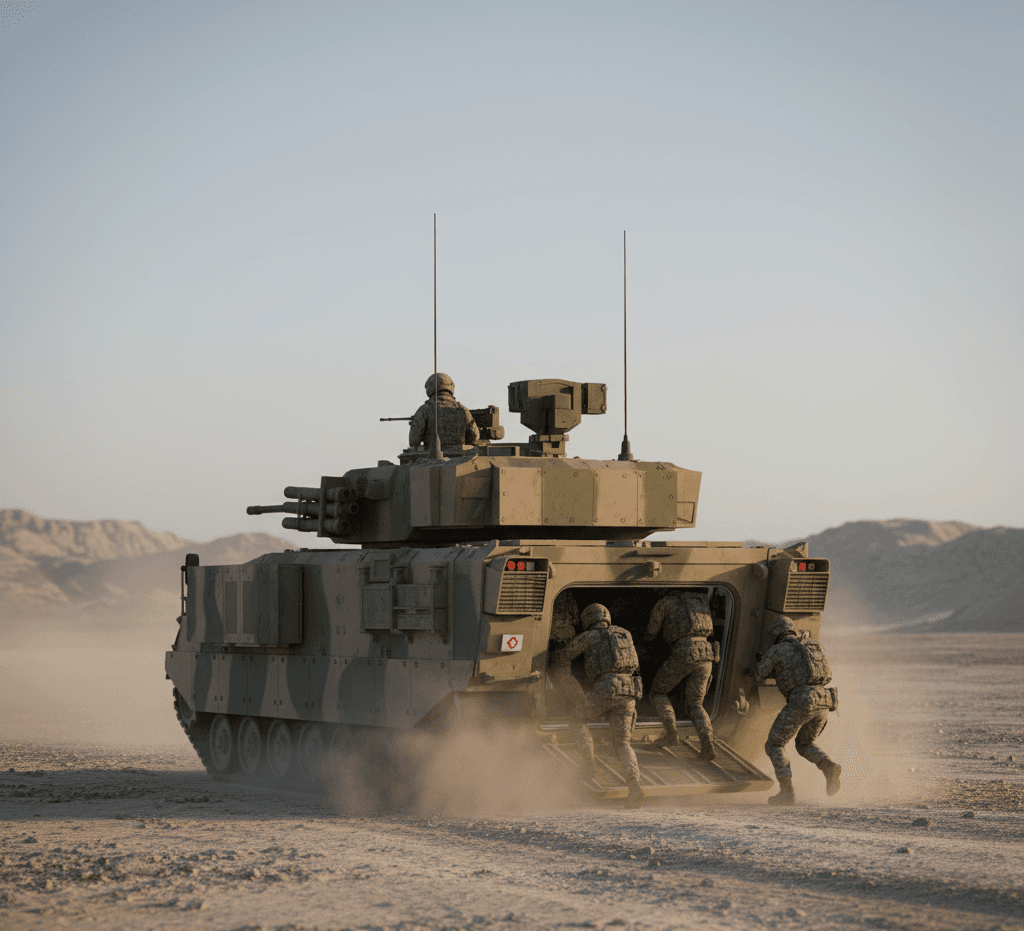
APC TULPAR-S (Generated by Artificial Intelligence.)
The TULPAR-S platform can be configured into the following mission-specific variants:
The TULPAR-S is currently under evaluation as part of the Turkish Armed Forces’ modernization program and international customer trials. Field tests in Kazakhstan demonstrated its durability under high temperatures, low atmospheric pressure, and sandy-muddy terrain. The successful completion of these tests represents a critical milestone toward achieving export certification. Additionally, promotional activities for the TULPAR-S are underway in Central Asian and Middle Eastern markets, with several prototypes being integrated into foreign military evaluation fleets.
Army Guide. "Tulpar Armoured Infantry Fighting Vehicle." Accessed October 22, 2025. https://www.army-guide.com/eng/product5262.html
DefenceTurk. "Otokar Tulpar-S." Accessed October 22, 2025. https://www.defenceturk.net/tulpar-s
DefenceTurk. “Otokar Tulpar Kazakistan’da Girdiği Testleri Başarıyla Tamamladı.” 2021. Accessed October 22, 2025. https://www.defenceturk.net/otokar-tulpar-kazakistanda-girdigi-testleri-basariyla-tamamladi
Milliyet. “Zırhlı Muharebe Aracı Tulpar’dan Büyük Başarı.” Accessed October 22, 2025. https://www.milliyet.com.tr/teknoloji/zirhli-muharebe-araci-tulpardan-buyuk-basari-6488072
Otokar A.Ş. "TULPAR-S Armored Vehicle." Otokar Defence Official Website. Accessed October 22, 2025. https://defense.otokar.com.tr/tracked-armored/tulpar-s-armored
Otokar A.Ş. “Otokar Displays TULPAR at FEINDEF 2023.” 2023. Accessed October 22, 2025. https://www.otokar.com.tr/news/daily-news/otokar-displays-tulpar-at-feindef-2023
Otokar A.Ş. “TULPAR-S Brochure (PDF).” Accessed October 22, 2025. https://defense.otokar.com.tr/OtokarSavunma/media/Otokar-Savunma/brochure/tulpar-s-en-ap04ef-25.pdf
Otokar Central Asia. "Tulpar-S Armored." Accessed October 22, 2025. https://www.otokarcentralasia.kz/en/tracked-armored/tulpar-s-armored
SavunmaSanayi.org. "Otokar TULPAR-S." Accessed October 22, 2025. https://www.savunmasanayi.org/otokar-tulpar-s
SavunmaSanayi.org. “Otokar TULPAR.” Accessed October 22, 2025. https://www.savunmasanayi.org/otokar-tulpar
T.C. Communication Presidency. “Türkiye’nin Tulpar Piyade Muharebe Aracı İtalyan Kule ile Donatıldı.” Accessed October 22, 2025. https://www.iletisim.gov.tr/turkce/dis_basinda_turkiye/detay/turkiyenin-tulpar-piyade-muharebe-araci-italyan-kule-ile-donatildi-cin#:~:text=%C4%B0stanbul'da%20d%C3%BCzenlenen%20T%C3%BCrkiye%20Savunma,veya%20tank%20avc%C4%B1s%C4%B1%20olarak%20de%C4%9Ferlendiriliyor.

History
Design and Architectural Features
Hull and Chassis
Engine and Transmission
Suspension and Mobility
Interior Layout and Ergonomics
Protection and Defense Systems
Electronic Systems
Weapons and Turret Systems
Variants
Operational Use and Testing