


This article was automatically translated from the original Turkish version.

Pain Perdu (generated with artificial intelligence)
Type(s) | Sweet / Bread-based dish | ||||||||
|---|---|---|---|---|---|---|---|---|---|
Name(s) | Pain Perdu | ||||||||
Cultural Context | A traditional culinary practice aimed at preventing food waste | ||||||||
Historical Origin | A bread utilization practice extending to ancient times | ||||||||
Key Feature | Cooking stale bread by immersing it in a liquid mixture | ||||||||
Kitchen | French cuisine | ||||||||
Pain Perdu is a traditional dish prepared by soaking stale bread in a mixture of milk and eggs, then cooking it. The term, which means “lost bread” in French, describes a culinary practice that repurposes bread that has lost its freshness rather than discarding it. In this sense, Pain Perdu is regarded as a historical culinary practice based on the principle of food reuse【1】.
Techniques involving soaking stale bread in liquid mixtures and then cooking them can be traced back to Ancient Rome. The cookbook De Re Coquinaria attributed to Apicius contains recipes describing the preparation of bread with milk or sweetened liquids. Although these recipes do not directly correspond to Pain Perdu, they are considered historical precursors to its fundamental cooking method【2】.
Practices similar to those seen in Ancient Rome continued to exist in European culinary culture in subsequent centuries. Sources indicate that the method of softening bread in liquids before cooking was known by various names in different periods and became part of everyday culinary practice【3】. This demonstrates that Pain Perdu was not an innovation confined to a single historical period.
Medieval and early modern Europe regarded bread as one of the fundamental components of diet. During this period, the reuse of stale bread was seen as both an economic and practical necessity. Sources indicate that softening bread in liquids such as milk and eggs before cooking was a widespread practice【4】. In this context, Pain Perdu is viewed as an example reflecting the continuity of everyday culinary traditions.
The fundamental preparation method of Pain Perdu involves dipping slices of stale bread into a mixture of milk and eggs, then cooking them. Sources note that this technique softens the bread’s firm texture and renders it edible again. This method has been applied with little change throughout history【5】.
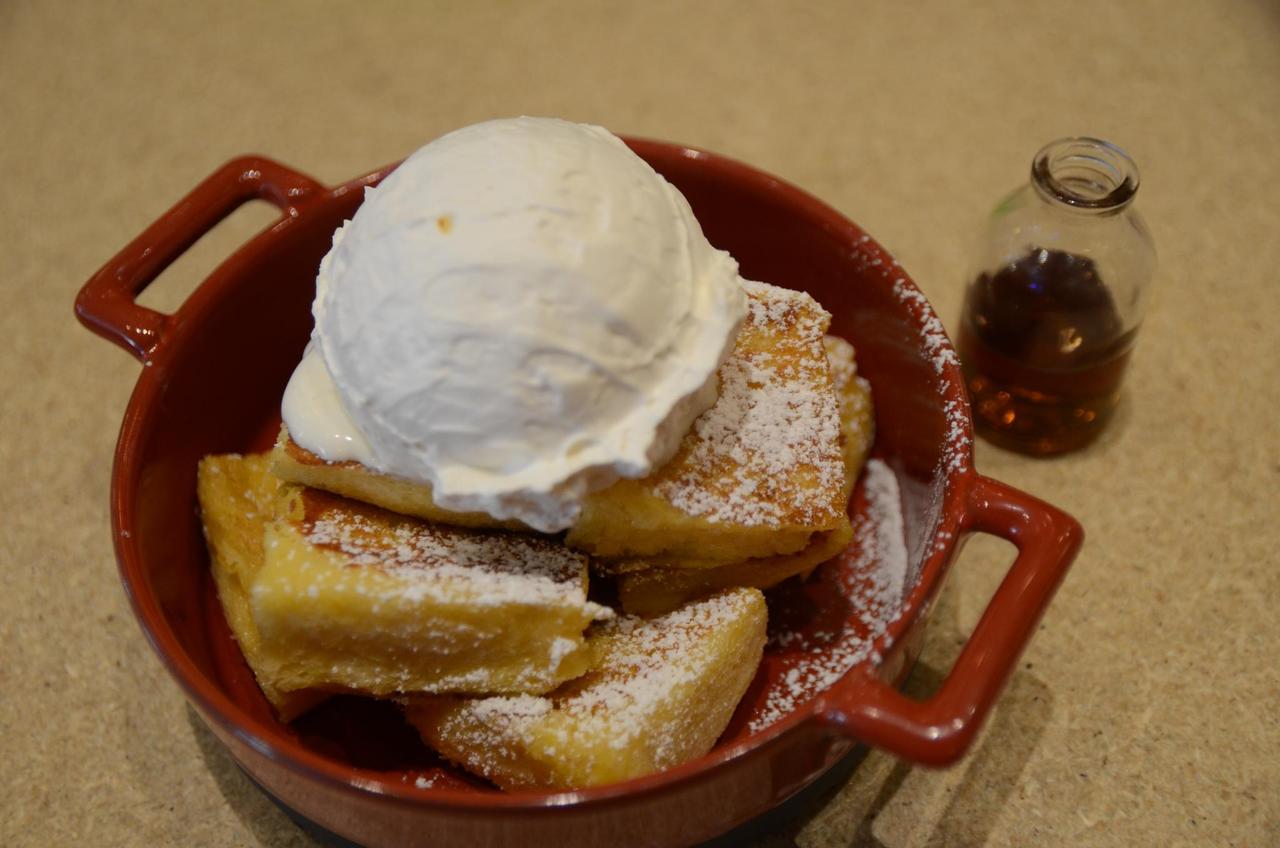
Pain perdu served with garnish (Flickr)
Sources indicate that milk and eggs serve to soften the bread’s structure and maintain its integrity during cooking【6】. These ingredients enable the bread to absorb the liquid mixture and remain intact during cooking. Historical recipes consistently identify these components as essential elements of Pain Perdu.
Although Pain Perdu is commonly associated with French cuisine, it is regarded as part of a broader European tradition of dishes prepared using similar methods. Examples such as “Arme Ritter” in Germany represent regional variations of the same cooking technique. This demonstrates that Pain Perdu belongs to a shared European culinary heritage.
Dishes based on the reuse of stale bread are historically closely linked to economic conditions and daily living practices. Pain Perdu emerged particularly during periods of limited resources as a result of culinary practices emphasizing frugality and reuse. In this sense, the dish is not merely a source of nutrition but also a product of economic necessity.
Eat’s History. “The Original French Toast: Aliter Dulcia.” Accessed January 1, 2026. https://eatshistory.com/the-original-french-toast-aliter-dulcia/
Savoring the Past. "Pan Perdu (or as we call it ‘French Toast’)." Accessed January 1, 2026. https://savoringthepast.net/2012/07/17/pan-perdu-or-as-we-call-it-french-toast/
TrueFoodFact. "French Toast: History and Origins." Accessed January 1, 2026. https://truefoodfact.com/food/french-toast/
Tufts European Center. "The Art of Lost Bread." Accessed January 1, 2026. https://europeancenter.tufts.edu/blog/2021/09/28/the-art-of-lost-bread/
[1]
Mad About Macarons. “French Toast Recipe – Pain Perdu.” Erişim tarihi: 1 Ocak 2026. https://www.madaboutmacarons.com/french-toast-recipe-pain-perdu/
[2]
Mon Petit Four. “Pain Perdu.” Erişim tarihi: 1 Ocak 2026. https://www.monpetitfour.com/pain-perdu-2/
[3]
Mon Petit Four. “Pain Perdu.” Erişim tarihi: 1 Ocak 2026. https://www.monpetitfour.com/pain-perdu-2/
[4]
Mon Petit Four. “Pain Perdu.” Erişim tarihi: 1 Ocak 2026. https://www.monpetitfour.com/pain-perdu-2/
[5]
Mad About Macarons. “French Toast Recipe – Pain Perdu.” Erişim tarihi: 1 Ocak 2026. https://www.madaboutmacarons.com/french-toast-recipe-pain-perdu/
[6]
Mad About Macarons. “French Toast Recipe – Pain Perdu.” Erişim tarihi: 1 Ocak 2026. https://www.madaboutmacarons.com/french-toast-recipe-pain-perdu/

Pain Perdu (generated with artificial intelligence)
Type(s) | Sweet / Bread-based dish | ||||||||
|---|---|---|---|---|---|---|---|---|---|
Name(s) | Pain Perdu | ||||||||
Cultural Context | A traditional culinary practice aimed at preventing food waste | ||||||||
Historical Origin | A bread utilization practice extending to ancient times | ||||||||
Key Feature | Cooking stale bread by immersing it in a liquid mixture | ||||||||
Kitchen | French cuisine | ||||||||
Historical Origins
Continuity from Antiquity to the Middle Ages
Practices in the Middle Ages and Early Modern Period
Preparation Method
Function of Ingredients
Place in European Culinary Culture
Social and Economic Context