

This article was automatically translated from the original Turkish version.
+1 More
Palu Bridge is a historic stone bridge located in the Palu district of Elazığ province in eastern Türkiye, spanning the Murat River. Built to connect the settlement with the river, the bridge lies along the east-west trade routes of Anatolia. With its engineering features and historical documentation, the structure is one of the representative examples of Ottoman-era stone bridge architecture in the region.
The exact construction date of Palu Bridge is unknown; however, archival records from the Ottoman period indicate that the bridge was already in existence by the second half of the 19th century. Particularly from the 1870s onward, repeated petitions to the central administration reporting the bridge’s deteriorating condition increased state interest in its preservation. Severe flooding in the region caused significant damage to parts of the structure, negatively affecting local transportation and trade activities. In response, engineers and stonemasons were dispatched from Istanbul to initiate repairs. The restoration process was carried out under state supervision, ensuring the structural reinforcement of the bridge.
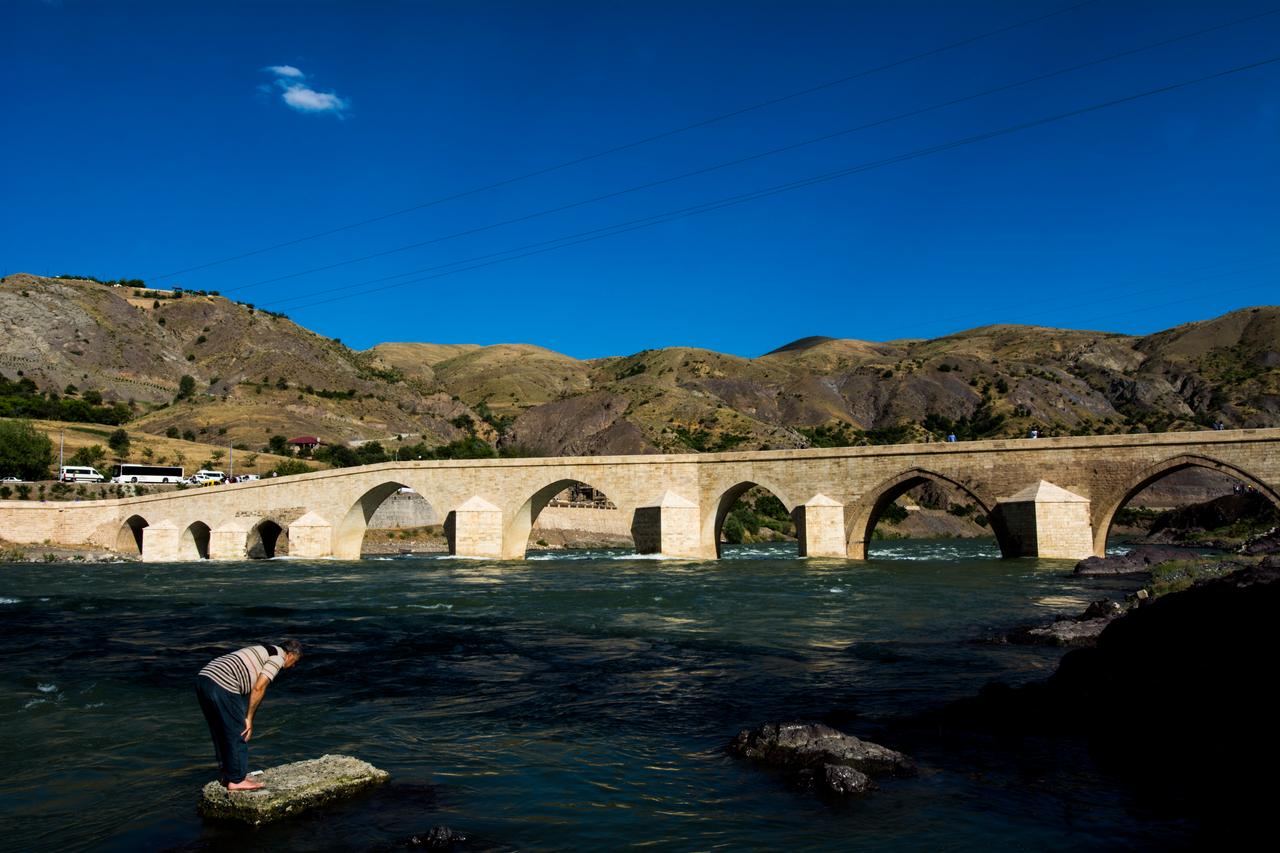
Palu Bridge was constructed using cut stone and rubble stone in accordance with traditional stone bridge architecture. The bridge has five arches, with span sizes varying according to the flow of the river. The largest arch is positioned at the central axis, designed to cross the main channel of the Murat River. The arches are built in a pointed form, chosen to facilitate water flow and balance load distribution.
The cutwaters—protruding structures between the piers—are arranged to protect the piers from erosion caused by river currents. The bridge deck is designed for pedestrian use and connects to the land roads via gently sloping ramps at both ends. The overall proportions and craftsmanship of the structure reflect the stone masonry standards of its time.

Aerial view of Palu Bridge (Republic of Türkiye, Palu Subprovince)
Palu Bridge underwent major repairs in the late 19th century under the Ottoman State. Throughout the 20th century, it was preserved through intermittent interventions by local administrations. However, over time, natural factors and regional urbanization led to deterioration in certain sections. Today, the bridge is closed to vehicular traffic but remains open to pedestrians. It has been officially registered as a protected immovable cultural heritage site by the Ministry of Culture and Tourism.
Since its construction, Palu Bridge has played a vital role in facilitating the movement of goods and people between the rural settlements around Palu and the district center. It also enabled residents from surrounding villages to access markets, contributing significantly to the regional economy. The bridge served not only as a means of transportation but also as a vital element sustaining social interaction and commercial continuity.

Image of Palu Bridge (Republic of Türkiye, Palu Subgovernorship)
Palu district is notable for its historical remnants, including Palu Castle, mosques, bathhouses, and examples of civil architecture, which together form a cohesive cultural landscape. In this context, Palu Bridge is recognized as an important component of the district’s historical fabric and attracts tourist interest. Open to visitors, the bridge serves as a physical link between past and present and is regarded by both the local community and researchers as a valuable structure.
Video about Palu Bridge (Ihlas News Agency)
Palu Bridge is one of the rare infrastructure structures from the Ottoman period whose history can be traced through documentary evidence and whose design reflects the engineering and architectural principles of its time. The materials and techniques used in its construction are consistent with the stone bridge-building traditions of the era, while its restoration efforts document the state’s commitment to rural transportation infrastructure. More than a mere transit structure, the bridge carries the character of a historical document and has played a central role in the social, economic, and cultural development of Palu. Its current protected status demonstrates awareness of this historical continuity and the intention to preserve the structure for future generations. As a tangible representative of regional cultural heritage, Palu Bridge holds both academic and societal value.

Historical Development
Architectural Structure and Technical Features
Restorations and Conservation Status
Social and Economic Function
Cultural and Touristic Value