


This article was automatically translated from the original Turkish version.
+2 More
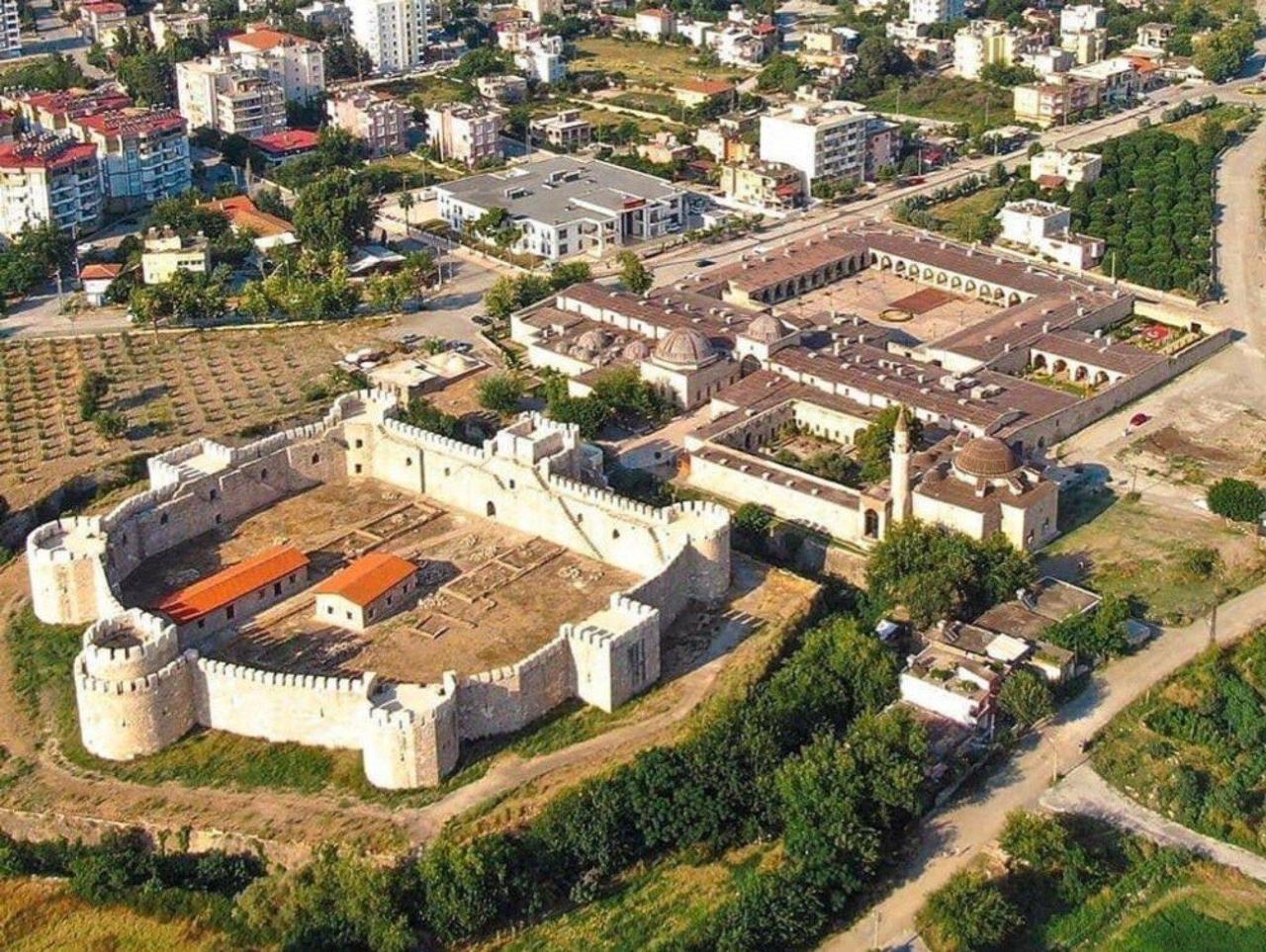
Payas Castle is located approximately 700 metres from the sea coast, to the west of the Sokollu Mehmet Pasha Külliyesi, in the Payas district of Hatay province. The castle, surrounded by a moat, features eight towers and exhibits a defensive structure. Physically, it is situated symmetrically opposite the caravanserai on the eastern wing of the külliye, thereby contributing a balanced element to the architectural unity. When considered together with the külliye, it becomes evident that Mimar Sinan took the castle into account in his overall külliye planning.

Payas Castle.(Hatay Metropolitan Municipality)
Information regarding the initial construction of Payas Castle dates back to the Crusades period. During this time, the castle was built by the Genoese and used by the Knights Templar, who were responsible for securing the safety of pilgrims traveling to Jerusalem. After the Ottomans gained control of the region, it was determined that the foundations of the existing structure had been so severely damaged that they could not be repaired. Between 1567 and 1571, the Ottoman State reconstructed the castle faithfully preserving its original form. In this respect, the castle in its present state is entirely an Ottoman structure in both technical and artistic terms.

Payas Castle.(Anadolu Agency)
The castle features a large central courtyard, surrounded on the ground floor by storage rooms and barracks, and on the upper floors by staircases leading to the bastions and towers. In the centre of the courtyard stands a mosque and a barracks building. The eight-towered design, intended for defense and surveillance, was planned specifically for military use.

Payas Castle.(Anadolu Agency)
The castle gained significance during the Ottoman period following the conquest of Cyprus and was used as a military base. It served as a garrison and forward command post, protecting Payas Harbour, the Sürre regiments, and trade caravans. In this capacity, it became one of the Ottoman Empire’s key strategic defense points in the eastern Mediterranean.
Although actively used during the Ottoman period, the castle later assumed various functions. In the 19th century, the national poet Namık Kemal was held here for a period before being exiled to Cyprus. During the early years of the Republic, it was used as a garrison and prison.
Considering archival records and construction techniques, although some sources describe it as having Crusader or Genoese origins, Payas Castle in its present form is entirely an Ottoman-era defensive structure. The physical and planned relationship between the castle and the külliye reflects Mimar Sinan’s architectural approach and the urban planning concepts of the period.
Anadolu Ajansı. “Tarihi Payas Kalesi Ziyarete Açılmaya Hazırlanıyor.” Accessed May 28, 2025. https://www.aa.com.tr/tr/kultur-sanat/tarihi-payas-kalesi-ziyarete-acilmaya-hazirlaniyor-/2415667.
Hatay Büyükşehir Municipality. "Payas Kalesi." Hatay Metropolitan Municipality. Accessed May 28, 2025. https://hatay.bel.tr/payas-kalesi.
Ministry of Culture and Tourism of the Republic of Türkiye. "Payas Kalesi." Kültür Portalı. Accessed May 28, 2025. https://www.kulturportali.gov.tr/turkiye/hatay/gezilecekyer/payas-kalesi.
Payas Belediyesi. "Payas Kalesi." Payas Municipality. Accessed May 28, 2025. https://www.payas.bel.tr/sayfa.php?idno=16.
Payas Kaymakamlığı Governorship. "Culture and Tourism." T.C. Payas District Governorship. Accessed May 28, 2025. http://www.payas.gov.tr/kultur---turizm.
Payas Milli Education Directorate. "Tarihi Mekanlar." T.C. Payas İlçe Milli Eğitim Müdürlüğü. Accessed May 28, 2025. https://payas.meb.gov.tr/www/tarihi-mekanlar/icerik/1273.

History and Construction
Architectural Structure and Function
Military and Strategic Importance
Subsequent Uses
Architectural and Historical Assessment