


This article was automatically translated from the original Turkish version.
Personnel lifts are mechanical platforms designed to ensure safe access to elevated work areas. These devices are used to meet the needs of working at height, particularly in sectors such as construction, maintenance, cleaning, and warehouse operations. Personnel lifts must be selected and used in accordance with the nature of the task and the working environment.
The development of personnel lifts has progressed in parallel with increasing industrial demands. Beginning in the mid-20th century with simple mechanical systems, this evolution has led to modern equipment integrating hydraulic, electric, and hybrid systems. According to information on the Construction Equipment website, numerous models are now available offering a variety of height and capacity options.
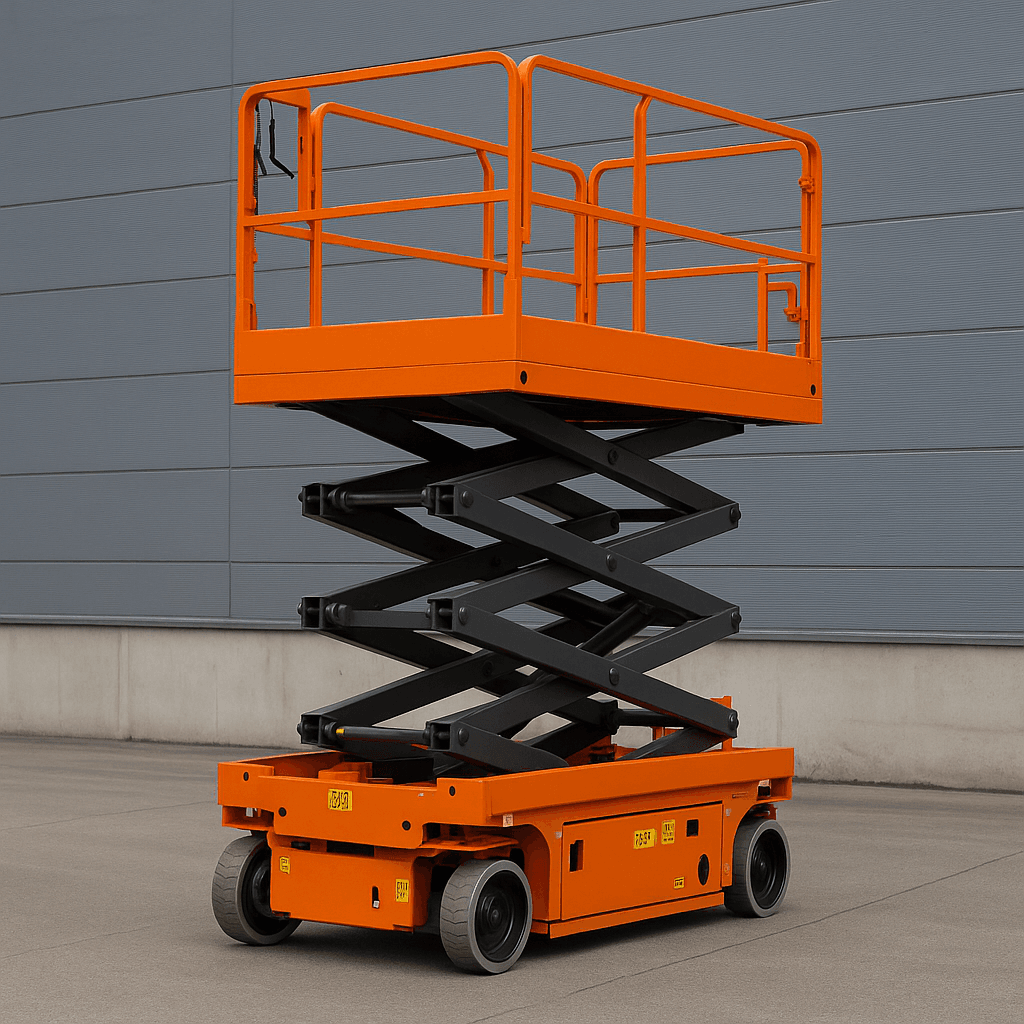
Personnel Lift - Manlift (Generated by Artificial Intelligence)
Personnel lifts consist fundamentally of the following components:
Personnel lifts are classified into various types based on their intended use and mechanism:
Personnel lifts have a broad range of applications across various sectors:
The following safety measures must be implemented to ensure the safe use of personnel lifts:
Personnel lifts are essential equipment that enable safe and efficient work at height. With proper selection, regular maintenance, and appropriate training, these machines enhance workplace safety while maximizing operational efficiency.
Construction Equipment Editors. "Aerial Work Platforms." Construction Equipment. Accessed May 29, 2025.
Millî Eğitim Bakanlığı. İş Makineleri. Ankara: MEB Yayınları, 2011.

No Discussion Added Yet
Start discussion for "Personnel Elevator (Manlift)" article
Historical Development
Technical Structure and Key Components
Types of Personnel Lifts
Applications
Occupational Health and Safety Measures