


This article was automatically translated from the original Turkish version.
+2 More
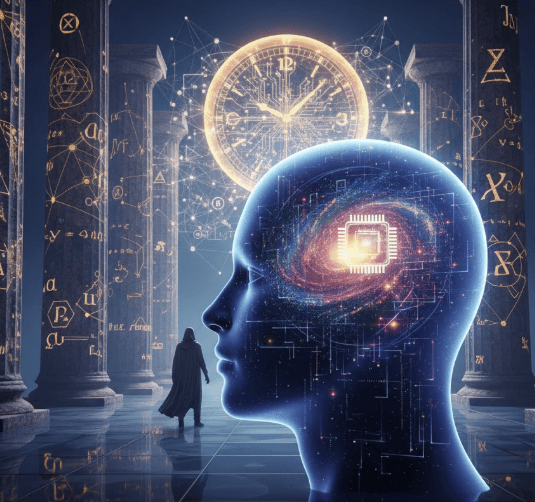
(Yapay Zeka ile Oluşturulmuştur)
Philosophy of Information, is a contemporary discipline that examines the processes by which all types of data (visual, auditory, textual) and the information derived from them are processed through computational intelligent technologies, as well as the fundamental concepts, principles, and ontological statuses underlying these technologies. This field critically engages with applications and technologies such as the Internet of Things, augmented reality, the metaverse, and digital platforms, all of which are based on data-processing-output cycles, within a philosophical framework.
This discipline treats the computer not merely as a technical device but as an instrument and cultural artifact that reflects humanity’s relationship with itself and history. It examines developments in the information sphere from an axiological (value-centered) perspective, integrating traditional philosophical debates with the realities of the digital universe (the infosphere), and offering a holistic inquiry that redefines the positions of moral agents and entities affected by these processes.

Information and Computer Philosophy (Generated by Artificial Intelligence)
The computer is more than a device that executes given commands; it is a cultural object requiring critical examination in terms of its place in human life and its historical development. To “speak” with a computer entails questioning the motivations and purposes behind its creation and recognizing it as a human artifact. This philosophical sensitivity constitutes an internal dialogue in which the user interrogates their own capacity for understanding and their relationship with technology through the questions they direct toward the computer.
The close relationship between information and philosophy is linked to the human endeavor to discern patterns in numbers and comprehend the unity of the universe. Philosophy provides a contextual framework within which scientific and technological research takes place; awareness of this context enables experts to carry out their work with greater consciousness and meaning beyond the narrow confines of their specialized fields. Questioning the computer from a philosophical perspective aims to move beyond mindless consumption of technology and instead examine its role in human life and its impact on human well-being or harm.
Information, historically rooted in humanity’s relationship with computation, gained its primary momentum in the mid-twentieth century. The development of this process has been shaped by scientific and technological advances emerging in different periods.
The earliest stages of the information revolution stem from humanity’s need for calculation. Engravings of prime numbers dating to around 20,000 BCE and the later invention of the abacus, which facilitated commercial life, are among the earliest examples of this process.【1】 Boolean algebra, developed by George Boole in the nineteenth century, forms the foundational logical structure of modern computers and mathematics.
In the 1940s, Norbert Wiener established the science of “cybernetics,” linking human processes of control and communication with machine systems, thereby laying the philosophical foundations of the field. This approach contributed to the intellectual development of information science by examining human-machine interaction within a scientific framework.
Advances in electronic technologies enabled the emergence of programmable computers. Key milestones in this process include the development of the triode in 1906 and machine designs from 1937. Among the technical landmarks of this era are ENIGMA-deciphering machines such as COLOSSUS and EDVAC, some of the world’s first digital computers.【2】
Network technologies initiated in the 1960s with ARPANET were elevated to a global and societal dimension in 1989 with the development of the HTTP protocol by Tim Berners-Lee.【3】
This technological evolution initiated the “information age,” defined by the management of the lifecycle of knowledge. Unlike previous revolutions, this age has generated social and ethical changes at both micro and macro levels.
The ontological basis of the philosophy of information considers entities not merely in terms of biological attributes but through their information life cycles and forms. Within this perspective, Luciano Floridi’s “macroethical” approach shifts the center of ethical evaluation from the “human” to an “ontocentric” framework.【4】 In this ontological framework, the universe of the philosophy of information is defined as an “infosphere” in which all entities—living, non-living, digital, or abstract—are understood as information and are interrelated.
In this approach, traditional ethical subjects are replaced by systems capable of interacting with their environment, acting autonomously, and performing morally significant actions. Humans, software, or autonomous structures are regarded as “moral agents” within this context. Meanwhile, everything within the information environment that is subject to ethical impact—animals, plants, artworks, libraries, and even future generations—is recognized as possessing at least minimal intrinsic value and is designated as “moral patients.”
This ontological approach also incorporates the principle of ontological equality, which asserts that all entities deserve respect according to their nature and mode of existence, and demands that moral behavior be conducted from a neutral, non-anthropocentric perspective. This macroethical foundation grants the philosophy of information a universal dimension by aiming not only to preserve biological life but also to safeguard the integrity of information and all forms of existence.
The Flourishing Ethics theory offers a framework aimed at addressing the complex ethical challenges of the information sphere by enhancing individual ethical capacity and placing social well-being at the center. Rooted in Aristotle’s virtue ethics, this theory targets the moral development of individuals and society in the information age.
In this approach, Thomas Kuhn’s concept of scientific paradigm shifts is adapted to ethics. The inadequacy of traditional ethical theories in explaining new problems arising in the digital world is labeled “ethical anomalies.” Thus, the inability of existing theories to fully account for problems of the information age reveals the necessity of a new ethical framework.
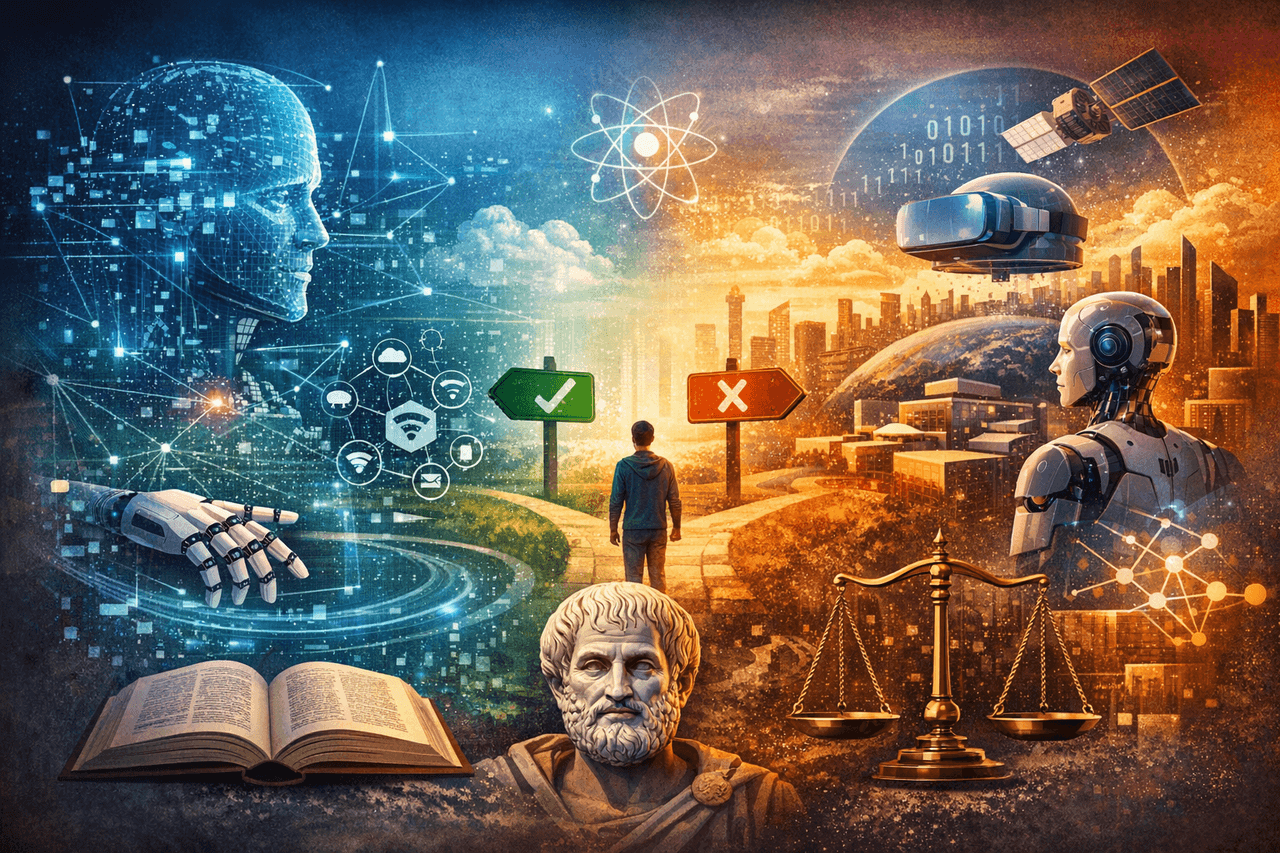
Philosophy of Information (Generated by Artificial Intelligence)
The intellectual foundations of the theory are shaped by the connection established between Norbert Wiener’s cybernetic ethics and Aristotle’s virtue ethics. This linkage constitutes both the scientific and philosophical origins of Flourishing Ethics, reinterpreting individual ethical development within the context of information technologies.
Flourishing Ethics is also understood as an approach targeting both individual and collective transformation. Within this framework, the goal is not merely for individuals to fulfill their ethical responsibilities but to undergo a transformative process that enhances their ethical capacity. Additionally, the construction of a dialogical culture that elevates societal ethical awareness is among its objectives.
Moreover, Flourishing Ethics argues that, in accordance with the demands of the information age, the ethical domain must extend beyond anthropocentrism to encompass non-human elements such as robots. This approach holds the potential to reconstruct normative foundations, with individual internal development playing a decisive role in overcoming ethical crises.
The integration of information technologies into social, economic, and cultural domains has led individuals and societies to confront more complex ethical problems. These issues necessitate the transformation of existing ethical theories and the development of new normative principles.
Intellectual property is a legal domain that protects works created through creative thought, aiming to safeguard individual labor through patents, copyrights, and trademarks. Violations of these rights not only harm the rights holder but also impede social progress and discourage original innovation.
Privacy, as a crucial element in preserving human dignity, concerns the control of personal data and the prevention of unauthorized collection. This concept encompasses elements such as anonymity, protection, and the right to isolation.
Networking, due to the decentralized nature of the internet, allows data to circulate uncontrollably. This lack of oversight creates fertile ground for problems such as fraud, identity theft, and the dissemination of unethical content.
Anonymity, enabled by the digital world’s capacity to conceal identity, is associated with an increase in unethical behavior. Cyberbullying is defined as intentional and repeated acts of harm, harassment, and discrediting directed at individuals through online networks.
Manipulation, within the scope of “digital manipulation,” refers to the covert influence of computer systems and algorithms on individuals’ decision-making processes. Profiles derived from personal data are used to guide individuals’ choices.
The problem of anthropomorphism reveals the psychological and ethical illusions that arise when human attributes are ascribed to non-human entities such as robots and software. This situation underscores the necessity of accurately defining and naming such entities.
Information technologies construct a digital reality parallel to the physical world, challenging the boundaries of human imagination and habit. Among the most influential elements of this domain, computer games exert effects on the moral subject.
Virtual reality technologies create non-carbon-based environments that stimulate users’ sensory systems and evoke a sense of “presence.” Because the emotions experienced in these environments resemble those of real life, users become vulnerable to manipulation.
Computer games are complex cultural artifacts composed of rules that shape human behavior. Players gain the opportunity to experience actions prohibited by law or morality in the real world, thereby violating or exploring ethical boundaries.
Game ethics examines violent content, gaming addiction, player-to-player harassment and threats, the manipulative treatment of political issues, and the unethical scenarios designed by game developers. Therefore, computer games and related actions are evaluated within the framework of information ethics, which provides a technical and philosophical structure and constitutes a necessary domain for addressing these problems.
Science and technology are intrinsically linked to the philosophical atmosphere in which they operate. Scientists and engineers act within a philosophical framework by considering the impacts of their work on human life and its moral-aesthetic dimensions.
Within this framework, the philosopher occupies a critical position, preventing experts from remaining confined within their narrow specializations and reminding them that their work is part of a multidimensional human activity. Technological designs are developed with an ethical orientation that preserves the distinction between reality and fiction while generating a sense of presence in users.
Moreover, preserving the relationship between emotion, thought, and knowledge is essential to prevent the unconscious use of scientific and technological products from harming humans. Researchers’ responsibility is to develop ethical approaches suited to emerging technologies and to establish grounds that preserve their own values and cultural contexts.
Given that, at the dawn of history, the scientist and the philosopher were the same person, the relationship between science and philosophy remains vital for humanity to sustain its existence as a unified whole in the world of the future.
[1]
Nesibe Kantar, “Information Ethics and Contemporary Debates in the Context of Philosophy of Information,” Iğdır University Journal of Social Sciences 13, no. 36 (May 2024): 112–133, 116, accessed April 14, 2026, https://dergipark.org.tr/tr/download/article-file/3735169
[2]
Nesibe Kantar, “Information Ethics and Contemporary Debates in the Context of Philosophy of Information,” Iğdır University Journal of Social Sciences 13, no. 36 (May 2024): 112–133, 116, accessed April 14, 2026,https://dergipark.org.tr/tr/download/article-file/3735169
[3]
Nesibe Kantar, “Information Ethics and Contemporary Debates in the Context of Philosophy of Information,” Iğdır University Journal of Social Sciences 13, no. 36 (May 2024): 112–133, 116, accessed April 14, 2026, https://dergipark.org.tr/tr/download/article-file/3735169
[4]
Nesibe Kantar, “Information Ethics and Contemporary Debates in the Context of Philosophy of Information,” Iğdır University Journal of Social Sciences 13, no. 36 (May 2024): 112–133, 118, accessed April 14, 2026, https://dergipark.org.tr/tr/download/article-file/3735169


(Yapay Zeka ile Oluşturulmuştur)
No Discussion Added Yet
Start discussion for "Philosophy of Information" article
The Philosophical Discovery and Cultural Role of the Computer
The Information Revolution and Historical Background
Mathematical and Mechanical Foundations
The Birth of Cybernetics
Electronic and Digital Transformation
The Internet and World Wide Web
Ontological Foundations and the Macroethical Approach
The Flourishing Ethics Theory in Information Ethics
Current Ethical Issues and Debates
Intellectual Property and Privacy
Network Structure, Anonymity, and Cyberbullying
Artificial Intelligence, Manipulation, and Anthropomorphism
Virtual Worlds and the Ethics of Computer Games
Collaboration Among Science, Technology, and Philosophy