

This article was automatically translated from the original Turkish version.
+2 More
Ethics, as a subdiscipline ofphilosophyalso known as moral philosophy, is the branch that examines human actions and behaviors in terms of good/bad, right/wrong, and virtuous/vicious. The theoretical problems developed within this framework and the proposed solutions to these problems reveal the systematic nature of ethical thought. Therefore, it is possible to speak of different approaches within this discipline. For this reason, one of its major subfields is the normative ethics approach.

Aristotle and Plato – Raphael’s The School of Athens (Picryl)
In the theoretical foundation of normative ethics, axiology, which investigates the nature and status of values, plays a significant role. According to this approach, “what ought to be” is examined. This stems from ethics’ fundamental aim of determining what is right and wrong, good and bad. In contrast, descriptive ethics [Eng. Descriptive ethics] aims to study the moral beliefs, attitudes, and historical and social conditions of individuals and societies.【1】
In the 21st century, the term “ethics” remains one of the most frequently used concepts both among the general public and in professional life. When needed, this term is used to judge the behavior of others within society and sometimes serves as a tool for characterizing societal conduct. Occasionally, it is combined with other terms to form compound expressions such as “professional ethics,” “medical ethics,” or “sports ethics.” Another example of such a compound is the term “unethical.” In fact, when using this term, an assumption is made: that there exists a mathematical line or a circle defined as “ethics,” and that what is labeled “unethical” lies outside this boundary.
However, in this context, a theoretical principle must be introduced: to define what something is not or what lies outside it, one must first define what it is.【2】 Therefore, to define the concept of “unethical,” it is fundamentally necessary to first define “ethics” through a discussion of “moral philosophy” that respects its boundaries as expressed in Ottoman Turkish as “efradını cami ve ağyarını mani bir had ile” — that is, staying within its defined limits.
The term “ethics” is morphologically derived from the Greek word “ethos,” which was used long before Aristotle’s time.【3】 This word is itself of Greek origin and can be translated into Turkish as “character.” Based on this etymological root, systems and approaches developed understand the term “ethics” as referring to the connection between behavior and character. However, when considering the historical development of the discipline of ethics, one must speak of different schools, thinkers, and approaches, none of which consistently maintain this connection.
Referring to its etymological meaning and the phrase “ethical behavior,” what is actually intended is an expression along the lines of “behavior consistent with character.” Thus, behaviors deemed ethical and characterized as conforming to character will also be described as “virtuous.” Naturally, behaviors lacking these qualities will be identified as “vicious.” Therefore, when people speak of “unethical” behavior or actions, one might expect them to equally refer to vicious behaviors, but this is not always the case. Depending on usage, an action or behavior may be judged as unethical simply because it deviates from what is expected or customary.
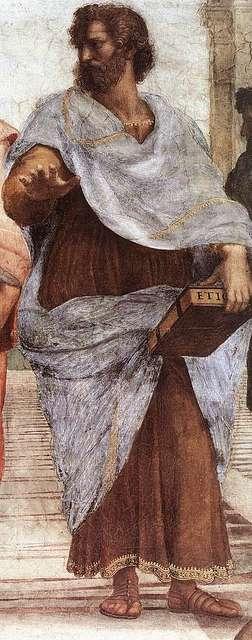
Aristotle – Raphael’s The School of Athens (Picryl)
The terminological meaning of the term differs slightly from its common usage. Plato’s usage of the term before Aristotle was tied to the idea of the “Good,” resulting in its application to the improvement or correction of actions. This usage can also be observed in Christian and Islamic moral frameworks.【4】
When examined historically, one encounters different ethical systems—for example, Aristotle spoke of a character-based ethics oriented toward “happiness.” That is, the focus was on the “character” of the agent performing the action.
This understanding somewhat resembled the view of Plato, Aristotle’s teacher. Indeed, classical Islamic philosophers and Christian moralists who followed ancient Greek philosophy also held the idea that morality is built upon character. However, after the Classical period, the influence of events such as the Renaissance and the Reformation led to a general break with this idea during the Enlightenment.
For instance, morality is now constructed not on character but on consciousness. The break from Aristotle’s classical philosophy in modern philosophy arises from the emphasis placed on “consciousness” through consciously performed actions.
The conceptual usage of the term “ethics” dates back to Aristotle (384–322 BCE). That is, the claim that the term has a theoretical referent corresponds to this period.
The classical representative of this approach is Aristotle. According to Aristotle, the aim of the discipline of ethics is to achieve eudaimonia—the highest good, a state of good and virtuous living. This happiness is not a fleeting pleasure but a comprehensive way of life sustained by virtuous activities.
Thus, Aristotelian ethics evaluates actions not by their individual consequences but by the character of the agent performing them. A virtuous action is one performed at the right time, in the right measure, and for the right purpose. In this approach, ethics is closely linked to character education and habit formation. In his work Nicomachean Ethics, Aristotle defines this concept roughly as follows:
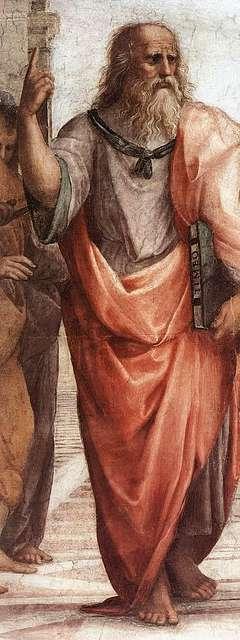
Plato – Raphael’s The School of Athens (Picryl)
Ethics is a practical philosophical field concerned with virtuous actions and character habits that enable human beings to achieve eudaimonia, their highest end.【5】
Through this definition—essentially an assumption—Aristotle articulates the aim, subject, and principle of the discipline he calls “ethics,” thereby also defining it. These distinctions were not present in his teacher Plato’s thought. For this reason, it has become a tradition to begin the history of ethics with Aristotle, on the grounds that his treatment is more systematic.
At this point, the chronological sequence in the history of ethics becomes important. For example, although Aristotle was a figure who conducted a systematic discussion of moral philosophy, the fundamental axioms and notions of these moral philosophical debates first appear in his teacher Plato (427–347 BCE). Plato is recognized as the first to discuss the central problems of moral philosophy—such as “morality,” “justice,” “temperance,” and virtues like “courage” or “wisdom”—in many of his dialogues from his youth, middle, and late periods. However, because he did not present these ideas within a systematic whole, and because some of his dialogues end in aporia—that is, without resolution—he is not regarded as the founding figure of the history of ethics.
Unlike Aristotle’s focus on character virtues, for Plato morality is a consequence of his theory of Forms. According to him, it is the Form of the “Good” that gives objects their reality and the mind its capacity for knowledge.【6】 Thus, a person’s virtue develops proportionally to how closely they resemble the Form of the Good (Greek: agathon). He expressed this idea as follows:
In the visible realm, the sun is to vision and visible things what the Good is to thought and intelligible things.【7】
Thus, the Form of the Good is, in fact, the fundamental criterion for a person’s virtue.
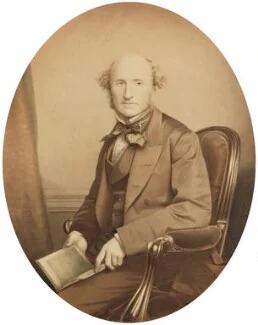
John Stuart Mill (National Portrait Gallery)
Utilitarianism, the view that prioritizes the utility or usefulness of objects, is most prominently represented by Jeremy Bentham and John Stuart Mill.
According to this approach, the moral value of an action is assessed based on its consequences. The fundamental criterion is whether the action produces the greatest possible benefit for the greatest number of people.
In Bentham, this notion of utility is grounded primarily in the pleasure-pain dichotomy, whereas Mill introduces a qualitative dimension to the concept of utility. According to him, not all pleasures are of equal value; intellectual and mental pleasures are considered superior to bodily pleasures. Thus, utilitarian ethics is a teleological ethical approach centered on consequences.
The most systematic representative of duty ethics is Kant. According to Kant, the moral value of an action is determined not by its consequences or by happiness but by the principle on which the action is based.
For him, a moral action is one performed solely out of duty. The foundation of this approach is the principle Kant calls the categorical imperative. The categorical imperative expresses moral commands that are unconditional and universally valid. Therefore, duty ethics is a normative ethical system that prioritizes intention and principle over consequence:
...Thus the principle is its highest law: Act only according to that maxim whereby you can at the same time will that it should become a universal law; this is the only condition under which a maxim will not conflict with itself, and such a command is certain.【8】
This general principle, which Kant calls a “maxim,” constitutes the foundational code of his “deontological ethics” system. For this maxim—or principle—to be universal, it must be the result of a “pure will” commanded by pure practical reason.
The field under discussion is, at its core, a “practical philosophy.” As both Kant and Aristotle have indicated in their definitions, ethics is characterized by its grounding in practical reason. Thus, the principle of the discipline of ethics has been established.
By definition, this discipline concerns virtuous actions and thus proceeds from the judgment that a behavior is either “virtuous” or “vicious,” that is, “good” or “bad.” Consequently, this area of practical philosophy operates under a presupposition: since virtuous and vicious actions are being discussed, must the judgment of “virtuous” or “vicious” itself be taken as a precondition?
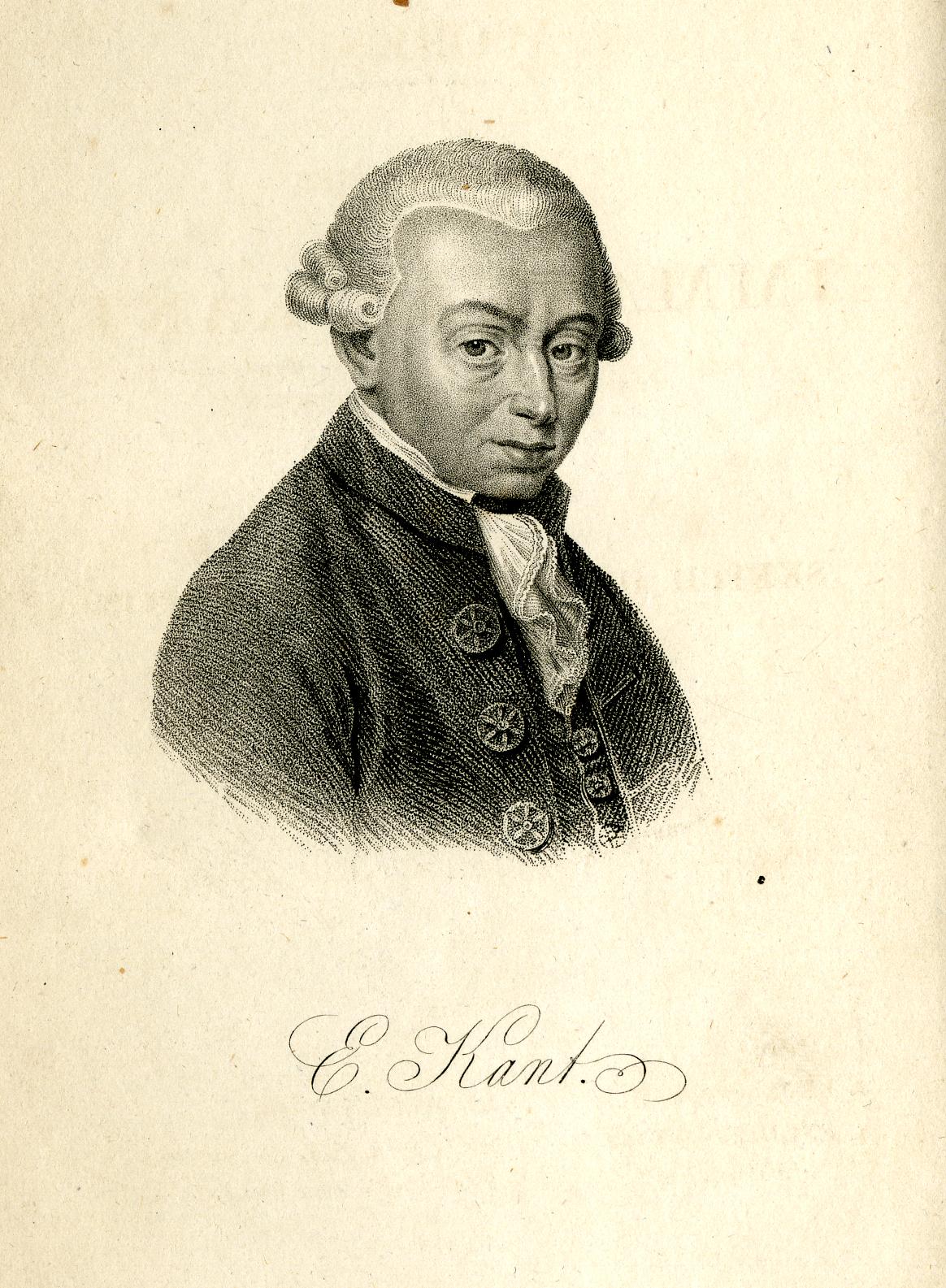
Immanuel Kant (Flickr)
In Aristotle’s definition, the assumption regarding “character” virtue or habit virtue is this: virtuous behavior is behavior performed through habit, because ethics is character. In the historical development of ethical thought, a distinct break from Aristotle’s character-centered approach can be observed. This break can be interpreted as the evolution of morality toward conscious human activities.
Therefore, it is now necessary to speak not of the virtuous or vicious nature of behavior arising directly from character without consciousness, but of the virtuous or vicious nature of consciously performed actions. We see this clearly in the German thinker Kant’s 1785 work Groundwork of the Metaphysics of Morals. According to Kant, who argued that the foundation of morality lies in pure practical reason, the fundamental moral principle is this (the categorical imperative):
Thus the practical imperative requires that humanity, whether in your own person or in that of another, should never be treated merely as a means, but always at the same time as an end.【9】
In his work Critique of Pure Reason, written at the end of the 18th century, the thinker also distinguishes between “reason” (Vernunft) and “understanding” (Verstand), because he recognizes a distinction between “pure reason” and “practical reason.”【10】 His work in this book holds that morality is constructed through reason. Thus, morality is, in essence, the sum of conscious actions performed through reason.
Considering the historical and terminological development so far, the discipline of “ethics” can also be viewed from another perspective: the term “morality” also derives from a root similar to ethics-ethos, namely the Arabic root “Hulk,” which conveys the meaning of nature, habit, or character. Thus, one might think that ethics and morality are identical. However, when Aristotle’s definition is reconsidered, we are reminded of a discipline concerned with “virtuous actions.”
Thus, in this context, ethics corresponds not to morality but to moral philosophy. Because ethics, while making judgments of virtuous or vicious, also discusses the epistemological dimension of these judgments. This is not the case with morality. Morality generally functions as a set of practical norms guiding virtuous behavior, whereas ethics examines the philosophical foundations, justifications, and methodologies of these norms. Therefore, ethics investigates the philosophical foundations of moral judgments.
The question that arises with humanity’s need to make judgments about concepts—for example, whether something is “good” because it is acted upon, or whether it is acted upon because it is “good”—gives rise to the most fundamental problem of moral philosophy: the “value” problem. Philosophical responses to such questions have highlighted two approaches: objective and subjective theories of value. According to the objective theory of value, objects possess a value that is valid independently of the subject. In contrast, according to the subjective theory of value, objects have no value independent of the subject; they acquire value only through the subject who ascribes it to them.
[1]
Joshua D. Greene, "Beyond Point-and-Shoot Morality: Why Cognitive (Neuro)Science Matters for Ethics," Ethics 124, no. 4 (2014): 695–726.
[2]
Aristotle, Metaphysics, trans. Ahmet Arslan (Istanbul: Divan Kitap, 2019), Gamma 2, 1003a33–1003b10.
[3]
Aristotle, Nicomachean Ethics, trans. Saffet Babür (Ankara: BilgeSu Publications, 2019), I.1 (1094a1–11); I.7 (1097a15–1098a20).
[4]
Celal Türer, “Why Ethics,” in Ethics and Ethical Issues, ed. Celal Türer (Ankara: Nobel Academic Publishing, 2019), 4.
[5]
Aristotle, Nicomachean Ethics, I.1 (1094a1–11); I.7 (1097a15–1098a20).
[6]
Plato, The Republic, trans. Sabahattin Eyüboğlu (Istanbul: Türkiye İş Bankası Kültür Yayınları, 2010), Book VI, 508a–509a
[7]
Plato, The Republic, 508c.
[8]
Immanuel Kant, Groundwork of the Metaphysics of Morals, 54–55, §82.
[9]
Immanuel Kant, Groundwork of the Metaphysics of Morals, 46, §67.
[10]
Immanuel Kant, Critique of Pure Reason, trans. Paul Guyer and Allen Wood (Cambridge: Cambridge University Press, 1998), A307/B363–A320/B377; A339/B397–A344/B402.
The paragraph numbers marked with A refer to the first edition of 1781.
The paragraph numbers marked with B refer to the second edition of 1787.


Etymological Origin, History, and Scope of the Concept of Ethics
Common Usage
Terminological Meaning
Aristotle and Eudaimonistic Ethics
Plato and the Idea of the Good
Utilitarian Ethics
Duty Ethics (Deontological Ethics)
Principle
Subject
Distinction Between Ethics and Morality
The Emergence of the Ethical Problem or the “Value” Problem