

+2 More


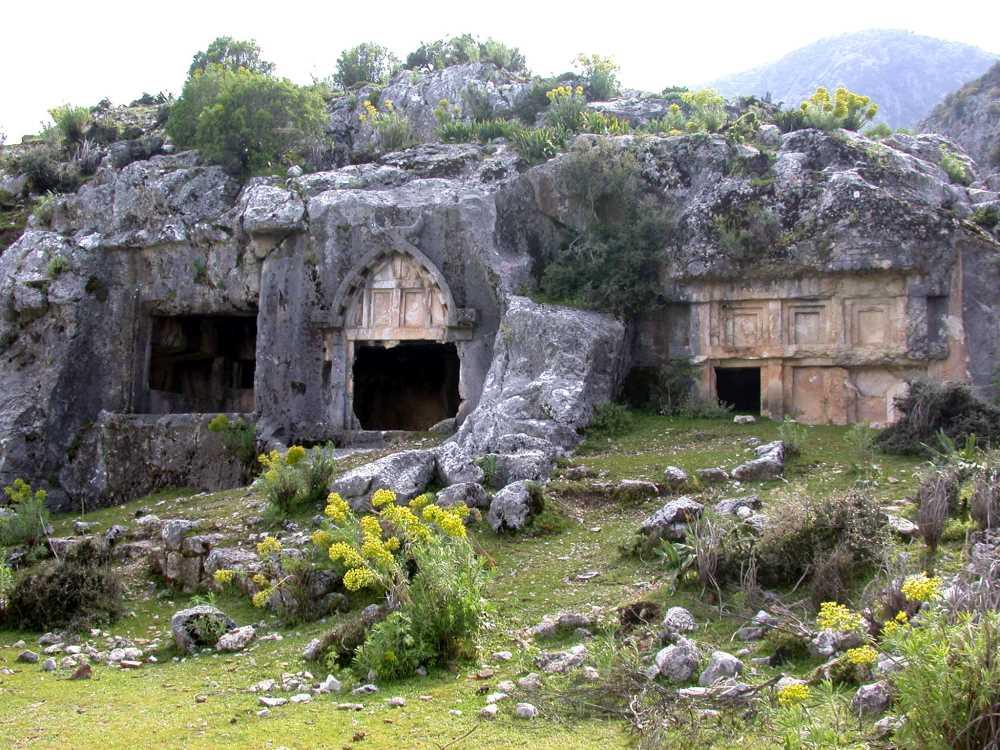
One of the prominent cities of the Lycian civilization, Pınara is located within the boundaries of Muğla province, in the Fethiye district, in the Seydikemer region. Situated adjacent to major Lycian cities such as Xanthos, Patara, Letoon, and Tlos, Pınara stands out with both its geographical position and its unique architectural remains. The city holds significance for tracing the traces of Lycian culture and urbanization, both due to its structure integrated with the natural landscape and the roles it undertook throughout history.

Pınara Antik Kenti - Türkiye Kültür Portalı
Pınara Ancient City played a central political and cultural role as one of the six major cities within the Lycian civilization that held three votes in the Lycian League. Geographically located within the present-day boundaries of Muğla province, in the Fethiye district, in the Seydikemer region, the city was an important settlement in antiquity with connections to both inland and coastal cities. The name of the city likely derives from the Luwian word “Pilleñni,” meaning “round hill.” This name corresponds directly to the city’s semicircular geographical formation.
Although the exact date of Pınara’s foundation is uncertain, archaeological remains and inscriptions show that it was a well-established settlement as early as the 5th century BCE. From an early period, the region where the city is located developed as one of the political, religious, and commercial centers of Lycia. Starting from the 5th century BCE, Pınara became a full member of the Lycian League and was one of the few cities with three voting rights within the league. This status indicates that Pınara was among the leading cities in terms of population density as well as economic and military capacity.
During the Hellenistic period, the city underwent significant architectural development. The construction of public structures such as the agora, theater, odeon, and city walls indicates that Pınara was reorganized in this period. In the Roman period, the city developed further and became monumental under imperial rule. Structures such as the theater were either built during this time or existing ones were expanded. The Roman bath and other civil buildings are among the examples that reflect the lifestyle of the period.
In the Byzantine period, Pınara was reshaped under the influence of Christianity, and religious buildings were constructed. The remains of a basilica and church suggest that the city became a bishopric center during this time. As in the Roman period, the city retained its strategic importance in the Byzantine period and functioned as a religious and administrative center.
However, the city's significance began to decline, especially from late antiquity onwards. Natural disasters, political turmoil, and shifting power balances in the region gradually led to the loss of Pınara’s importance. After the medieval period, the city was abandoned and eventually became covered by natural elements.
Today, the archaeological remains preserve the physical traces of this long historical process. Through structures such as the theater, agora, rock-cut tombs, and temples, the developmental phases of the city can be followed. Pınara maintains its historical identity as a significant example both within Lycian history and in the context of Mediterranean archaeology.
Pınara Ancient City stands out with its multi-layered architectural structure. Among the most notable structures in the city are the theater, agora, odeon, baths, fortification walls, rock-cut tombs, and temples. The city is organized into two distinct settlement levels: the upper and lower towns. While the upper city is equipped with defensive structures and civil architecture, the lower city contains public buildings and areas where social life was concentrated.
The theater of Pınara, with a seating capacity of approximately 3,200, is one of the larger theaters in the Lycian region. Constructed using hillside architecture, the structure reflects the advanced engineering techniques of the period in terms of both acoustic qualities and geometric proportions. Although the stage building known as the scaenae frons is largely destroyed, the seating rows and cavea are relatively well preserved.
Located right next to the agora, the odeon building was used for both political meetings and musical events. In the city plan, the agora served as the center of social and commercial life, while the odeon had a function supporting the cultural aspect of this life. Although the floor of the agora is largely damaged, the surrounding colonnades and building remains reveal the architectural organization of the area.
One of the most striking features of Pınara is its large number of rock-cut tombs. Especially on the high slopes of the city, the tombs carved into steep rock faces reflect Lycian burial traditions and masterful stone craftsmanship. Among these, the ones with temple façades stand out with their architectural details and reliefs. The density of rock-cut tombs points to the presence of an aristocratic class and the importance placed on religious rituals.
In addition, the city contains remains of civil and religious structures such as a Roman bath, a basilica, various cisterns, and water channels. The basilica, particularly from the Byzantine period, reflects the ecclesiastical architecture of the time with its multi-nave plan. Most of these structures are located in the southwestern part of the city, in relatively flat areas.
Pınara Antik Kenti - Turkish Museums
Pınara has suffered less damage compared to many other ancient cities due to its location on a natural platform surrounded by steep cliffs. The archaeological site is integrated with rich vegetation, which creates both an aesthetic and protective effect. However, some structures have still been damaged by earthquakes, treasure hunters, and natural wear. Today, cleaning and preservation efforts carried out in the area help to limit this damage to some extent.
Müze Kart. "Fethiye Pınara Örenyeri." Access Date: 25.03.2025. https://muze.gov.tr/muze-detay?SectionId=MFP01&DistId=MRK
Türkiye Kültür Portalı. "Pınara Antik Kenti - Muğla." Access Date: 25.03.2025. https://www.kulturportali.gov.tr/turkiye/mugla/gezilecekyer/pinara
T.C. Kültür ve Turizm Bakanlığı. Muğla İl Kültür ve Turizm Müdürlüğü. "Likya Uygarlığı Antik Kentleri (Pınara Antik Kenti-Tlos Antik Kenti)." Access Date: 25.03.2025. https://mugla.ktb.gov.tr/TR-159716/likya-uygarligi-antik-kentleri-pinara-antik-kenti-tlos-.html
T.C. Kültür ve Turizm Bakanlığı. Muğla İl Kültür ve Turizm Müdürlüğü. "Pınara." Access Date: 25.03.2025. https://mugla.ktb.gov.tr/TR-273366/pinara.html
T.C. Seydikemer Kaymakamlığı. "Pinara Antik Kenti." Access Date: 25.03.2025. http://www.seydikemer.gov.tr/pinara-antik-kenti
Turkish Museums. "Muğla Pınara Örenyeri." Access Date: 25.03.2025. https://www.turkishmuseums.com/museum/detail/2191-mugla-pinara-orenyeri/2191/1
Youtube. "Pınara Archaeological Site, Muğla." Turkish Museums. Access Date: 25.03.2025. https://www.youtube.com/watch?v=awWnpHTnwgw&t=28s

History
Architectural Remains and Urban Planning
Theater
Agora and Odeon
Rock-Cut Tombs
Other Structures
Natural Environment and State of Preservation
This article was created with the support of artificial intelligence.