
This article was automatically translated from the original Turkish version.
+1 More

Pıngıdık Oyunu
(Yapay zeka ile oluşturulmuştur)
Pıngıdık Oyunu is a traditional folk game and rite of passage organized by the Tahtacı Türkmen community in Gökbük Village of Finike District, Antalya Province, Türkiye. It is classified as a “spectacle game” and is widely believed to originate from Central Asian Turkic traditions and early Anatolian theatrical/ritual practices. The game was officially inscribed in 2014 on Türkiye’s Intangible Cultural Heritage National Inventory.
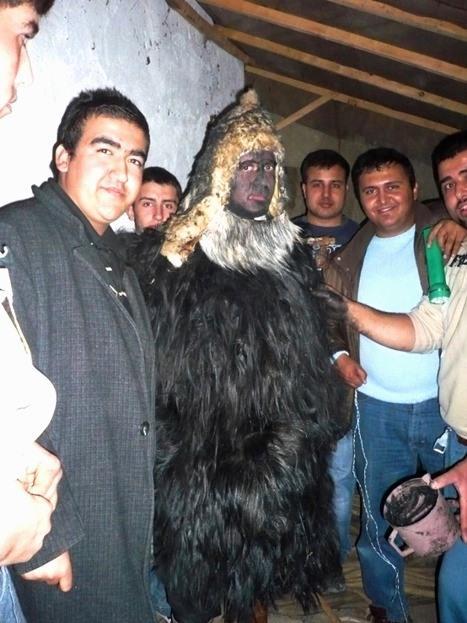
Pıngıdık Tradition (Antalya KTB)
The Pıngıdık game begins in the evening at the village square in Gökbük Village and continues until midnight. Three main participant groups take part in the ritual: adolescent males, middle-aged married men, and young girls. Although the timing of the game was later aligned with the late February weekend to coincide with seasonal transhumance and winter return migrations, its origins are thought to be linked to Nevruz, on 21 March.
The game consists of three main stages:
Adolescent males divide tasks among themselves. During this phase, the game area (square), firewood, sacks, and containers are prepared; preparations are also made for the character of “Pıngıdık.” The person designated as Pıngıdık wears a goat or sheep hide, dons a mask and beard, paints their face with pigment or charcoal, and attaches bells to a stick placed between their legs. These preparations are carried out secretly in a location away from public view.
The fully prepared Pıngıdık, accompanied by a group carrying tin cans, tambourines, and other noisemakers, walks through the village streets. During this procession, Pıngıdık frightens, intimidates, or provokes the villagers. At every door, household members are asked to contribute ingredients for bread-making such as flour, salt, yeast, and anise seed. The collected ingredients are then used to knead dough on flat stones, a task performed by young girls while young men guard them. Once baked, the loaves are taken from the ground. Adult men begin competing to seize the bread from the young men’s hands. While adult men attempt to take the bread, the young men resist. If an adult is caught, they risk being thrown into or near the fire.
The baked loaves are collected by the young men. Elders and adults begin to leave the square, while the youth continue to play and reflect on the event. Subsequently, the young men distribute bread to households. When entering a home, each young man kisses the threshold three times with the bread in hand and is forbidden to speak while inside. A piece of bread is left at every house; any surplus is secretly given to families in difficult circumstances. In this way, the game also embodies social solidarity and sharing.
Pıngıdık Tradition (TRT Archive)
The Pıngıdık game carries symbolic meanings:
As of 2014, the Pıngıdık game has been officially recorded on Türkiye’s Intangible Cultural Heritage National Inventory under the category of Village Spectacle Games. This inscription recognizes the game’s cultural value and highlights its significance within conservation efforts.

Pıngıdık Oyunu
(Yapay zeka ile oluşturulmuştur)
Game Area, Timing and Social Context
Stages and Implementation Process
Preparation Stage
Game Stage
Final Stage
Figures, Symbols and Themes
Social Functions
Conservation Status