

This article was automatically translated from the original Turkish version.
+2 More
Author(s) | Ahmet Bican Ercilasun | ||||||||
|---|---|---|---|---|---|---|---|---|---|
Publisher(s) | Bilge Kültür Sanat | ||||||||
Publication Date | 2020 | ||||||||
Number of Pages | 224 | ||||||||
Type(s) | Linguistics | ||||||||
Language(s) | Turkish | ||||||||
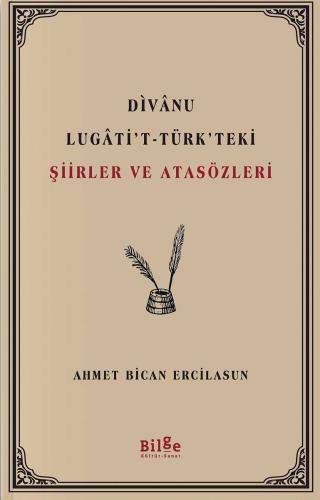
Professor Ahmet Bican Ercilasun’s work Şiirler ve Atasözleri in Dîvânu Lugâti’t-Türk is a detailed study of the poems and proverbs found in Kaşgarlı Mahmud’s 11th-century lexical and cultural compendium, Dîvânu Lugâti’t-Türk. The book provides a foundational resource for literary, linguistic, and cultural historical research.
The work systematically examines the poems and proverbs in Dîvânu Lugâti’t-Türk both in terms of textual transmission and analysis. Through thematic organization of the poems and evaluation of the linguistic structures and semantic patterns of the proverbs, it sheds light on the oral and written expressive elements of historical Turkish culture.
The book is generally divided into three main sections:
The “Söz Başı” and “Introduction” sections provide historical and linguistic background on Kaşgarlı Mahmud, the author of Dîvânu Lugâti’t-Türk, including the historical period he lived in, the Turkish tribes, their dialects, and the distinguishing characteristics of these groups.
The poetry analyses in the first section of the work are organized into thematic, structural, and formal evaluations. The poems are classified under two main categories:
Each poem is presented with its original text, a modern Turkish translation, and explanatory commentary.
For the classification of proverbs, the work draws upon Carl Brockelmann’s tripartite taxonomy:
In addition, the book presents alternative classifications based on criteria such as “prevalence,” “theme,” and “way of life.”
In the final section of the book, the texts of the proverbs are listed alongside their modern Turkish translations, accompanied by analyses of their cultural value judgments. This section includes proverbs that convey universal as well as culturally specific wisdom, ethical principles, moral guidance, and life knowledge. Some examples are:
Ercilasun, Ahmet Bican. *Dîvânu Lugâti’t-Türk’teki Şiirler ve Atasözleri*. Accessed July 12, 2025. https://www.bilgeyayincilik.com/divanu-lugatit-turkteki-siirler-ve-atasozleri
Korkmaz, Zeynep. *Dîvânu Lugâti’t-Türk’teki Şiirler ve Atasözleri*. İnceleme. *Türk Dili Dergisi*, September 2020. Accessed July 12, 2025. https://tdk.gov.tr/wp-content/uploads/2020/09/z_-kitapl%C4%B1k-_-15-1.pdf.

Author(s) | Ahmet Bican Ercilasun | ||||||||
|---|---|---|---|---|---|---|---|---|---|
Publisher(s) | Bilge Kültür Sanat | ||||||||
Publication Date | 2020 | ||||||||
Number of Pages | 224 | ||||||||
Type(s) | Linguistics | ||||||||
Language(s) | Turkish | ||||||||
No Discussion Added Yet
Start discussion for "Poems and Proverbs in Dîvânu Lugâti’t-Türk (Book)" article
Content Structure and Sections
Poetry Analysis
Proverb Analysis
Classification and Thematic Analyses
Representative Texts and Values