This article was automatically translated from the original Turkish version.
+2 More
Registration Number | 1269 | ||||||||
|---|---|---|---|---|---|---|---|---|---|
Registration Date | 06.12.2022 | ||||||||
Application Number | C2022/000144 | ||||||||
Application Date | 18.05.2022 | ||||||||
Name of the Geographical Indication | Polat İçli Köftesi / Polat Köftesi | ||||||||
Product / Product Group(s) | İçli köfte / Meals and Soups | ||||||||
Type of Geographical Indication | Mahreç İşareti | ||||||||
Applicant/Registrant(s) | Malatya Industry and Technology Provincial Directorate | ||||||||
Address of the Registrant | Vilayet Building No:1 Yeşilyurt MALATYA | ||||||||
Geographical Boundary | Doğanşehir District of Malatya Province | ||||||||
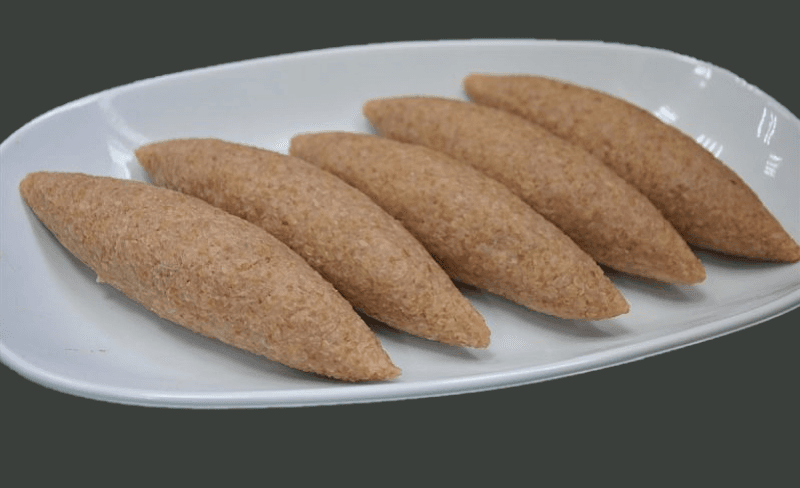
Polat içli köftesi / Polat köftesi is a traditional stuffed meatball variety originating from Polat Village in the Doğanşehir district of Malatya province, officially registered with a geographical indication mark. The product is produced by filling an outer casing made of lean, nerve-free beef mince, bulgur, dried onion, salt, and water with an inner filling composed of fatty beef mince, butter, onion, spices, and dried herbs, followed by boiling. These meatballs, approximately 12–13 cm in length and weighing 90–110 grams, are commonly served during holidays and special occasions.
Polat içli köftesi / Polat köftesi is a type of stuffed meatball made by placing an inner filling, prepared with specific ingredients, inside an outer casing composed of lean, nerve-free beef mince, bulgur, dried onion, salt, and water, followed by boiling.
The inner filling consists of fatty beef mince with nerves removed, butter, dried onion, salt, black pepper, ground red pepper, basil, and dried parsley. Upon completion of production, Polat içli köftesi / Polat köftesi measures approximately 12–13 cm in length and weighs 90–110 grams.
The consumption of Polat içli köftesi / Polat köftesi is widespread among the local population, and it has become customary to serve it during holidays and special gatherings. This socio-cultural practice underscores its strong association with its geographical origin.
In the production of Polat içli köftesi / Polat köftesi, medium-grain bulgur produced in Malatya province is preferred. The production process is based on preparing the inner and outer fillings separately, then combining the two components.
The composition of the inner filling for 16 meatballs is as follows:
To prepare the inner filling, finely chopped dried onion is sautéed in 15 g of butter until it turns pink. In another pan, medium-fat beef mince is sautéed until all moisture has evaporated. Then, 20 g of butter, salt, black pepper, ground red pepper, basil, and dried parsley are added, and the mixture is sautéed for an additional 10–15 minutes. The sautéed onion mixture is added to the pan containing the beef mince and cooked together for several more minutes until fully combined. Once cooled, balls of 30–35 g are formed from the inner filling.
The components of the outer casing are as follows:
In preparing the outer casing, the beef mince and salt are kneaded together for approximately 30 minutes. Bulgur and water are then added, and the mixture is kneaded continuously until it reaches a consistency that holds its shape without crumbling.
Portions of 60–65 g are taken from the outer casing and rolled into cylinders approximately 12–13 cm in length. Using the index finger, each cylinder is hollowed out to create a wall thickness of 0.3–0.5 cm. A 30–35 g ball of the prepared inner filling is placed into the hollowed space, and the opening is sealed.
The prepared meatballs are arranged on a tray so that they do not touch each other. Water is brought to a boil in a large pot, and 20 g of salt is added. The meatballs are boiled in the salted water for 8–10 minutes. Polat içli köftesi / Polat köftesi is served hot.
The production of Polat içli köftesi / Polat köftesi has deep roots in the culinary culture of the Doğanşehir district. The product was first produced in Polat Village and gradually became known throughout the entire district. The tradition of serving it during holidays and special occasions reinforces its cultural significance. For these reasons, Polat içli köftesi / Polat köftesi is a product bound by geographical indication, and all production processes must be carried out within these defined boundaries.
The production of Polat içli köftesi / Polat köftesi and compliance with its geographical indication regulations are monitored under the coordination of the Malatya Directorate of Industry and Technology. The monitoring body consists of at least three experts from the Malatya Directorate of Industry and Technology, the Malatya Directorate of Agriculture and Forestry, and the Polat Social Assistance and Culture Association, all specializing in the product.
Monitoring is conducted at least once annually. Additional inspections may be carried out at any time upon request or complaint. The monitoring criteria are as follows:
During inspections, the monitoring body may receive support or procure services from public institutions, private organizations, or qualified individuals and entities affiliated with such institutions. The registering authority is responsible for pursuing legal procedures to protect the geographical indication rights of the product.
Turk Patent and Trademark Office. "Polat İçli Köftesi / Polat Köftesi." Accessed July 14, 2025. https://ci.turkpatent.gov.tr/cografi-isaretler/detay/6682.
Turkish Patent and Trademark Office. "Polat İçli Köftesi / Polat Köftesi Coğrafi İşaret Tescil Belgesi (PDF)." Accessed July 14, 2025. https://ci.turkpatent.gov.tr/Files/GeographicalSigns/80269f82-3acb-4865-bb0b-8658d3e6b8ad.pdf.

Registration Number | 1269 | ||||||||
|---|---|---|---|---|---|---|---|---|---|
Registration Date | 06.12.2022 | ||||||||
Application Number | C2022/000144 | ||||||||
Application Date | 18.05.2022 | ||||||||
Name of the Geographical Indication | Polat İçli Köftesi / Polat Köftesi | ||||||||
Product / Product Group(s) | İçli köfte / Meals and Soups | ||||||||
Type of Geographical Indication | Mahreç İşareti | ||||||||
Applicant/Registrant(s) | Malatya Industry and Technology Provincial Directorate | ||||||||
Address of the Registrant | Vilayet Building No:1 Yeşilyurt MALATYA | ||||||||
Geographical Boundary | Doğanşehir District of Malatya Province | ||||||||
No Discussion Added Yet
Start discussion for "Polat İçli Köftesi / Polat Köftesi" article
Distinguishing Characteristics
Recipe / Production Method
Preparation of the Inner Filling
Preparation of the Outer Casing
Shaping and Cooking the Meatballs
Geographical Link
Monitoring and Control