


This article was automatically translated from the original Turkish version.
+1 More
Opening Date(s)(Text) | 9 April 2021 | ||||||||
|---|---|---|---|---|---|---|---|---|---|
Location | Selimiye Street No:17 Çankaya/ANKARA (EGM Dikmen Additional Service Building Campus) Ayrancı Neighborhood | ||||||||
Museum Status | Private Museum Approved by the Ministry of Culture and Tourism | ||||||||
Affiliated Unit | General Directorate of Security Directorate of Social Services and Health | ||||||||
Institution Name | Republic of Turkey Police Museum | ||||||||
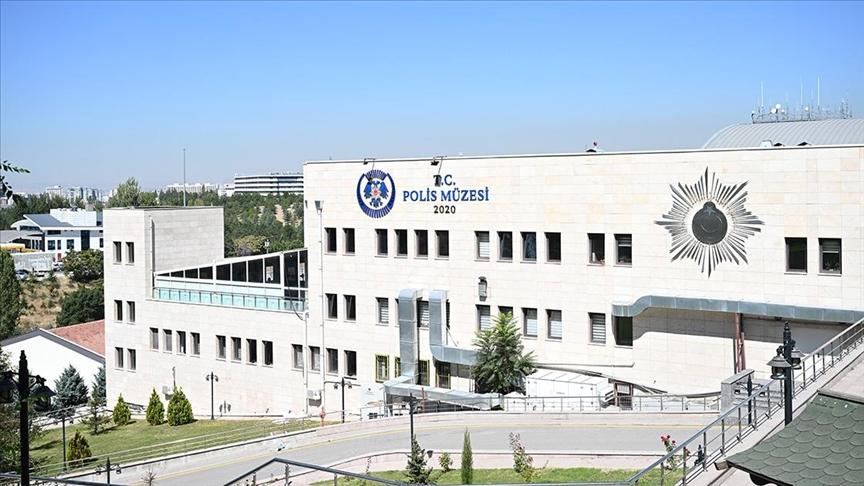
Police Museum, operating under the Directorate of Social Services and Health of the General Directorate of Security, is a specialized museum that opened on 9 April 2021, marking the 176th anniversary of the founding of the Turkish Police Organization. It showcases the development of the organization from the era of Sultan Abdülmecid to the present day.【1】
Police Museum (Ministry of Interior of the Republic of Türkiye)
The Police Museum is an institution operating under the Directorate of Social Services and Health of the General Directorate of Security.【2】 It was established with special museum status upon approval from the Ministry of Culture and Tourism. Its primary purpose is to transmit to new generations the stages the organization has undergone, its institutional heritage, and its developmental journey from the era of Sultan Abdülmecid to the present day.【3】
The museum is located in the Dikmen Additional Service Building complex of the General Directorate of Security in the Ayrancı neighborhood of Çankaya district, Ankara. It has a total usable area of 3,801 square meters, with exhibition units covering 1,518 square meters. The complex includes social areas, restrooms, a café, and a souvenir shop for visitors.【4】
The first initiative to establish a Police Museum in the Ottoman Empire was planned in 1911 within the Dersaadet Police School in Istanbul, but activities were suspended due to wartime conditions at the time.【5】 In accordance with a circular issued by the Ministry of Interior on 12 April 1917, uniforms, equipment, and photographs of police officers killed in the line of duty were collected from various units and began to be preserved and exhibited at the Istanbul Police Directorate. After the proclamation of the Republic, museum materials were transferred to Ankara and remained preserved for many years at the Ankara Police Institute. After a century-long preparatory process, the museum project was completed in 2020 and opened to the public in 2021.【7】
The museum’s layout consists of six main thematic and chronological sections. Silicone mannequins, reenactment techniques, and documentary-style productions are used in the exhibition areas to enhance storytelling.【8】
Police Museum (Anadolu Agency)
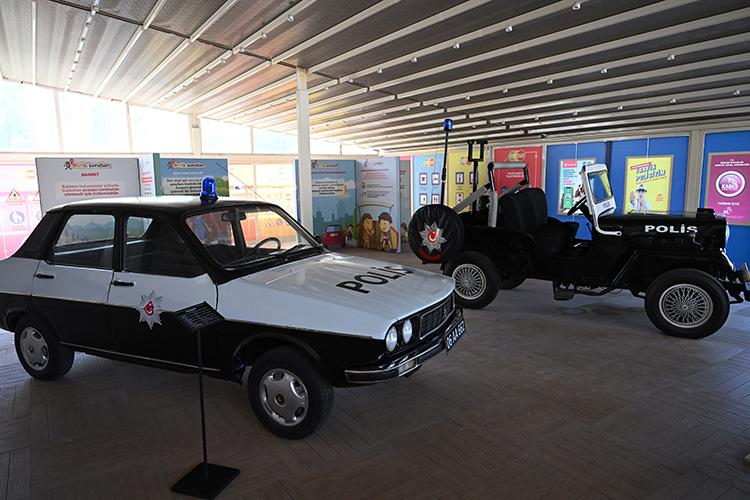
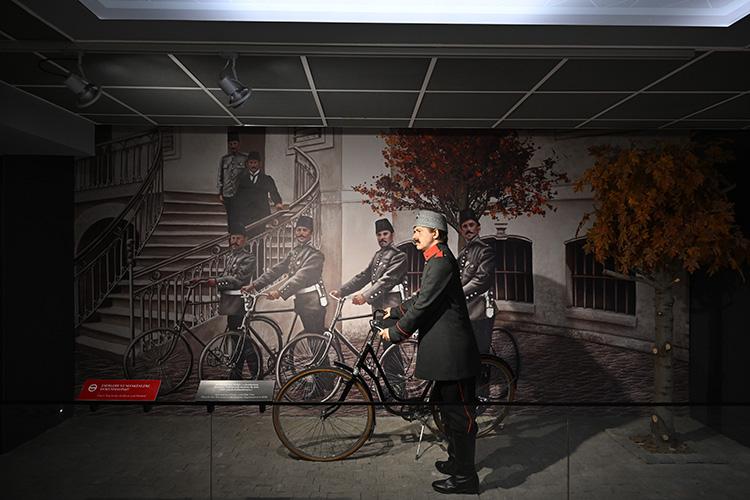
Sections A, B, and C examine the historical position and chronological development of the Turkish police. These areas display the institutional structure of the Ottoman police organization, historical police station models, period uniforms, and police-themed works from Turkish literature. Additionally, technical advancements such as the first fingerprint application in the organization’s history, the establishment of the first bicycle-mounted cavalry unit, as well as historical weapons and operational vehicles are exhibited in these sections.【9】
Section D focuses on forensic investigation procedures and educational activities. This area includes criminal laboratory demonstrations, bomb disposal reenactment zones, and units introducing police dogs. An educational area for traffic rules and traffic simulation units, as well as a police library, are also open to visitors.【10】
Police Museum (Anadolu Agency)
Section E is dedicated to the organization’s modern inventory and spiritual heritage. This section displays current operational equipment and uniforms, as well as the 15 July area, which features memorials for fallen officers, personal belongings of Security martyrs, and a special production honoring them. Diplomatic gifts from foreign security organizations and historical documents are also preserved in this section.【11】
Section F is an outdoor exhibition unit located outside the museum building. This area displays armored police vehicles that have been part of or are still in active service with the General Directorate of Security.【12】
The museum’s inventory includes materials representing significant events and individuals that shaped the organization’s history. Among the notable reenactments is the historical incident involving the bag lost by Gazi Mustafa Kemal Atatürk during his journey from the Amasya Congress to Sivas, later recovered by a police officer.
The collection also includes a commemorative area dedicated to “Zehir,” the police dog who sacrificed his life in 2016 by leaping onto a live bomb during an operation in Nusaybin, saving the lives of 42 personnel. Specialized areas within the museum display the first motorcycles and bicycles used by police units, as well as personal belongings of Security martyrs.【13】
Anadolu Ajansı. "Anadolu Ajansı Polis Müzesi'ni FPV dronla görüntüledi." Accessed March 22, 2026. https://www.aa.com.tr/tr/kultur/anadolu-ajansi-polis-muzesini-fpv-dronla-goruntuledi/3052363
Polis Müzesi. "Hakkımızda." Accessed March 22, 2026. https://www.polismuzesi.com/hakkimizda
T.C. Ministry of Interior. "Polis Müzesi Açılıyor." Accessed March 22, 2026. YouTube. https://www.youtube.com/watch?v=mi7_EWizKwY
Turkish Museums. "Polis Müzesi." Accessed March 22, 2026. https://www.turkishmuseums.com/museum/detail/22348-polis-muzesi/22348/1
İstanbul Emniyet Müdürlüğü. "İlk Polis Müzesi Açılıyor." Accessed March 22, 2026. https://www.istanbul.pol.tr/ilk-polis-muzesi-aciliyor-merkezicerik
[1]
T.C. Polis Müzesi. "Hakkımızda." Erişim Tarihi 22 Mart 2026. https://www.polismuzesi.com/hakkimizda
[2]
Turkısh Museums. "Polis Müzesi." Erişim Tarihi 22 Mart 2026. https://www.turkishmuseums.com/museum/detail/22348-polis-muzesi/22348/1
[3]
T.C. Polis Müzesi. "Hakkımızda." Erişim Tarihi 22 Mart 2026. https://www.polismuzesi.com/hakkimizda
[4]
T.C. Polis Müzesi. "Hakkımızda." Erişim Tarihi 22 Mart 2026. https://www.polismuzesi.com/hakkimizda
[5]
Turkısh Museums. "Polis Müzesi." Erişim Tarihi 22 Mart 2026. https://www.turkishmuseums.com/museum/detail/22348-polis-muzesi/22348/1
[7]
Turkısh Museums. "Polis Müzesi." Erişim Tarihi 22 Mart 2026. https://www.turkishmuseums.com/museum/detail/22348-polis-muzesi/22348/1
[8]
T.C. Polis Müzesi. "Hakkımızda." Erişim Tarihi 22 Mart 2026. https://www.polismuzesi.com/hakkimizda
[9]
T.C. Polis Müzesi. "Hakkımızda." Erişim Tarihi 22 Mart 2026. https://www.polismuzesi.com/hakkimizda
[10]
T.C. Polis Müzesi. "Hakkımızda." Erişim Tarihi 22 Mart 2026. https://www.polismuzesi.com/hakkimizda
[11]
T.C. Polis Müzesi. "Hakkımızda." Erişim Tarihi 22 Mart 2026. https://www.polismuzesi.com/hakkimizda
[12]
T.C. Polis Müzesi. "Hakkımızda." Erişim Tarihi 22 Mart 2026. https://www.polismuzesi.com/hakkimizda
[13]
İstanbul Emniyet Müdürlüğü. "İlk Polis Müzesi Açılıyor." Erişim Tarihi 22 Mart 2026. https://www.istanbul.pol.tr/ilk-polis-muzesi-aciliyor-merkezicerik

Opening Date(s)(Text) | 9 April 2021 | ||||||||
|---|---|---|---|---|---|---|---|---|---|
Location | Selimiye Street No:17 Çankaya/ANKARA (EGM Dikmen Additional Service Building Campus) Ayrancı Neighborhood | ||||||||
Museum Status | Private Museum Approved by the Ministry of Culture and Tourism | ||||||||
Affiliated Unit | General Directorate of Security Directorate of Social Services and Health | ||||||||
Institution Name | Republic of Turkey Police Museum | ||||||||
Purpose of Establishment
Location and Physical Capacity
Establishment Process and Reason
Sections
Important Collections