


This article was automatically translated from the original Turkish version.
+3 More
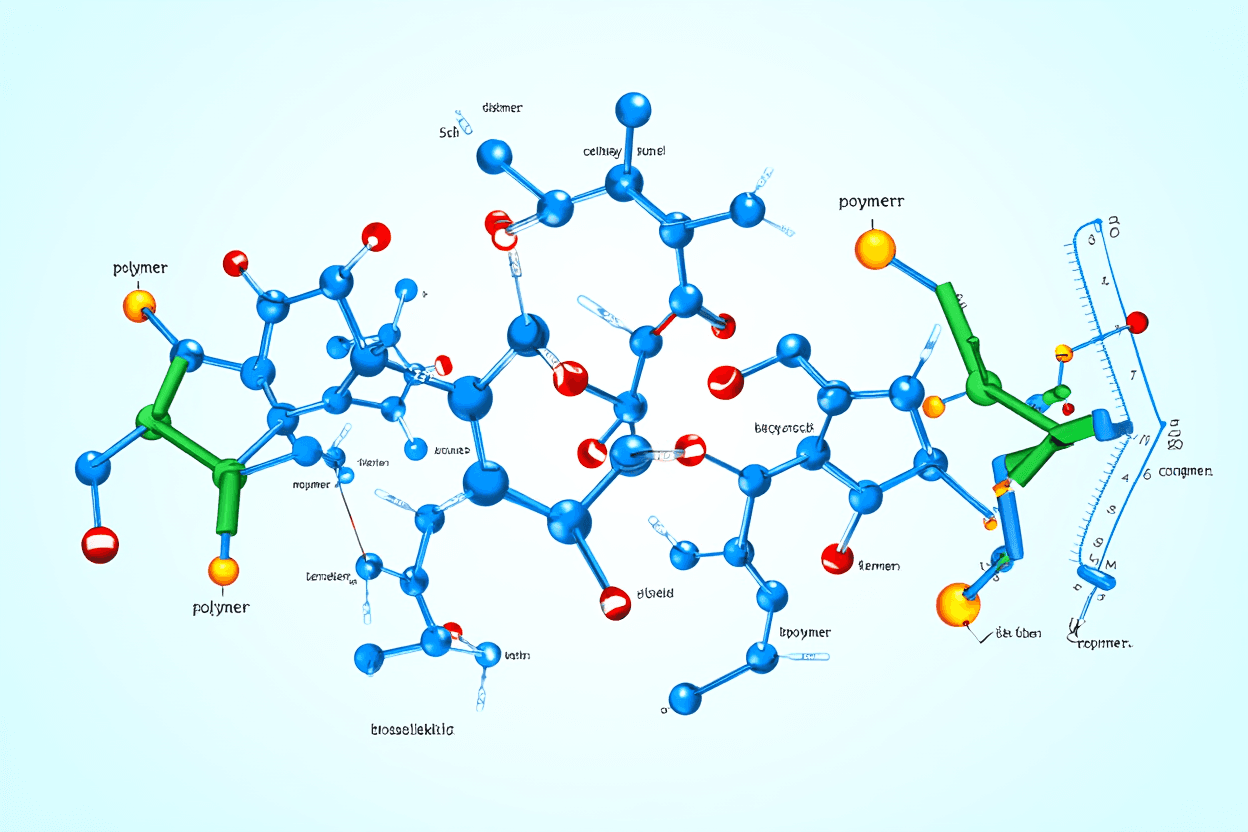
Polymer-Based Biomaterials (Generated by Artificial Intelligence)
Definition(s) | Polymer-based materials used to perform or replace the functions of living tissues. support | ||||||||
|---|---|---|---|---|---|---|---|---|---|
Basic Type(s) | Biodegradable Natural and Synthetic Polymers. Superhydrophobic Conductive | ||||||||
Example Polymers | Polycaprolactone (PCL), Poly(lactic-co-glycolic acid) (PLGA), Polypyrrole (PPy), PEDOT. | ||||||||
Production Techniques | Electrospinning, Electrospraying, Additive Manufacturing (3D Printing). | ||||||||
Application Area(s) | Brain-Computer Interfaces. Biosensors Medical Implants Drug Delivery Tissue Engineering | ||||||||
Polymers-based biomaterials are polymer-based materials designed to interact with living tissues and systems within the human body in order to perform, support, enhance, or modify their functions. These materials are developed through the integration of fundamental sciences, nanotechnology, and biotechnology, bridging the fields of medicine and engineering. Biocompatibility—the ability of the material to be accepted by the body—is one of their most fundamental requirements. The ease with which the chemical and physical properties of polymers can be altered provides them with a broad range of applications, from tissue engineering and drug delivery systems to medical implants and brain-computer interfaces.
The origins of biomaterials, particularly those that are electrically active, extend back to the 18th century. In the 1790s, Luigi Galvani’s frog leg experiments provided the first scientific evidence of the electrical nature of the nervous system. However, the foundations of modern polymeric biomaterials were laid in the 20th century. In the mid-1900s, researchers at Bell Laboratories discovered that certain organic compounds could conduct electricity, opening a new frontier between materials science and biology.
This field experienced a breakthrough in 1977 when Alan Heeger, Alan MacDiarmid, and Hideki Shirakawa developed conductive polymers. Their demonstration that materials such as polyacetylene could gain electrical conductivity through doping earned them the Nobel Prize in Chemistry in 2000. This discovery paved the way for the use of electrically active materials in biomedical applications.
In the early 2000s, conductive polymers such as polypyrrole (PPy) and PEDOT began to be used in nerve tissue engineering. Laboratory studies showed that these polymers could promote the growth of nerve cells and successfully transmit electrical signals. In 2005, Robert Langer and his team at MIT confirmed the high biocompatibility of these materials, drawing the attention of medical device manufacturers. By 2009, the use of electrospinning techniques enabled the production of more complex, tissue-like structures from these polymers. A 2020 study at Stanford University further revolutionized the field by demonstrating that genetically modified neurons could synthesize their own conductive polymers.
Polymeric biomaterials are classified into various categories based on their properties and intended applications. This diversity ensures that the most suitable solution can be provided for specific biomedical challenges.
Biodegradable polymers are materials that, after performing their function within the body for a specified period, break down into non-toxic byproducts that can be naturally eliminated. This characteristic eliminates the need for a second surgical procedure to remove the implant once its purpose is fulfilled. They are widely used in tissue engineering scaffolds, temporary implants, and controlled drug delivery systems. Aliphatic polyesters such as polycaprolactone (PCL) and poly(lactic-co-glycolic acid) (PLGA) are among the most well-known examples of this class.
Conductive polymers are organic polymers capable of conducting electricity. This property makes them ideal for interfacing with biological systems where electrical activity is critical, such as nerve and muscle tissues. They hold potential in applications such as nerve repair, cardiac muscle regeneration, and brain-computer interfaces. Polypyrrole (PPy) and poly(3,4-ethylenedioxythiophene) (PEDOT) are among the most extensively studied conductive polymers due to their biocompatibility and favorable electrical properties.
Superhydrophobic surfaces are those with an extremely high ability to repel water, exhibiting water contact angles greater than 150°. This property is achieved by increasing the surface roughness of a material with low surface energy. In biomedical applications, superhydrophobic polymers are used to develop antithrombogenic surfaces that prevent blood clotting, antibacterial coatings that inhibit microbial adhesion, and self-cleaning medical devices. Materials based on PCL and PLGA produced using techniques such as electrospinning can be employed to create such surfaces.

Ball-and-Stick Model of a Segment of Polyacetylene’s Polymer Chain (Generated by Artificial Intelligence)
A variety of advanced manufacturing techniques are employed to transform polymeric biomaterials into functional products. These methods control the micro- and macrostructure of the material to achieve desired biological and mechanical properties.
Electrospinning is a technique that uses a high voltage to generate a network of nano- or microscale fibers from a polymer solution, forming a scaffold. This fibrous structure mimics the extracellular matrix and provides an optimal environment for cell adhesion, proliferation, and differentiation. Electrospraying operates on a similar principle but produces particles instead of fibers. These techniques are widely used in the fabrication of tissue engineering scaffolds, wound dressings, and superhydrophobic surfaces.
Additive manufacturing, or 3D printing, is a technology that constructs three-dimensional objects by layering material according to a digital model. In biomedical applications, this technology is used to produce patient-specific implants, prostheses, and tissue scaffolds based on individual anatomical data from CT or MRI scans. Polymeric biomaterials are particularly well-suited for 3D printing, granting them broad utility in this domain. This method allows precise control over the porosity and internal architecture of implants, enhancing tissue integration and functionality.
The versatility of polymers-based biomaterials has driven innovation across numerous branches of medicine.
The primary goal of tissue engineering is to repair or replace damaged or nonfunctional tissues and organs. Polymeric scaffolds serve as three-dimensional structural supports for cells, guiding the formation of new tissue. Significant research efforts focus on polymer-based scaffolds for the regeneration of nerve, bone, cartilage, and skin tissues.
Polymers can carry drug molecules to targeted sites within the body and enable their controlled release. This approach reduces side effects while enhancing therapeutic efficacy. Micro- or nanoparticulates made from biodegradable polymers are used across a wide spectrum of applications, from cancer therapy to vaccine delivery.
Due to their light weight, flexibility, and biocompatibility, polymers serve as alternatives to metals and ceramics in a variety of implants. Examples include stents and grafts used in cardiovascular systems, screws and plates employed in orthopedic surgery, spinal implants, and intraocular lenses—all of which can be manufactured from polymeric biomaterials.
BCI technology aims to establish a communication channel between the nervous system and external devices by either reading brain signals or delivering signals to the brain. Conductive polymers play a critical role in fabricating electrodes that enable direct and stable contact with brain tissue. Companies such as Neuralink are conducting research in this area with goals such as enabling paralyzed individuals to control computers using their thoughts.
Polymers also play a vital role in the development of biosensors used for disease diagnosis. Polymer surfaces can be modified to recognize specific biomolecules such as proteins and DNA. This enables the rapid and sensitive detection of disease biomarkers.
The success of a biomaterial largely depends on its biocompatibility. Biocompatibility refers to the material’s ability to be implanted in the body without triggering undesirable immune responses such as inflammation, clotting, or rejection. Properties such as the surface chemistry and roughness of polymers directly influence biocompatibility. Therefore, when designing a polymeric biomaterial, its interaction with the intended biological environment is carefully evaluated, and the material is modified to optimize this interaction.
"Biyobozunur Metalik Malzemeler." Paradigma Akademi Yayınları, 2023. Accessed July 15, 2025. https://www.paradigmaakademiyayinlari.com/wp-content/uploads/2023/10/biyobozunur-metalik-malzemeler.pdf.
"Biyomedikal Uygulamalarında Eklemeli İmalat Teknolojileri." DergiPark. Accessed July 15, 2025. https://journals.indexcopernicus.com/api/file/viewByFileId/1593344.
"Functional Nano and Biomaterials." Sabiotek – Health Biotechnology Excellence Joint Application and Research Center. Accessed July 15, 2025. https://sabiotek.org/tematik-alanlar/fonksiyonel-nano-ve-biyomalzemeler.html.
"Sağlık Alanında Kullanılan Polimerik Biyomateryaller." *İstanbul Atlas Üniversitesi Tıp Fakültesi Dergisi* 3, no. 2 (2020). Accessed July 15, 2025. https://dx.doi.org/10.17932/IAU.TFK.2018.008/2020.302/tfk_v03i2002.
Gümüşderelioğlu, Menemşe. "Biyomalzemeler." *Bilim ve Teknik*, July 2002. Prepared byHacettepe Üniversitesi Department of Chemical Engineering. Accessed July 15, 2025. https://bilimteknik.tubitak.gov.tr/system/files/biyomalzemeler.pdf
Kaplan, Jonah and Mark Grinstaff. "Fabricating Superhydrophobic Polymeric Materials for Biomedical Applications." *JoVE (Journal of Visualized Experiments)*, no. 102 (2015): e53117. Accessed July 15, 2025. https://doi.org/10.3791/53117.
Muradoğlu, Candeğer. "Beyin-Bilgisayar Arayüzleri ve İletken Biyomalzemeler Üzerinde Çalışan Girişimler." *Webrazzi*, June 23, 2025. Accessed July 15, 2025. https://webrazzi.com/2025/06/23/beyin-bilgisayar-arayuzleri-ve-iletken-biyomalzemeler-uzerinde-calisan-girisimler/.

Polymer-Based Biomaterials (Generated by Artificial Intelligence)
Definition(s) | Polymer-based materials used to perform or replace the functions of living tissues. support | ||||||||
|---|---|---|---|---|---|---|---|---|---|
Basic Type(s) | Biodegradable Natural and Synthetic Polymers. Superhydrophobic Conductive | ||||||||
Example Polymers | Polycaprolactone (PCL), Poly(lactic-co-glycolic acid) (PLGA), Polypyrrole (PPy), PEDOT. | ||||||||
Production Techniques | Electrospinning, Electrospraying, Additive Manufacturing (3D Printing). | ||||||||
Application Area(s) | Brain-Computer Interfaces. Biosensors Medical Implants Drug Delivery Tissue Engineering | ||||||||
No Discussion Added Yet
Start discussion for "Polymer-Based Biomaterials" article
Historical Development
Types of Polymeric Biomaterials
Biodegradable Polymers
Conductive Polymers
Superhydrophobic Polymers
Production and Processing Techniques
Electrospinning and Electrospraying
Additive Manufacturing (3D Printing)
Biomedical Applications
Tissue Engineering and Regenerative Medicine
Drug Delivery and Release Systems
Medical Implants and Devices
Brain-Computer Interfaces (BCI)
Biosensors and Diagnostic Systems
Biocompatibility