

This article was automatically translated from the original Turkish version.
+2 More
Positronium (Ps) is an exotic atom consisting of an electron (e⁻) bound to its antiparticle, the the positron's (e⁺), by the Coulomb force. It has a structure similar to the hydrogen atom but contains a positron instead of a proton. This composition makes Ps a unique model for studying particle-antiparticle systems.
The existence of positronium was first predicted theoretically by Mohorovičić in 1934. Its spectroscopic structure was calculated by Ruark in 1945, and its binding energy and lifetime were determined by Wheeler in 1946. Following these theoretical foundations, positronium was experimentally discovered in 1951 by Martin Deutsch at the Massachusetts Institute of Technology (MIT). Deutsch’s paper titled “Evidence for Positronium Formation in Gases” provided the first significant experimental evidence in this field and opened the way for positronium (Ps) physics research.
Because Ps consists of two low-mass leptons and lacks hadronic components, it can be almost entirely described by Quantum Electrodynamics (QED). This allows the energy levels and decay rates of Ps to be calculated with high precision, as hadronic uncertainties are absent. The particle-antiparticle nature of Ps ensures the equality of electron and positron masses and magnetic moment magnitudes.
Ps is regarded as an ideal system for examining the bound-state aspects of QED. The QED description of Ps is strongly influenced by annihilation and recoil effects that are weaker or absent in other atoms. This is explained by the fact that the mass ratio in Ps reaches its maximum value of one, since the electron and positron masses are equal, making recoil effects significant in this system. These features make Ps uniquely suited for stringent and comprehensive tests of QED bound-state theory. Such precise measurements can provide sensitivity to processes beyond the Standard Model (SM), such as axion-like particles or a fifth fundamental force, and have the potential to expand our understanding of the fundamental constituents of the universe and their interactions.
Positronium is a system formed by the binding of an electron and its antiparticle, a of the positron, as an “exotic atom.” Unlike the hydrogen atom, it does not contain a proton. The orbits and energy levels of the two particles resemble those of the hydrogen atom. However, the reduced mass of Ps differs from the electron rest mass by only a factor of two. This results in transition frequencies associated with spectral lines being less than half those of the corresponding hydrogen lines.
The binding energy of Ps is -6.8 eV, compared to -13.6 eV for hydrogen. This energy difference causes the energy levels of Ps to be approximately half those of the hydrogen atom. For example, the Lyman-alpha emission occurs at 243.0 nm for Ps and at 121.5 nm for hydrogen. Additionally, the Bohr radius of Ps is twice that of hydrogen.
The “hydrogen-like” description of Ps emphasizes its reducibility to a simple two-body Coulomb-interacting system. However, properties such as the mass ratio being equal to one and the presence of self-annihilation channels make it a far more complex system than a simple light isotope of hydrogen. This requires theoretical models and experimental tests to account for these unique characteristics of Ps.
The mass of Ps is 1.022 MeV, which is twice the electron mass minus a few eV of binding energy. The lowest energy level (n=1) is -6.8 eV, and the next higher energy level (n=2) is -1.7 eV. The negative sign is a convention indicating a bound state.
The ground state of Ps has two possible configurations depending on the relative orientation of the electron and positron spins.
The lifetime of o-Ps is more than a thousand times longer than that of p-Ps, allowing these two states to be efficiently distinguished. This enormous lifetime difference arises primarily from an additional factor of the fine structure constant α associated with the two-photon decay compared to the three-photon decay. The quantum mechanical differences between the spin states (singlet/triplet) leading to macroscopically observable and practically usable lifetime differences provide strong evidence for the real-world effects of quantum theory. This distinguishability plays a critical role in both fundamental physics tests (precise lifetime measurements) and applications (e.g., determining void sizes in materials).
Positronium atoms can form after positrons' are implanted into various target materials. Positronium formation occurs via electron transfer from a neutral target. This process is characterized by the positron forming a bound state through interaction with surrounding electrons.
The classical technique for producing Ps involves using a gas that acts both as a positron energy moderator and as a source of electrons for Ps formation. Fast positrons emitted from a radioactive source are injected into the gas, where they slow down to a few eV before forming Ps or annihilating directly. Ps formation occurs via radiationless electron capture within an energy range known as the “Ore gap” (Eᵢ - Eₚₛ < T < Eᵢ), where T is the positron kinetic energy, Eᵢ is the ionization energy of the gas atom/molecule, and Eₚₛ = 6.8 eV is the Ps binding energy. In rare gases (excluding xenon), experimental Ps formation rates vary between 10% and 40%, consistent with Ore gap predictions.
Ps can also form in many liquids and some insulating solids. In these materials, Ps forms via electron capture within the ionization track or “spur” created as the positron slows down. Ps cannot form inside metals due to the screening effect of free electrons, but formation can occur near surfaces or in surface-adjacent regions where electron density is reduced. This may occur directly or via an intermediate positron surface state, leading to thermal desorption of Ps atoms. Ps formation in semiconductors is also limited to regions near the surface. In porous insulating materials (e.g., silica), Ps can diffuse from grain to grain, where collisions cool the atoms to near-thermal energies. Some complex materials (e.g., Metal-Organic Framework (MOF) crystals) allow Ps to exist as an unlocalized (Bloch) wave, resulting in emission with much lower energy distributions.
Ps formation is not solely dependent on fundamental particle interactions; environmental factors such as gases, dense matter, surfaces, and even laser fields significantly influence formation probability and dynamics. This demonstrates that Ps is a highly interactive system and that precise control of these interactions is critical for experimental manipulation. Ps’s high sensitivity to environmental conditions makes it a powerful probe both in fundamental physics experiments (e.g., creating controllable Ps sources for QED tests) and in applications (e.g., characterizing voids in materials or microenvironments in biological tissues). This reveals that Ps physics is not merely a theoretical field but also offers practical benefits through experimental control and environmental engineering.
Ps formation has been studied through collisions between Rydberg hydrogen atoms (H(nH)) and positrons in the presence of a linearly polarized infrared laser field. The presence of the laser field significantly increases the Ps formation cross section compared to the zero-field case. For example, at a positron energy of 0.032 eV and a field strength of 0.005 a.u., the cross section was 0.058 a.u., which is 58.0 times higher than in the zero-field case. The magnitude of this increase is controlled by the positron velocity, laser frequency, and laser field amplitude. The laser-assisted process exploits the effective dipole moment in excited states of hydrogen, leading to dipole focusing effects.
Significant progress has been observed in Ps production techniques, from classical gas-based methods (Ore gap) using slow positron beams to vacuum formation and most recently laser-assisted formation. Each new technique has enabled better characterization of Ps, higher precision studies, and the production of previously inaccessible quantum states (e.g., excited Rydberg states). This continuous improvement in production methods has enhanced Ps’s potential as a tool for fundamental QED tests, opened doors to more complex experiments (e.g., antimatter-gravity measurements, CP violation tests), and enabled new applications (e.g., next-generation PET imaging). This demonstrates how innovations in experimental methodology directly drive progress in fundamental science.
Positronium is an unstable system and almost always decays into two or more photons. A single-photon (1γ) decay of free Ps is forbidden by the conservation laws of energy and momentum. However, single-photon decay is possible if part of the annihilation energy is transferred to another particle, such as an electron.
The general selection rule for a Ps state with orbital angular momentum l and total spin s decaying into n photons is (-1)^l+s = (-1)^n. This rule implies that spin singlet S states (l=0, s=0) decay only into an even number of photons, while spin triplet S states (l=0, s=1) decay into an odd number greater than one.
The probability of decays involving more than three photons decreases rapidly; for example, the branching ratio for four-photon decay is 1.439(2)×10⁻⁶.
Electrons and positrons do not overlap in Ps P states, resulting in much lower 2γ and 3γ annihilation rates for these states. Radiative corrections are applied to obtain more precise theoretical values for annihilation rates and energy levels.
In the Standard Model (SM), the branching ratio for o-Ps decay into neutrino pairs (e.g., νeν̄e) is extremely small (about 6.2 × 10⁻¹⁸). For p-Ps, decay rates into neutrino pairs via weak interactions are much smaller than those for o-Ps, as they are proportional to the square of the neutrino masses. Therefore, invisible decays of Ps can serve as an excellent laboratory for testing physics beyond the SM in both o-Ps and p-Ps decays. For example, many new physics models, such as those involving milicharged particles or paraphotons, predict significant invisible decay channels for o-Ps.
In a fermionic light dark matter model mediated by a dark Z boson, if the dark matter fermion is lighter than the electron, o-Ps can annihilate into a pair of dark matter fermions via the dark Z boson. This leads to a significant increase in the invisible decay rate of o-Ps compared to the weak invisible decay rate in the SM. Rare decays are strongly constrained by precise measurements of the electron’s anomalous magnetic moment and electric dipole moment.
Ps decay rates can be calculated with very high accuracy within QED. The SM prediction for o-Ps decay into neutrino pairs is extremely small. Therefore, any observed deviation—particularly in invisible decays—could be a strong signal of physics beyond the SM (e.g., dark matter, milicharged particles, paraphotons). This highlights Ps’s potential for discovery in fundamental particle physics. Precise measurements of Ps decays challenge the limits of current theoretical models and offer the potential to expand our understanding of the fundamental constituents and interactions of the universe. Ps plays the role of a “new physics laboratory” in this field.
In biological materials, the average lifetime and formation probability of Ps depend on the material’s health, nanostructure, and concentration of bioactive molecules. Additional annihilation pathways exist within molecules; the average lifetime of o-Ps is significantly reduced from its vacuum value (142 ns) to just a few nanoseconds.
The decay lifetime and formation probability of Ps are sensitive to environmental factors such as the nanostructure of biological materials, void concentration, and the presence of bioactive molecules. In particular, the significant shortening of the o-Ps lifetime in biological materials compared to vacuum (due to the “pick-off” process and o-Ps to p-Ps conversion) reflects its dynamic interactions with the environment. This indicates that the decay properties of Ps can provide valuable, non-invasive information about the microenvironment of biological systems. This strengthens Ps’s potential as a “biomarker” in medical diagnostics (particularly PET) and biological research, as disease progression or changes in metabolic state can be correlated with nanoscale structural changes.
The first experimental evidence for the existence of Ps was reported by Deutsch in 1951 in a paper titled “Evidence for Positronium Formation in Gases.” Most Ps detection techniques were developed by Deutsch and his students between 1949 and 1952. These early observations laid the groundwork for understanding the fundamental properties of Ps.
PAS techniques are a powerful method for detecting voids and void-related defects and defect complexes. The size of open-volume defects and the chemical nature of nearest neighbors can be determined.
From Deutsch’s initial discovery to today’s advanced spectroscopic techniques (PALS, DBS, ACAR) and laser-assisted experiments, the experimental methodology in Ps research has continuously evolved. Each new technique has enabled the study of different properties of Ps (lifetime, energy levels, defect interactions) with higher precision and under more complex conditions. This represents a transition from merely proving the existence of Ps to mapping its complex quantum dynamics and environmental interactions. This progress in experimental techniques has deepened our understanding of Ps as a fundamental physical system and expanded its practical potential in applied fields such as materials science and medical diagnostics. This demonstrates how experimental innovation accelerates scientific discovery and opens new research avenues.
The first observation of Ps with n>1 was made by Canter and colleagues in 1974. The first observation of Ps(n=2) in a gas target was made by Laricchia and colleagues in 1985. Molecular Ps (Ps₂) formation was observed by Cassidy and Mills. The positronium ion (Ps⁻) and positronium hydride (PsH) have also been observed. These observations represent important steps toward understanding the complex structures and interactions of Ps.
The first laser-induced transition was observed by Chu and Mills in 1982. Ps energy levels are measured using laser or microwave spectroscopy. The 1³S₁ → 2³S₁ two-photon optical transition has been measured with the highest relative precision to date (2.6 ppb). The ground state hyperfine splitting (1³S₁ → 1¹S₀) and n=2 fine structure intervals (e.g., 2³S₁ → 2³P₀) have been measured.
Techniques such as PALS and DBS exploit the unique sensitivity of Ps to atomic defects, voids, and nanostructures in materials. The trapping of positrons in defects and the resulting increase in lifetime due to local electron density make Ps ideal for examining defect concentrations and sizes at the nanometer scale. This sensitivity enables the discrimination of complex systems such as metabolic changes and nanoscale variations in biological materials. Ps’s sensitivity to its microscopic environment transforms it from merely a tool for fundamental research into a vital instrument in practical disciplines such as engineering (materials characterization) and medicine (disease diagnosis). This is a strong example of how fundamental physical principles can be applied to complex real-world problems.
Because Ps lacks hadronic components, it can be almost entirely described by QED. This allows the energy levels and decay rates of Ps to be calculated with high accuracy within QED.
Ps is described as an “ideal system” for testing the bound-state aspects of QED. This situation not only shows that experimental measurements test QED but also that theoretical developments in QED (e.g., Breit, Bethe-Salpeter equations, effective field theories) are driven by the need to model the behavior of Ps more accurately. This mutual feedback makes Ps physics a dynamic and progressive research field. Ps research exemplifies a strong synergy between fundamental theoretical physics and precise experimental measurements. Innovations in theoretical models increase the precision of experimental tests, while experimental results reveal the validity or shortcomings of theoretical frameworks, triggering new theoretical developments. This cycle contributes to a deeper understanding of the most profound aspects of QED.
Precise enough measurements of Ps energy levels and decay properties serve as stringent tests of bound-state QED theory. The purely leptonic nature of Ps allows high-order perturbative QED corrections to be tested with high precision. The current theoretical precision for the 1³S₁ - 2³S₁ transition frequency includes loop corrections up to O(mₑα⁷ln²(1/α)) and is 0.58 MHz. Theoretical advances in the bound-state problem of QED have been inspired by the inherent difficulty of the problem and the renewed interest in relativistic quantum field theory (e.g., the Weinberg-Salam theory).
Ps measurements can provide sensitivity to processes not present in the SM, such as axion-like particles or a fifth fundamental force. Ps decay processes can be used in searches for light dark matter via a single-photon decay channel mediated by a dark photon. Ps spectroscopy can constrain the existence of hypothetical pseudoscalar or axion-like particles. Ps measurements can constrain CPT-violating differences between electron and positron charges and masses. Searches for anomalous decay modes can investigate various symmetry-violating mechanisms.
Since Ps decay rates and energy levels can be calculated with very high accuracy in QED, any deviation from these predictions or unexpected decay modes (e.g., invisible decays) could signal new physics. This demonstrates that Ps not only confirms known physics but also serves as a tool for searching for yet undiscovered phenomena such as dark matter, extra dimensions, or new fundamental forces. Ps acts as a “discovery laboratory” in the search for some of the universe’s most fundamental answers. Its precise measurements and theoretical predictability make it a unique tool for testing the limits of the SM and investigating the existence of new physical interactions or particles. This underscores the connection between Ps research and broader fields such as astrophysics and cosmology.
Positron annihilation spectroscopy (PAS) techniques (Doppler Broadening, PALS) are powerful tools for detecting voids and void-related defects and defect complexes. The size of open-volume defects and the chemical nature of nearest neighbors can be determined. Ps formation is used for porosity characterization. PAS is a well-established, non-destructive materials research method for studying metals, semiconductors, polymers, and porous materials. The effect of positron trapping in low-density regions led to the development of e⁺ annihilation as a tool for defect studies in metallurgy.
In PET diagnostics, up to 40% of positron annihilations occur via the formation of positronium atoms within the patient’s body. The decay of these Ps atoms is sensitive to metabolism and can provide information about disease progression. Ps imaging provides distinct and complementary information compared to anatomical, morphological, and metabolic images. In particular, ortho-positronium lifetime imaging has shown differences between tumors and healthy tissues and between different oxygen concentrations. New PET technologies aim to enable in vivo imaging of Ps properties.
It has been noted that a significant portion (approximately 40%) of positron annihilations in PET scans occur via Ps formation, yet current PET systems do not fully utilize this information. It has been observed that the decay properties of Ps (lifetime, formation probability) can provide information about the health, nanostructure, and metabolic state of biological materials and may even distinguish between cancerous and healthy tissues. This suggests that Ps imaging has the potential to surpass current PET standards. The full medical diagnostic potential of Ps has not yet been fully realized. The development of next-generation PET devices and Ps imaging technologies could revolutionize medicine by enabling earlier and more accurate disease diagnosis. This is an important example of how fundamental physics research can directly contribute to human health.

Positron Emission Tomography (Generated by Artificial Intelligence)
Ps physics has applications in chemistry, and Ps chemistry is an established branch of radiation chemistry. Ps formation is studied in condensed matter (liquids, solids) and in the gas phase. Chemical applications of Ps include its reactions, kinetics, and stability constants.
Observations of astrophysical gamma-ray lines are interpreted as redshifted 0.511-MeV 2γ annihilation radiation, suggesting Ps formation when positrons come to rest in the interstellar gas. Ps physics is relevant to understanding phenomena in the strong magnetic fields characteristic of neutron stars.
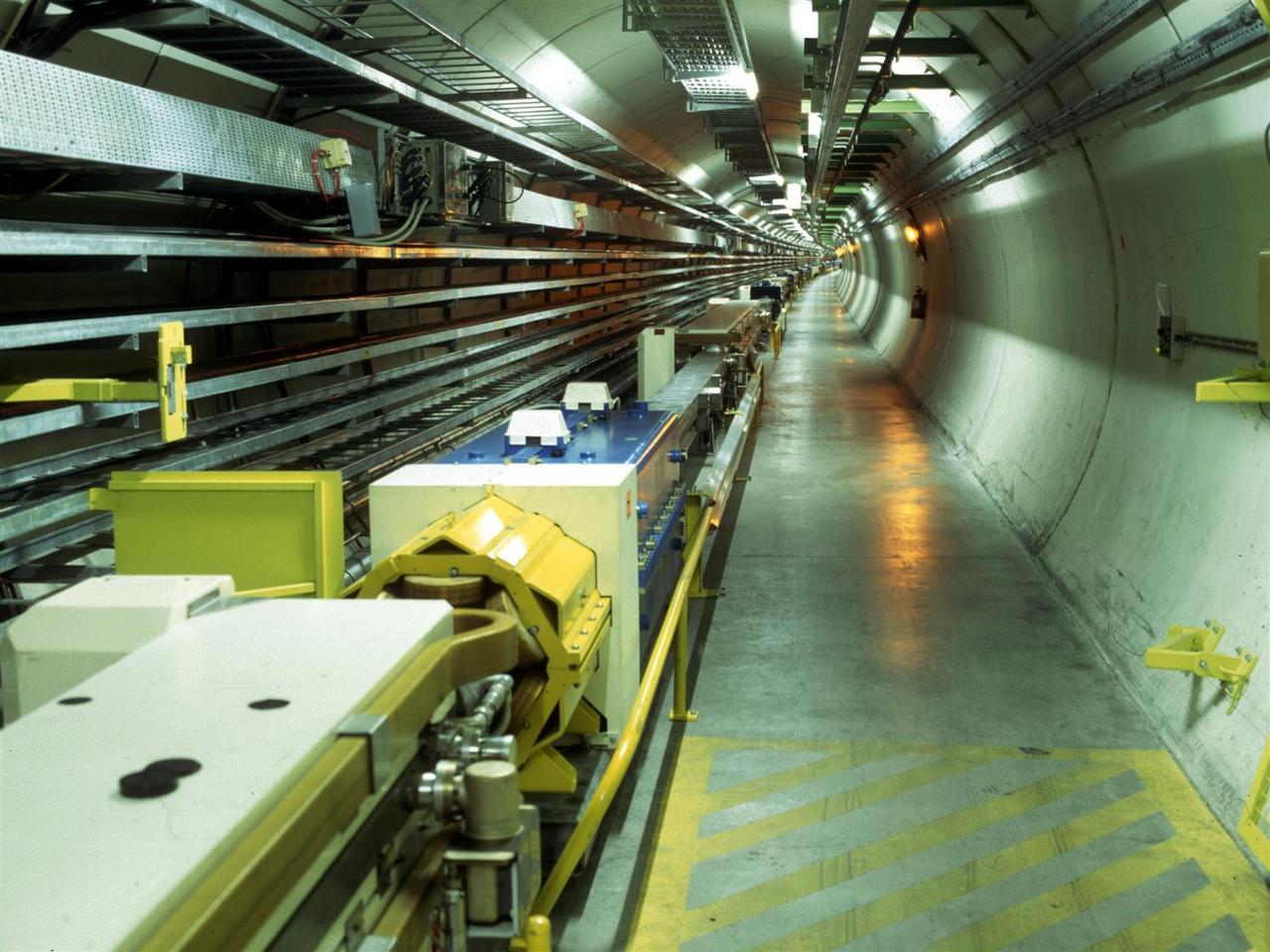
Large Electron-Positron Collider (CERN)
Ps is used in atomic physics to study fundamental interactions. Dense positronium clouds can enable interactions between multiple Ps atoms, such as elastic scattering, spin exchange, and Ps molecule formation. Laser-excited Rydberg Ps states will be used to test gravity on antihydrogen at CERN. Bose-Einstein condensates of Ps have been proposed as a gain medium for a gamma-ray laser.
The properties of Ps (particle-antiparticle nature, lifetime dependence on spin states, sensitivity to the environment) have made it not only a tool for fundamental physics research but also a valuable instrument in diverse disciplines such as materials science (defect detection), medicine (PET imaging), chemistry, and astrophysics. This wide range of applications demonstrates how Ps’s fundamental properties can be used to understand physical processes in complex systems. Ps is an example of how fundamental scientific discoveries can be transformed into practical applications. Its interdisciplinary applications prove that Ps research is more than a theoretical curiosity—it provides tangible benefits. This highlights the broad impact of scientific research and the connections between different fields.
Jung, Dong-Won, Kang Young Lee, and Chaehyun Yu. "Positronium Decays with a Dark 𝑍 and Fermionic Dark Matter." *Physical Review* D, 105, May (2022): 1–7. Accessed July 29, 2025. https://link.aps.org/doi/10.1103/PhysRevD.105.095023.
Moskal, Pawel, Jasinska Bozena, Ewa Stepien, and Steven D. Bass. "Positronium in Medicine and Biology." *Nature Reviews Physics*, 1 (2019): 527-528. Accessed July 29, 2025. https://www.researchgate.net/publication/333928990_Positronium_in_medicine_and_biology.

Basic Properties of Positronium
Structure and Comparison with Hydrogen
Mass and Energy Levels
Spin States: Para-Positronium (p-Ps) and Ortho-Positronium (o-Ps)
Positronium Formation Mechanisms
General Formation Mechanism
Formation in Gases (Classical Technique)
Formation in Dense Matter and Surfaces
Laser-Assisted Formation
Positronium Decay Mechanisms
Annihilation Selection Rules and Fundamental Decay Modes
Radiative Corrections and Precise Calculations
Exotic and Invisible Decays
Decay Mechanisms in Biological Environments
Experimental Observations and Techniques
Historical Discovery and Early Observations
Positron Annihilation Spectroscopy (PAS) Techniques
Observations of Excited States and Molecular Ps
Laser Interactions and Spectroscopy
Theoretical Models and Quantum Electrodynamics Tests
Role of QED and Related Equations
QED Tests and Precise Calculations
Effects of External Fields
Searches for Physics Beyond the Standard Model
Applications of Positronium
Materials Science and Defect Detection
Medical Imaging (Positron Emission Tomography - PET)
Chemistry and Radiation Chemistry
Astrophysics
Other Applications and Potential