
badge icon

This article was automatically translated from the original Turkish version.
Article
9235217317938_1730225318510.webp
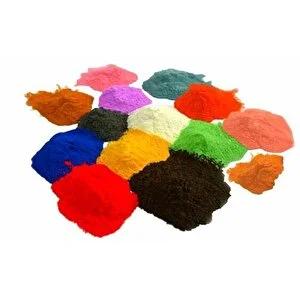
Powder Paint
Definition
A type of dry paint applied electrostatically and free of solventsused for coating surfaces.
Application Method
Electrostatic spraying or dipping method

Powder coating is a dry paint system composed of resin, pigment, and additives, in thermoplastic or thermoset form, without solvents. It is applied to surfaces using the electrostatic spray method and then cured with heat to form a hard, durable finish. Due to its environmentally friendly nature, high mechanical resistance, and long-lasting surface protection, it is widely used in the industrial, automotive, white goods, and furniture sectors. It stands out for its chemical resistance, scratch resistance, and aesthetic appearance.

Properties

  • Contains no solvents; environmentally friendly
  • Applied via electrostatic charging
  • Cured using a thermal curing process
  • Offers high resistance to impact, scratching, and abrasion
  • Strong resistance to chemicals, UV radiation, and moisture
  • Can produce a wide range of surface effects such as glossy, matte, satin, textured, and metallic finishes
  • Provides a homogeneous, thick, and non-porous coating
  • Durable with low maintenance requirements

Application Surfaces

Powder coatings can only be applied to surfaces with electrical conductivity. The main application surfaces include:

  • Steel, aluminum, and galvanized metals
  • White goods casings
  • Office furniture components
  • Racking systems and industrial panels
  • Exterior profiles (e.g., aluminum window frames)

Application Areas

  • Automotive industry – wheels, chassis, trim parts
  • White goods manufacturing – refrigerators, ovens, washing machines
  • Furniture industry – metal tables, chairs, and legs
  • Electrical and electronic equipment enclosures
  • Facades and construction profiles

Application Techniques

Surface Preparation

  • Must be thoroughly cleaned of oil, rust, dust, and contaminants
  • Typically pre-treated with phosphating or chromating
  • A clean surface is critical for paint adhesion and durability

Application Method

  • The powder is negatively charged using an electrostatic spray gun and sprayed onto the metal surface
  • The powder adhering to the surface melts and forms a film when heated in an oven
  • A homogeneous, smooth, and durable coating is formed after application
  • Oven temperature and duration depend on the product type and manufacturer’s technical guidelines

Advantages

  • Contains no solvents; zero VOC emissions
  • Minimal paint waste due to recyclability
  • Exceptionally high chemical and mechanical resistance
  • Offers a broad range of colors and textures for aesthetic variety
  • Delivers high film thickness in a single coat
  • Durable and resistant to outdoor weather conditions
  • Compatible with industrial automation

Limitations

  • Can only be applied to electrically conductive surfaces
  • Requires specialized equipment and oven curing infrastructure
  • Achieving uniform coating on complex geometries can be challenging
  • Removal and reapplication are costly
  • Changing colors in production requires time-consuming line cleaning

Author Information

Avatar
AuthorUfuk YararDecember 5, 2025 at 8:39 AM

Discussions

No Discussion Added Yet

Start discussion for "Powder Paint" article

View Discussions

Contents

  • Properties

  • Application Surfaces

  • Application Areas

  • Application Techniques

    • Surface Preparation

    • Application Method

    • Advantages

    • Limitations

Ask to Küre