This article was automatically translated from the original Turkish version.
+2 More
Product / Product Group(s) | Weaving | ||||||||
|---|---|---|---|---|---|---|---|---|---|
Geographical Boundary | Poyralı Village Kırklareli Province Pınarhisar District | ||||||||
Geographical Indication Type(s) | Mahreç Sign | ||||||||
Registration Date | 20 June 2025 | ||||||||
Registration Number | 1746 | ||||||||
Materials Used | Wool, linen and cotton yarns. (Usually dyed with root dyes.) | ||||||||
Control Authority | A team of experts from the Kırklareli Provincial Directorate of Culture and Tourism, Kırklareli Maturation Institute and Kırklareli Adult Education Center, under the coordination of the Kırklareli Governorship. | ||||||||
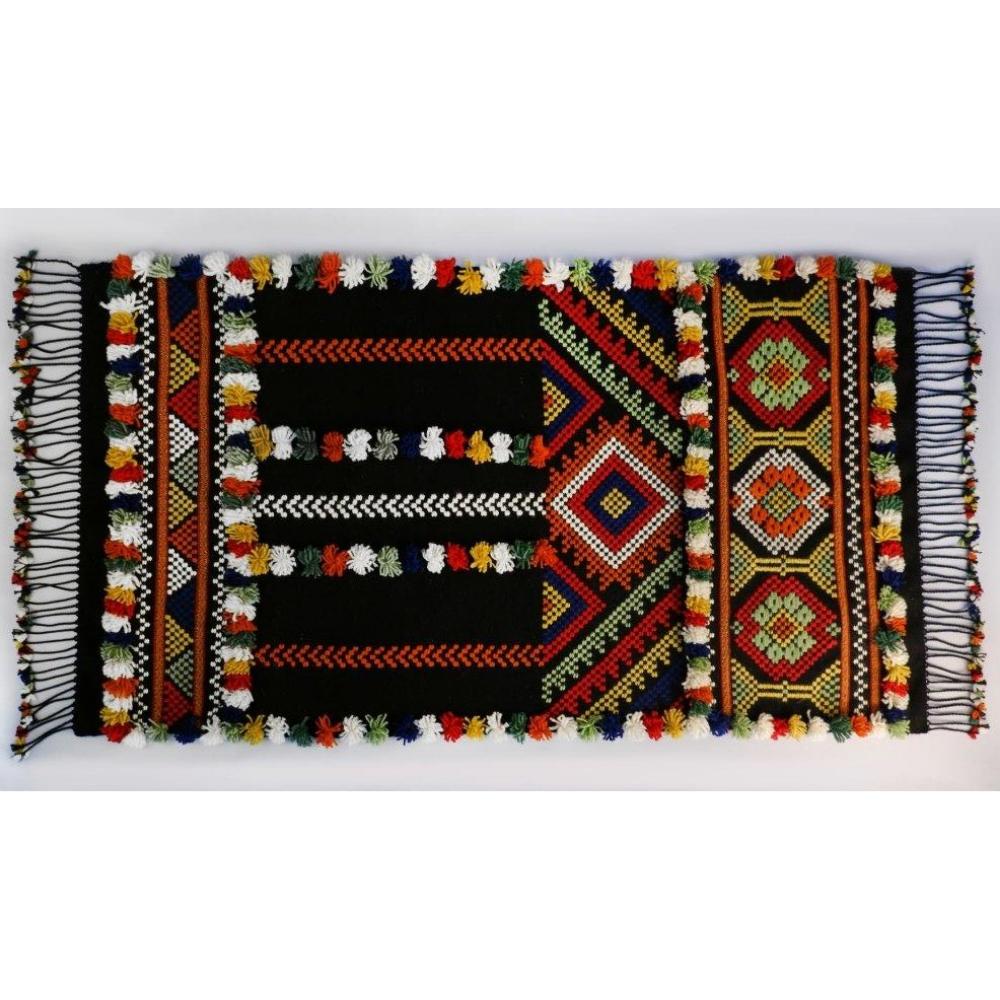
The Poyralı Weave, a traditional craft unique to Poyralı Village in the Pınarhisar district of Kırklareli, continues to exist as an important cultural heritage within Turkish textile arts. This traditional weaving carries the traces of its geographical and social memory, contributing to the formation of cultural identity awareness. Handicrafts serve as living documents reflecting a community’s history, traditions, and aesthetic understanding, and the Poyralı Weave holds both artistic and anthropological value in this context. Due to its distinct geographical and cultural characteristics, it was officially registered as a Geographical Indication on 20 June 2025 and placed under protection.

Poyralı Weave (Anadolu Agency)
Weaving in the Thrace region was a widespread handicraft since the mid-19th century, but over time it lost its former popularity due to industrialization and modernization, and now faces the threat of extinction. This decline has become more pronounced due to factors such as younger generations no longer learning the craft and diminishing interest in handcrafted products. The future of the Poyralı Weave presents significant sustainability challenges. Preserving local values is critical to ensuring the transmission of this weaving across generations. In this context, its registration as a Geographical Indication has been a crucial step toward safeguarding its production methods, motifs, and cultural significance. The registration process aims to revive this endangered art by securing its originality and traditional production techniques.
The Poyralı Weave is produced exclusively within the geographical boundaries defined by its Geographical Indication registration—that is, in Poyralı Village, Pınarhisar district of Kırklareli. One of its most fundamental characteristics is the use of yarn dyed primarily with root-based natural dyes. This natural dyeing technique imparts an authentic appearance and reinforces the regional character of the weave.
The weaving process is carried out on traditional looms using a specialized technique known as looped knitting. This technique creates a prominent, raised texture on the surface of the fabric, allowing motifs to emerge more distinctly. Additionally, the use of tassels along the edges and finishing points adds an aesthetic completeness to the weave. The entire production process must be completed within the village using traditional methods to ensure compliance with the Geographical Indication. The registration document includes these procedures among the criteria for monitoring the suitability of materials and tools used in production.

Poyralı Weave (Anadolu Agency)
One of the most distinguishing features of the Poyralı Weave compared to other regional weaves is its original motifs that reflect a rich cultural heritage. These motifs symbolize the community’s connection to nature, life, and tradition. The main motifs and their meanings as specified in the registration document are as follows:
Anadolu Ajansı. "Kırklareli'nde unutulmaya yüz tutan Poyralı dokumasından yapılan ürünler sergilendi." December 19, 2025. https://www.aa.com.tr/tr/kultur/kirklarelinde-unutulmaya-yuz-tutan-poyrali-dokumasindan-yapilan-urunler-sergilendi/3504383.
Turkish Patent and Trademark Office. "Poyralı Dokuması." Trademark Registration Certificate, No: 1746, June 20, 2025. https://ci.turkpatent.gov.tr/cografi-isaretler/detay/9083.
Yaman, Selen. "Geçmişten Günümüze Trakya El Dokumaları Yaygılar, Tasarımda Sorunlar ve Çözümler." 2019. https://dergipark.org.tr/tr/download/article-file/661217.
Özcan, Nazan, and H. Feriha Akpınarlı. "Kırklareli Poyralı Dokumasının Sürdürülebilirlik Kapsamında Değerlendirilmesi." *Hars Akademi* 5 (2022): 26-43. https://dergipark.org.tr/tr/pub/hars/issue/68596/1074126.

Product / Product Group(s) | Weaving | ||||||||
|---|---|---|---|---|---|---|---|---|---|
Geographical Boundary | Poyralı Village Kırklareli Province Pınarhisar District | ||||||||
Geographical Indication Type(s) | Mahreç Sign | ||||||||
Registration Date | 20 June 2025 | ||||||||
Registration Number | 1746 | ||||||||
Materials Used | Wool, linen and cotton yarns. (Usually dyed with root dyes.) | ||||||||
Control Authority | A team of experts from the Kırklareli Provincial Directorate of Culture and Tourism, Kırklareli Maturation Institute and Kırklareli Adult Education Center, under the coordination of the Kırklareli Governorship. | ||||||||
History and Sustainability
Production Method and Technical Features
Used Motifs and Their Meanings