

This article was automatically translated from the original Turkish version.
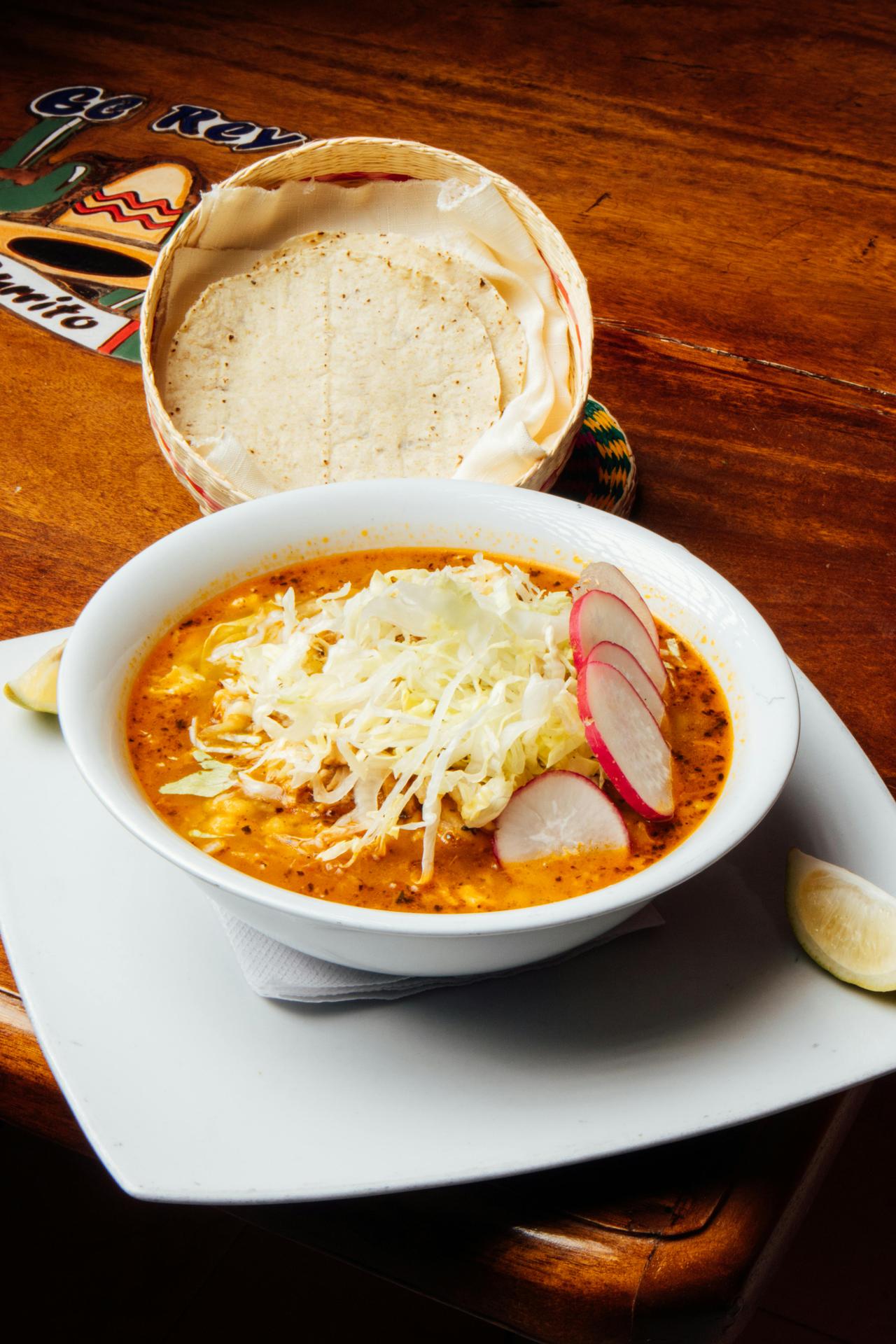
Pozole is a corn-based dish prepared by boiling hominy—maize kernels processed in an alkaline solution, then washed to remove their outer husks and tips—along with meat and other ingredients. The foaming that occurs on the liquid surface during boiling, caused by the kernels splitting open, is the defining physical characteristic from which the dish derives its name. The alkaline treatment applied during production induces structural changes within the maize kernel, creating a critical stage that determines texture, volume, and durability during cooking.
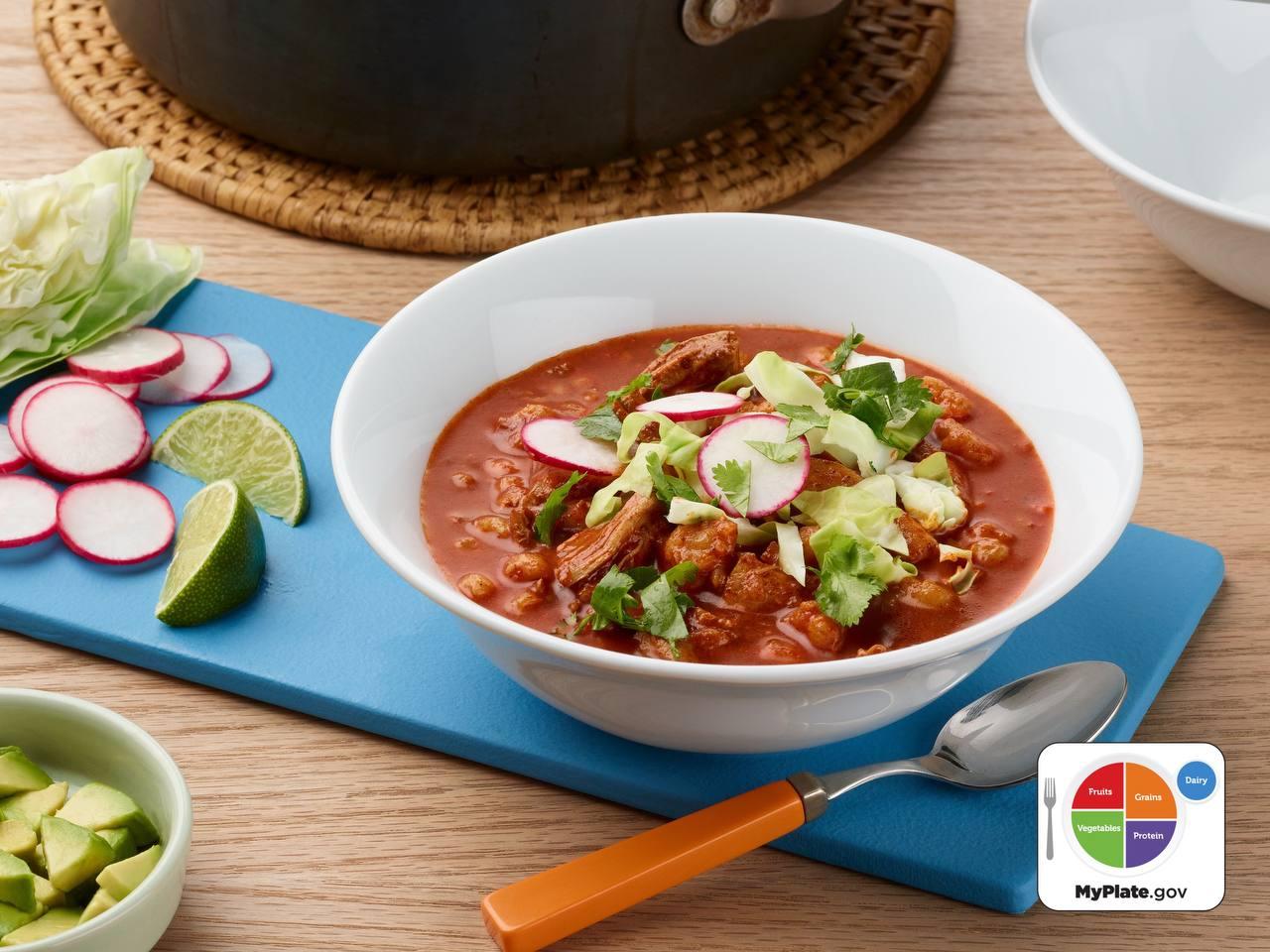
Pozole (Flickr)
The term pozole derives from the Nahuatl word pozol, meaning “foamy” or “to foam,” referring to the surface frothing produced when dried maize kernels are boiled and their husks separate. The Nahuatl form pozolli adopted the Spanish form pozole, which became widely used over time. Conceptually, pozole has acquired varying meanings across different geographic contexts; in the regions of Sonora and Arizona, the term denotes not only a corn-based preparation but also a type of stew combining meat, grains, and vegetables. Historical texts sometimes describe pozole as a beverage or semi-liquid food, a variation linked to regional culinary practices and local terminology.
The fundamental step in pozole production is nixtamalization, in which maize kernels are cooked and soaked in an alkaline solution containing calcium hydroxide. During this process, the outer layers of the kernels soften, allowing the husks and tips to be easily removed; the kernels are then rinsed to eliminate excess alkalinity. The resulting nixtamal forms an intermediate product that imparts the distinctive cooking properties to pozole. The combined effect of the alkaline environment and thermal treatment alters the structure of starch, the kernel’s main component, producing a more stable structure that maintains kernel integrity during cooking.
Nixtamalization induces an annealing effect that significantly alters the gelatinization behavior of starch. This process raises the onset, peak, and conclusion temperatures of gelatinization while narrowing the temperature range; it also increases the thermal stability and viscosity of starch granules. In some local maize varieties, increases in gelatinization temperatures of more than 3–5 °C have been observed, accompanied by reduced energy requirements and preserved granule integrity throughout cooking. This structural transformation plays a decisive role in achieving the desired volume expansion, texture, and balanced cooking time in pozole.
The maize varieties preferred for pozole production are distinguished by physical traits such as kernel size, endosperm structure, and ability to maintain integrity during cooking. Local maize landraces used for this purpose typically feature large, plump kernels, a high proportion of soft endosperm, and a structure that facilitates easy husk removal after alkaline treatment. Particularly notable varieties include Cacahuacintle, Tabloncillo, Elotes Occidentales, and Maíz Ancho, which stand out after nixtamalization for their kernel splitting, water absorption capacity, and balanced cooking time. Cacahuacintle is widely used in pozole production due to its high yield, short cooking time, and excellent kernel integrity. A portion of pozole maize is sold as whole kernels, a significant portion as kernels with tips removed, and a smaller proportion is processed as canned products.
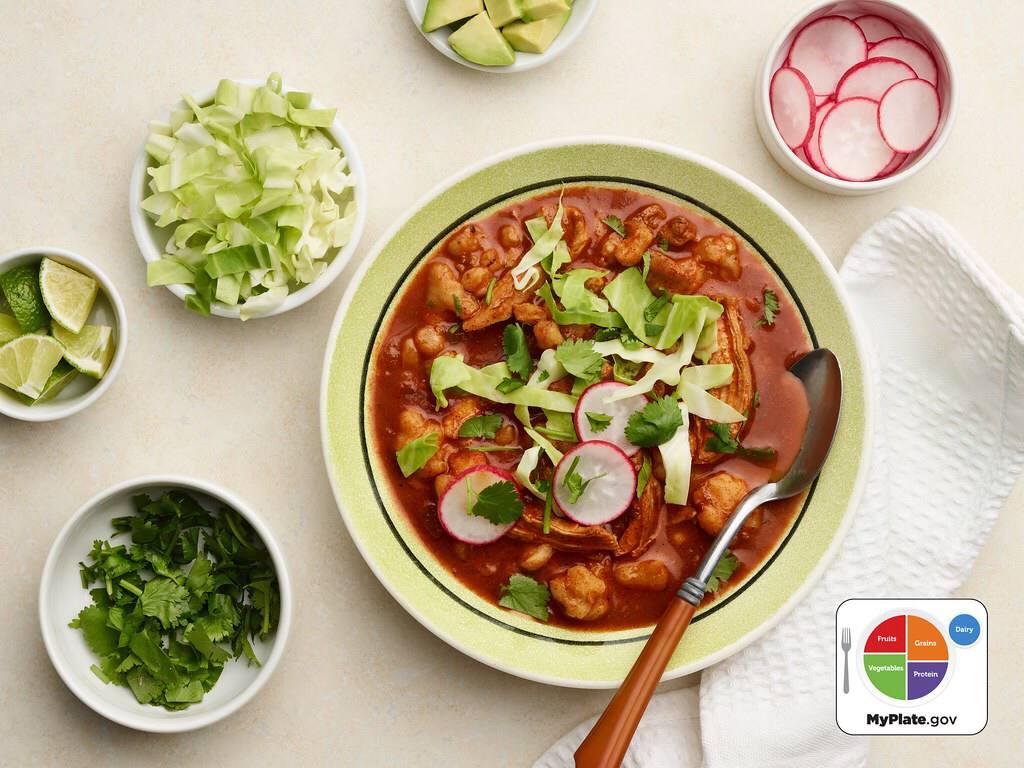
Pozole (Flickr)
Pozole was part of maize-based dietary practices in pre-Hispanic central and northern Mexico, later being adopted in the Sonora and Arizona regions with varying ingredients and nomenclature. Early written sources describe pozole sometimes as merely alkali-treated and boiled maize kernels, and at other times as a preparation combining meat, legumes, and grains. In Sonora and Arizona, pozole is typically defined as a stew made by combining nixtamalized maize kernels with pre-cooked meat, legumes, and chilies. The historical use of the same term to refer to a beverage, semi-liquid food, or solid dish reflects regional culinary practices and local terminological differences. This variability demonstrates that pozole is not defined by a single recipe but by a range of practices shaped by geography and tradition.
Chagoboy. “Cominda noel, Meksika yemeği, Pozole görseli.” Pixabay. Accessed February 19, 2026. https://pixabay.com/tr/photos/cominda-noel-meksika-yeme%c4%9fi-pozole-3912359/
Figueroa, Juan de Dios, José Juan Véles Medina, Martín Adelaido Hernández Landaverde, Flavio Aragón Cuevas, Marcela Gaytán Martínez, Ezequiel Chávez Martínez, Natalia Palacios, and Martha Willcox. “Effect of Annealing from Traditional Nixtamalisation Process on the Microstructural, Thermal, and Rheological Properties of Starch and Quality of Pozole.” *Journal of Cereal Science* 58, no. 3 (2013): 457–464. Accessed February 19, 2026. https://www.sciencedirect.com/science/article/abs/pii/S0733521013001549
Hernández‑Grajales, Meztli, Luis Barba, Juan José García‑Granero, Simona Mileto, María Teresa Castillo Mangas, Gabriela Mejía Appel, Alessandra Pecci, et al. “Lime Treatments for Food Preparation Identified in Postclassic Xochimilco (Mexico) Ceramic Sherds.” *Archaeological and Anthropological Sciences* 17, no. 209 (2025). Accessed February 19, 2026. https://link.springer.com/article/10.1007/s12520-025-02314-3
Morocho, 8pCarlos. “Cuenca’da Otantik Ekvador Pozole Yemeği.” Pexels. Accessed February 19, 2026. https://www.pexels.com/tr-tr/fotograf/cuenca-da-otantik-ekvador-pozole-yemegi-35770360/
Pradeau, Alberto Francisco. “Pozole, Atole and Tamales: Corn and Its Uses in the Sonora-Arizona Region.” *The Journal of Arizona History* 15, no. 1 (1974): 1–7. Accessed February 19, 2026. https://www.jstor.org/stable/41695162?read-now=1&seq=1#page_scan_tab_contents
U.S. Department of Agriculture. “Chicken Pozole Soup, a traditional Mexican soup that includes chicken and hominy, topped with cilantro, fresh lime juice, avocados, and radishes.” Flickr. Accessed February 19, 2026. https://www.flickr.com/photos/usdagov/54092967511/
U.S. Department of Agriculture. “Chicken Pozole Soup, a traditional Mexican soup that includes chicken and hominy, topped with cilantro, fresh lime juice, avocados, and radishes.” Flickr. Accessed February 19, 2026. https://www.flickr.com/photos/usdagov/54093425720/
Vázquez‑Carrillo, María Gricelda, Arturo Hernández‑Montes, Natalia Palacios‑Rojas, Leticia García‑Cruz, Aldo Rosales‑Nolasco, Aide Molina, and Gabriela Palacios‑Pola. “Comparing Traditional and Commercial Nixtamalization of Three Maize Landraces: Impact on Pozole Quality and Consumer Acceptance.” *Journal of Ethnic Foods* 11, no. 11 (2024). Accessed February 19, 2026. https://link.springer.com/article/10.1186/s42779-024-00227-5

Etymology and Conceptual Origins
Production Process and Nixtamalization
Maize Varieties Used and Their Physical Characteristics
Historical and Regional Use