


This article was automatically translated from the original Turkish version.
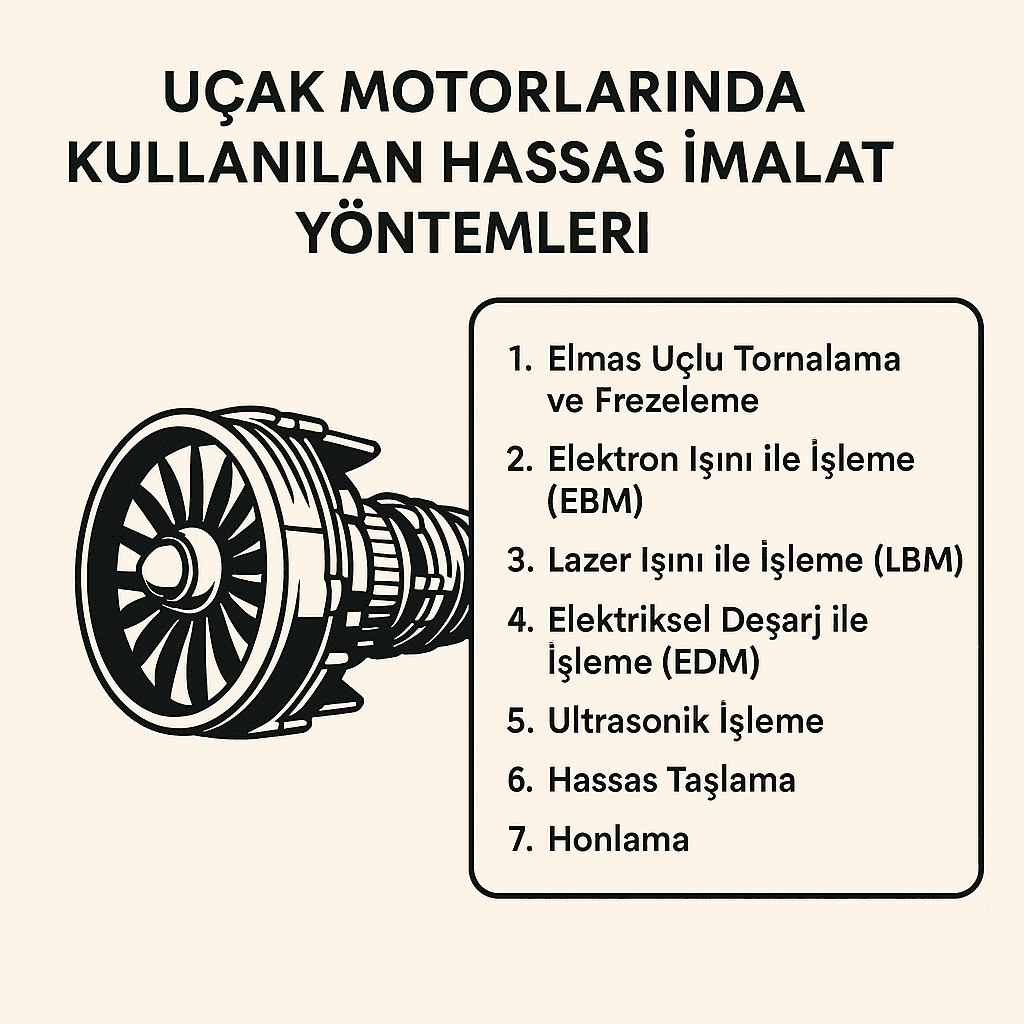
Precision Manufacturing Methods
Area(s) | Aerospace Engineering | ||||||||
|---|---|---|---|---|---|---|---|---|---|
Subarea | Advanced Manufacturing Technologies | ||||||||
Method(s) | Honing Precision Grinding Ultrasonic Machining Electrical Discharge Machining (EDM) Laser Beam Machining (LBM) Electron Beam Machining (EBM) Diamond-Tipped Turning and Milling | ||||||||
Application Area(s) | Turbines Combustion Chambers and Compressor Components Shaft Systems | ||||||||
Sensitivity Range | 0.1–10 micrometers | ||||||||
The manufacturing techniques used in aircraft engine production require precision levels that meet extraordinary safety standards. Components of these engines, which operate under high temperature, pressure, and speed, must be manufactured with tolerances at the micrometer level. Therefore, methods that go beyond conventional chip-making processes are preferred. For instance, diamond-tipped turning and milling stand out in the machining of superalloys due to their superior surface quality and dimensional precision. Electron beam machining (EBM) and laser beam machining (LBM) are widely used for complex and heat-resistant parts such as turbine blades because they enable non-contact and thermally controlled micro-machining. Both methods can remove material at the micron scale thanks to their high energy density, thereby minimizing deformation.
In addition, electrical discharge machining (EDM) enables the shaping of hard, electrically conductive metals into complex geometries. It is particularly favored for engine components requiring high precision in internal cavities or hard-to-reach surfaces, such as molds and channels. Ultrasonic machining provides surface finishing capability for brittle and hard materials through high-frequency vibrations supported by abrasive particles. Precision grinding reduces surface roughness while maintaining geometric accuracy; honing further improves surface quality during the final finishing stage of cylindrical parts, enabling longer service life and lower friction operation. The common feature of all these methods is that they have been developed specifically to meet the critical requirements of safety, durability, and performance in aircraft engines.
The cutting process performed with crystalline diamond tools, commonly referred to as diamond machining, produces surfaces with low surface roughness and high form accuracy. Depending on process parameters and workpiece material, surface roughness values as low as 1–10 nanometers and form accuracy ranging from 0.1 to 1 μm can be achieved. In addition to specially prepared tool tips, controlled temperature and vibration conditions during machining also contribute significantly to this level of precision. This process is routinely used to machine not only ductile materials such as aluminum, copper, and electroless nickel but also brittle materials such as germanium, silicon, zinc sulfide, and potassium dihydrogen phosphate (KDP).
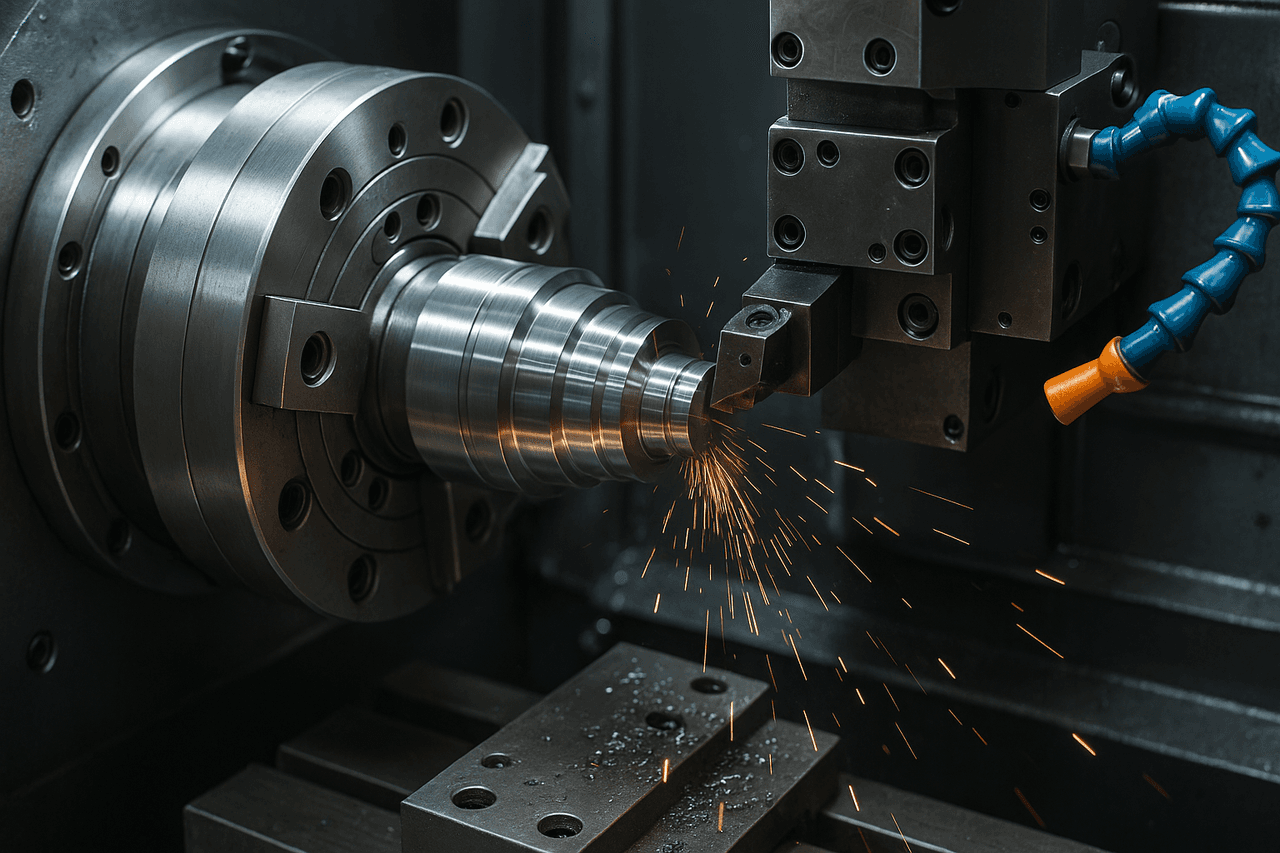
Diamond-Tipped Turning (Generated with artificial intelligence assistance).
Electron beam machining (EBM) is a technology that accelerates and focuses electrons in a vacuum environment using a high electric field to impact the workpiece surface. Electrons transfer their kinetic energy into thermal energy, thereby modifying the material. EBM provides high energy density similar to laser beams, but the mass and electrical charge of electrons result in different energy transfer characteristics. The electron beam can penetrate deeply into the material, making this technology particularly suitable for applications such as drilling fine holes and machining difficult-to-cut materials. Generally, form accuracy of approximately 1 μm can be achieved.
In laser beam machining (LBM), the laser beam is focused onto the material surface to shape it through heating, melting, vaporization, or spalling. LBM is used for operations such as drilling, cutting, marking, and welding. The laser beam can be applied in different gas environments depending on the material type and process conditions. These gases may include combustible gases like oxygen or inert gases like argon. LBM offers advantages such as high-speed cutting, precise cuts, and surface protection. It can process materials including stainless steel, aluminum, titanium, copper, bronze, and nickel alloys. Generally, form accuracy of approximately 5 μm can be achieved.
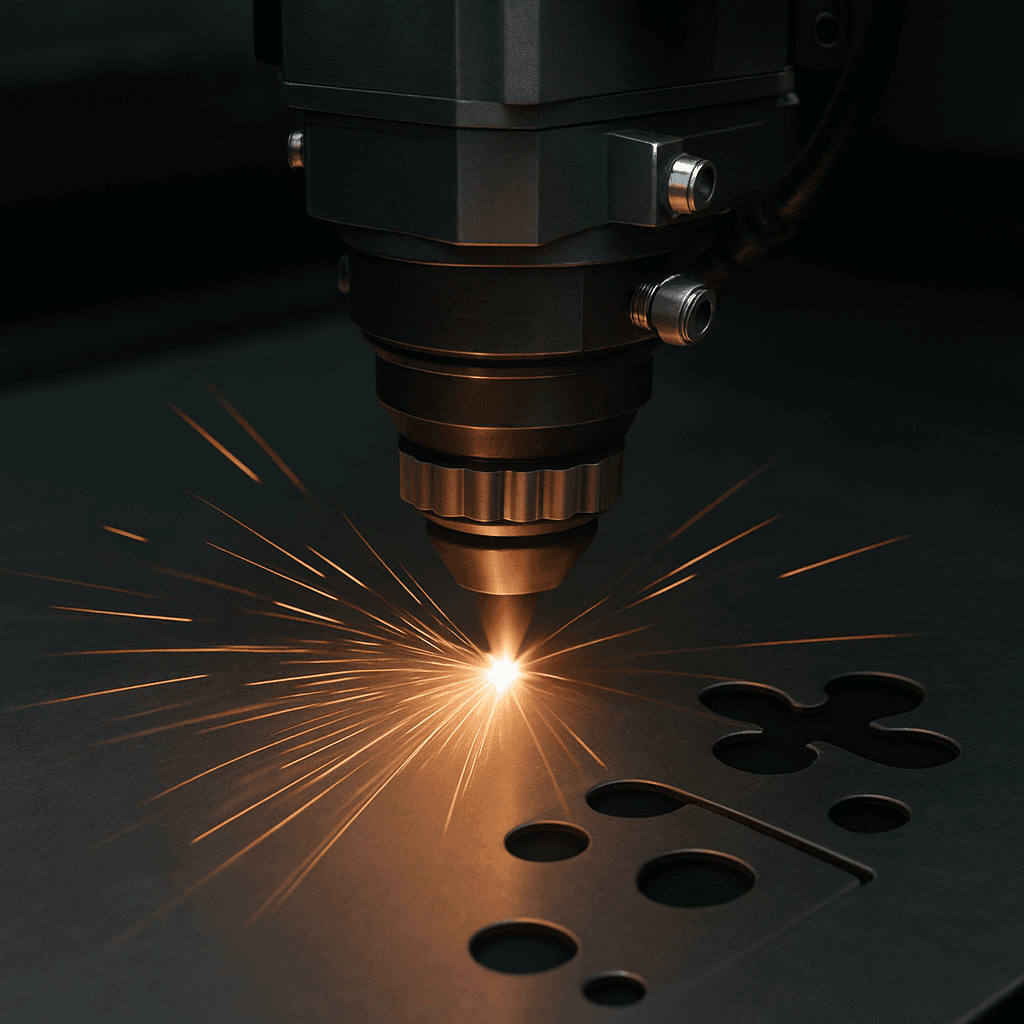
Laser Beam Machining (Generated with artificial intelligence assistance).
Electrical discharge machining (EDM) removes material by generating electrical discharges between an electrode and the workpiece. The process begins when a dielectric fluid becomes ionized and creates a conductive path for the discharge. Material removal depends on the thermal-physical properties of the material and electrical parameters, independent of the workpiece’s mechanical properties. EDM is used in applications such as cutting complex shapes, broaching, and high-precision component machining. The dielectric fluid used in the process serves cooling, insulation, and chip removal functions. EDM generally achieves form accuracy of about 5 μm, with surface roughness typically ranging from Ra = 0.4 to 2 μm. Electro-discharge machines are widely used for machining hard materials and producing components with complex geometries.
Ultrasonic machining performs material removal using a tool that vibrates at high frequencies and is particularly suited for hard and brittle materials such as high-carbon steels and steel alloys. This process relies on abrasive particles impacting the workpiece surface to erode material. The efficiency of ultrasonic machining depends on factors such as frequency, amplitude, abrasive particle size, and impact force. The abrasive slurry is delivered to the machining zone either freely or under pressure to enhance efficiency. Generally, form accuracy of about 7 μm can be achieved, and surface roughness ranges from Ra = 0.32 to 0.16 μm.
Precision grinding is a highly specialized and evolving machining method aimed at achieving the highest levels of surface quality, form accuracy, and subsurface integrity. This technique typically uses fixed abrasive wheels to machine brittle materials in micro-scale chip depths and ductile mode. Its goal is to produce optically smooth surfaces without cracks or subsurface damage, reliably and in a single operation. This is only possible with high-rigidity machine tools, wear-resistant specialized grinding wheels, and precisely controlled process parameters. Generally, form accuracy of 0.25–2.5 μm can be achieved.
Honing is a surface finishing process based on a multi-point cutting tool composed of bonded abrasive grains, featuring at least one oscillating motion. The process is classified into external cylindrical, internal cylindrical, and surface honing, and is applied using two main types of oscillation: long stroke and short stroke. The cross-hatch patterns created during the cutting motion result in high surface quality. Low cutting speeds, typically not exceeding 1.5 m/s, generate minimal thermal effects; therefore, cutting fluids are used primarily for lubrication rather than cooling. The type of honing stone, grain size, bond type, and stone hardness directly affect surface quality, and super-hard materials such as diamond and CBN can also be used. Surface roughness of Rz = 1 μm is achieved with long stroke honing and Rz = 0.1 μm with short stroke honing, while dimensional and form accuracy of 1–3 μm is attainable.
Brinksmeier, E., Y. Mutlugünes, F. Klocke, J. C. Aurich, P. Shore, and H. Ohmori. “Ultra-Precision Grinding.” *CIRP Annals* 59, no. 2 (2010): 652–671. Accessed May 8, 2025. https://doi.org/10.1016/j.cirp.2010.05.001.
Chonbuk National University. “Electron Manufacturing Lecture Notes.” Accessed May 8, 2025. http://sns.chonbuk.ac.kr/manufacturing/electron-1.pdf.
Dornfeld, David, and David-Eugene Lee. *Precision Manufacturing*. New York: Springer, 2008. Accessed May 8, 2025. https://www.researchgate.net/publication/287238068_Precision_Manufacturing.
Grote, Karl-Heinrich, and Erik K. Antonsson, eds. *Springer Handbook of Mechanical Engineering*. New York: Springer, 2008. Accessed May 8, 2025. https://www.researchgate.net/publication/327201764_Springer_handbook_of_mechanical_engineering.
Lee, Cameron. “What Is Laser Beam Machining: Process, Types & Methods.” *Accurl.* Accessed May 8, 2025. https://www.accurl.com/blog/laser-beam-machining/#:~:text=Laser%20Beam%20Machining%20involves%20removing,for%20larger%2Dscale%20production%20tasks.
Lucca, D. A., M. J. Klopfstein, and O. Riemer. “Ultra-Precision Machining: Cutting with Diamond Tools.” *Journal of Manufacturing Science and Engineering* 142, no. 11 (2020): 1–15. Accessed May 8, 2025. https://doi.org/10.1115/1.4048194.
Çandar, H. “ULTRASONIC MACHINING (USM).” PowerPoint sunusu. Accessed May 8, 2025. https://akbis.gantep.edu.tr/yonetim/upload/files/149277-4373.pdf.
“What Is Precision Grinding?” Sansmachining. Accessed May 8, 2025. https://www.sansmachining.com/what-is-precision-grinding/#:~:text=Precision%20grinding%20is%20a%20precision,machining%20processes%20on%20a%20part.

Precision Manufacturing Methods
Area(s) | Aerospace Engineering | ||||||||
|---|---|---|---|---|---|---|---|---|---|
Subarea | Advanced Manufacturing Technologies | ||||||||
Method(s) | Honing Precision Grinding Ultrasonic Machining Electrical Discharge Machining (EDM) Laser Beam Machining (LBM) Electron Beam Machining (EBM) Diamond-Tipped Turning and Milling | ||||||||
Application Area(s) | Turbines Combustion Chambers and Compressor Components Shaft Systems | ||||||||
Sensitivity Range | 0.1–10 micrometers | ||||||||
No Discussion Added Yet
Start discussion for "Precision Manufacturing Methods Used in Aircraft Engines" article
Precision Manufacturing Methods
1. Diamond-Tipped Turning and Milling
2. Electron Beam Machining (EBM)
3. Laser Beam Machining (LBM)
4. Electrical Discharge Machining (EDM)
5. Ultrasonic Machining
6. Precision Grinding
7. Honing