

This article was automatically translated from the original Turkish version.
+4 More
Definition(s) | The process of drilling holes in the earth's surface for the purpose of exploring and the techniques used in this process. or researching underground resources extracting | ||||||||
|---|---|---|---|---|---|---|---|---|---|
Basic Type(s) | Shallow Drilling Directional Drilling Horizontal Drilling Deep Drilling | ||||||||
Application Area(s) | Oil and Gas Carbon Storage Construction Geothermal Energy Water Resources Mining | ||||||||
Important Technologies | Automation, Robotic Systems (ROV), Digitalization, Wireless Control, Advanced Sensors | ||||||||
First Use | 19th century (oil and natural gas discoveries) | ||||||||
Drilling technology encompasses the methods, equipment, and processes used to bore holes into the Earth’s crust for the purpose of exploring, researching, evaluating, and extracting subsurface resources. This technology serves as a fundamental tool for identifying, extracting, and sustainably managing resources such as oil, natural gas, water, minerals, and geothermal energy. Supported by geological research and engineering knowledge, drilling operations play a critical role across a wide spectrum of applications, from soil investigations in the construction sector to energy production in deep ocean environments.
The modern use of drilling technology became widespread with the onset of oil and natural gas exploration activities in the 19th century. The earliest methods of that era were mechanically simple, labor-intensive, and time-consuming. Achievable depths were limited and operations lacked efficiency. With technological advancement, particularly during the 20th and 21st centuries, drilling machines and techniques underwent a major transformation. Today’s drilling rigs and equipment are significantly more powerful, efficient, and environmentally sensitive.
One of the most important developments in recent years has been the integration of digitalization and automation into the sector. Technologies such as advanced sensors, robotic systems, artificial intelligence, and machine learning enable drilling operations to be conducted with greater precision, speed, and safety. These innovations enhance operational efficiency while minimizing human-related risks in harsh and hazardous environments.
The fundamental principle of drilling involves creating a hole (well) in the Earth’s surface by fragmenting or eroding rock formations using a rotating drill bit or other cutting tools. During this process, a specialized fluid known as drilling mud is used to cool the drill bit, transport cuttings to the surface, and maintain the stability of the wellbore walls. Drilling operations are categorized according to their objectives and depths.
Shallow Drilling: A type of drilling aimed at relatively low depths, commonly used for soil investigations, initial mineral exploration, or shallow water wells. It plays a critical role in construction projects by helping to understand the geological structure of the ground to ensure foundation safety.
Deep Drilling: Drilling operations that reach depths of thousands of meters to access targets such as oil, natural gas, geothermal energy, or deep groundwater sources. These operations require high technology and specialized expertise.
Horizontal Drilling: A technique in which the drill bit proceeds horizontally after reaching a specific depth, unlike traditional vertical wells. This method allows access to extensive and thin subsurface reservoirs from a single well, enabling the extraction of a greater volume of resources. It reduces costs and minimizes environmental impact by requiring fewer wells to achieve higher yields.
Directional Drilling: An advanced technology that enables the well to follow a predetermined path and angle. It delivers effective results in complex geological structures, hard-to-reach reservoirs, or areas where surface rig installation is impossible—for example, beneath urban areas. Thanks to this technology, previously inaccessible or economically unviable resources can now be brought into production.

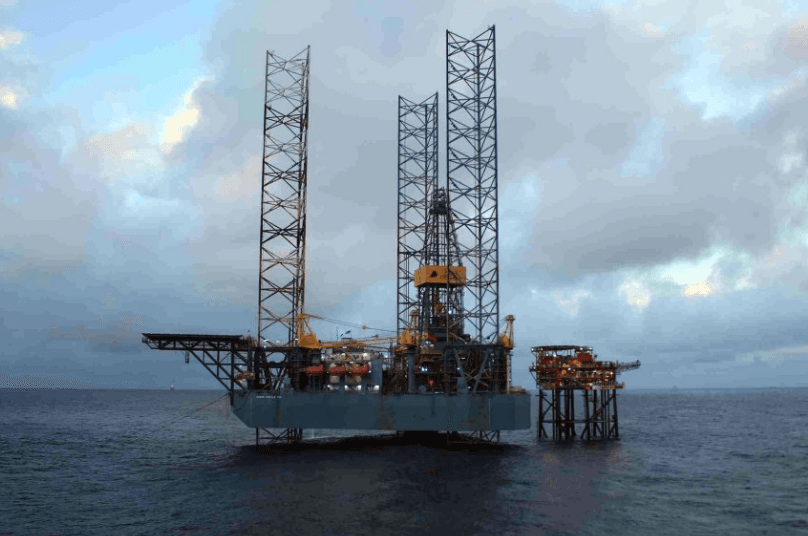
Example of a Drilling Rig (Generated by Artificial Intelligence.)
The drilling industry continuously develops new technologies to enhance efficiency, safety, and sustainability.
Automation and Digitalization: Automated drilling machines and digital control systems enable faster and safer operations. These systems increase operational efficiency by minimizing human error. Additionally, real-time monitoring and analysis of data collected during drilling allow engineers to make more accurate and timely decisions. Artificial intelligence and machine learning algorithms further optimize drilling processes and push efficiency to higher levels.
Robotic Systems and Sensors: Autonomous robots and remotely operated vehicles (ROVs) play a critical role in challenging environments such as deep-sea drilling. These devices handle tasks such as precise placement of drilling equipment, underwater maintenance and repair, and early detection of potential hazards. Advanced sensor technologies transmit real-time data on critical parameters—such as pressure, temperature, and formation properties—within the wellbore to central control systems, enhancing operational safety.
Wireless Control Systems: Wireless systems that allow remote and safe control of large and hazardous machinery on drilling sites—such as drilling rigs, conveyor belts, milling machines, and rock crushers—are a significant advancement in occupational safety. Operators can manage equipment with high precision from a safe distance, away from dangerous zones.
Drilling technologies hold an indispensable place in many sectors of modern industry.
Oil and Natural Gas: The most common and well-known application. Extraction of fossil fuels from beneath the Earth’s surface relies entirely on drilling operations.
Mining and Minerals: Drilling technology is used to locate valuable mineral deposits, determine reserve quantities, and extract ore.
Water Resources: Wells are drilled to discover groundwater sources for agricultural irrigation, drinking water supply, and industrial use. Samples extracted from these wells are also analyzed for water quality parameters such as salinity and mineral content.
Construction and Soil Investigation: Soil investigation drills are conducted before constructing large structures such as buildings, bridges, and dams to determine the ground’s load-bearing capacity and geological structure.
Geothermal Energy: Deep drilling is performed to access hot water or steam sources within the Earth’s crust and convert this heat into energy.
Carbon Capture, Utilization, and Storage (CCUS): Drilling technology is used to create injection wells for the permanent storage of carbon dioxide captured from the atmosphere into suitable subsurface geological formations.
Natural Gas Drilling Animation (Student Energy)
Geological Survey Ireland. "Drilling – Mineral Exploration." Accessed July 21, 2025. https://www.gsi.ie/en-ie/programmes-and-projects/minerals/activities/mineral-exploration/Pages/Drilling.aspx.
Geothermal News. Uytun, Merve. 2024. “Canada’sAlberta Eyaleti Invests inTest Tesisine for Advanced Drilling Technologies.” December 3, 2024. Accessed July 21, 2025. https://www.jeotermalhaberler.com/kanadanin-alberta-eyaleti-gelismis-sondaj-teknolojileri-icin-test-tesisine-yatirim-yapiyor/.
Student Energy. "Drilling." Accessed July 21, 2025. https://studentenergy.org/production/drilling/.
YHN Madencilik. "SONDAJ TEKNOLOJİLERİ." Accessed July 21, 2025. https://yhnmadencilik.com/maden-teknolojileri/.
YouTube. "Drilling Technology – Explained with Animation." Accessed July 21, 2025. https://youtu.be/-njmj0diWu8.


Definition(s) | The process of drilling holes in the earth's surface for the purpose of exploring and the techniques used in this process. or researching underground resources extracting | ||||||||
|---|---|---|---|---|---|---|---|---|---|
Basic Type(s) | Shallow Drilling Directional Drilling Horizontal Drilling Deep Drilling | ||||||||
Application Area(s) | Oil and Gas Carbon Storage Construction Geothermal Energy Water Resources Mining | ||||||||
Important Technologies | Automation, Robotic Systems (ROV), Digitalization, Wireless Control, Advanced Sensors | ||||||||
First Use | 19th century (oil and natural gas discoveries) | ||||||||
No Discussion Added Yet
Start discussion for "Drilling Technologies" article
History and Development
Basic Principles and Types
Key Technologies and Innovations
Application Areas